
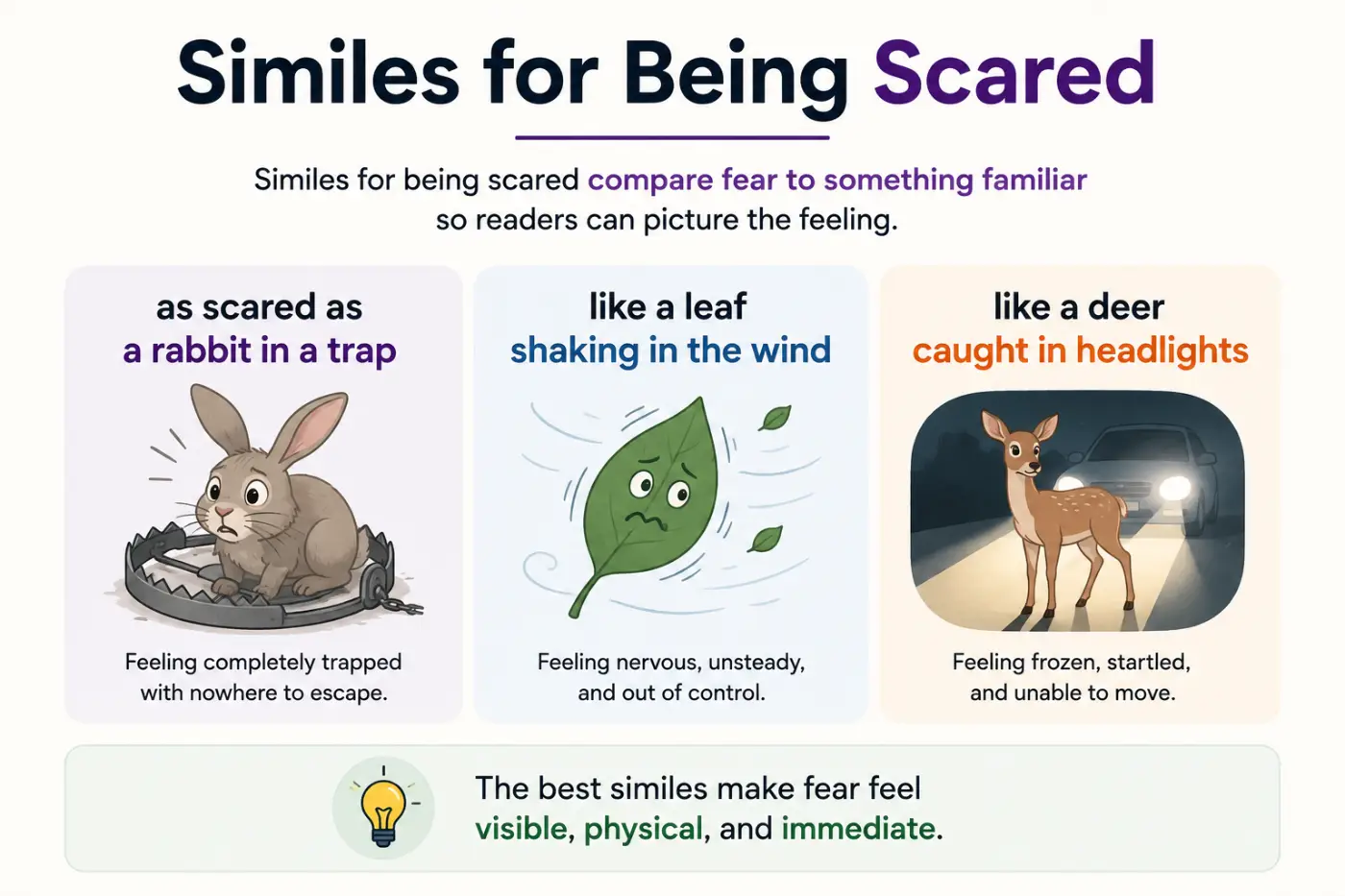
Similes for Being Scared can turn a simple description of fear into a vivid image that readers can picture and feel. Saying someone is scared tells the reader how they feel. Describing someone as as nervous as a bird trapped indoors creates a stronger impression of panic, tension, and uncertainty.
A simile compares two different things using words such as like or as. Fear offers plenty of ways to make these comparisons because it affects both the body and the mind. Your hands might shake, your heart might race, or your voice might tremble. You might freeze in place, look for an escape, or feel as though your legs can barely move. These details help you describe fear without relying on the same basic words again and again.
This collection features more than 120 original similes for being scared, organized by emotion and situation. Some comparisons are simple enough for school assignments, while others create dramatic images for stories, poems, and creative writing. You’ll also discover how to create your own similes, choose comparisons that fit the mood, and avoid expressions that sound predictable or overused.
Short Answer
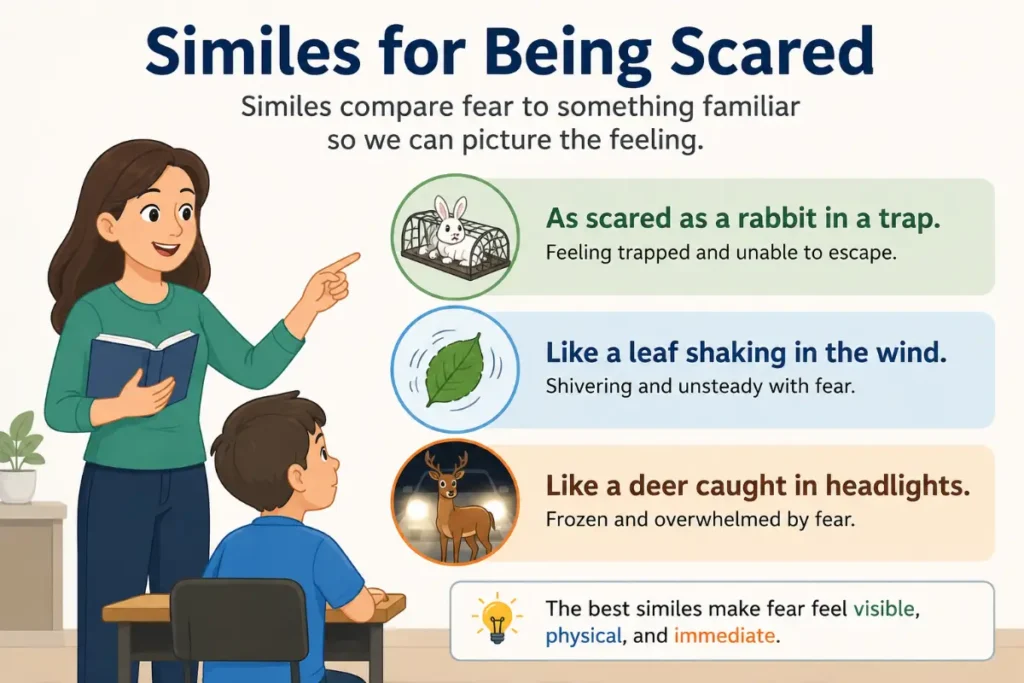
Similes for being scared compare fear to something familiar so readers can picture the feeling. Strong examples include as scared as a rabbit in a trap, like a leaf shaking in the wind, and like a deer caught in headlights. The best similes make fear feel visible, physical, and immediate.
Table of Contents
- What A Simile For Fear Does
- The Best Similes For Fear
- Similes About Shaking And Trembling
- Similes About A Racing Heart
- Similes About Freezing In Fear
- Similes About Wanting To Run
- Similes About Nervousness
- Similes About Sudden Fright
- Similes About Deep Fear
- Similes About Fear In Stories
- Similes For Being Scared In Everyday Writing
- How To Create Your Own Similes
- Common Mistakes
- Memory Tips
- Related Grammar And Usage Notes
- Key Takeaways
- FAQs
- Conclusion
What A Simile For Fear Does
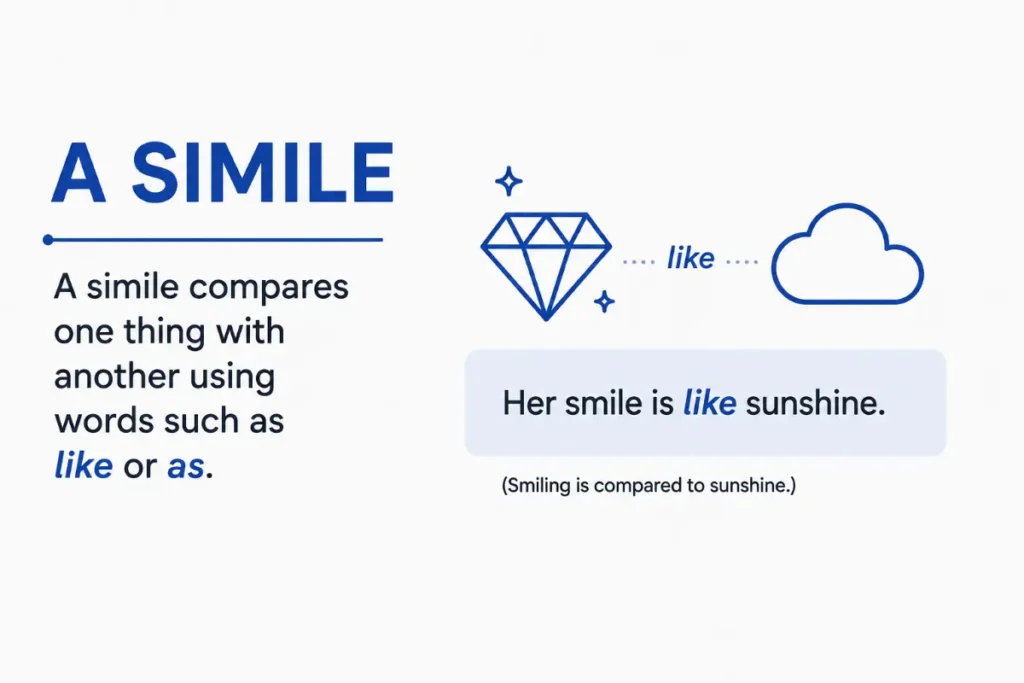
A simile compares one thing with another to make an idea easier to picture. Fear is often invisible so comparison gives it shape.
Consider these two sentences.
Maya was scared.
Maya was as still as a statue when she heard the noise.
The first sentence tells us that Maya felt fear. The second gives us a physical image. We can imagine her standing completely still.
That difference matters in creative writing.
A strong comparison can show fear through movement. It can also show fear through silence. A character might tremble like a loose window during a storm. Another character might sit as rigid as a locked door.
The goal isn’t to make every sentence dramatic. The goal is to choose an image that matches the level and type of fear.
Mild nervousness needs a different image from overwhelming terror.
The Best Similes For Fear
Here are some flexible comparisons that work in many kinds of writing.
- As scared as a rabbit in a trap. This creates an image of helpless and immediate fear.
- As frightened as a bird caught indoors. This suggests panic and a desperate need to escape.
- Like a deer caught in headlights. This shows someone frozen by sudden fear.
- Like a mouse hiding from a cat. This suggests someone trying to stay unnoticed.
- As nervous as a cat in a strange house. This works well for uncertainty and discomfort.
- Like a candle flickering in a dark room. This gives fear a fragile and uncertain quality.
- As tense as a bow pulled to its limit. This suggests fear mixed with intense pressure.
- Like a shadow following close behind. This presents fear as something difficult to escape.
- As jumpy as a squirrel near a hawk. This works well for nervous alertness.
- Like a storm waiting behind the clouds. This suggests fear that hasn’t fully arrived yet.
- As uneasy as a stranger alone in an empty house. This creates a quiet sense of danger.
- Like a whisper moving through a dark hallway. This gives fear a mysterious quality.
- As alert as a rabbit hearing a twig snap. This focuses on sudden awareness.
- Like a bird watching a hawk circle overhead. This suggests danger that feels close but hasn’t struck.
- As frightened as a child hearing footsteps upstairs. This creates suspense through uncertainty.
Similes About Shaking And Trembling
Fear often shows itself through the body. Shaking hands and trembling legs can communicate fear without directly saying someone is terrified.
- As shaky as a leaf in a winter wind. This gives the reader an image of uncontrollable trembling.
- Like a branch trembling during a storm. This suggests repeated movement caused by pressure.
- As unsteady as a candle flame in a draft. This works well for subtle physical fear.
- Like a leaf rattling against a window. This creates a nervous and restless image.
- As trembling as a bird in cold rain. This combines physical discomfort with vulnerability.
- Like a loose door shaking in the wind. This suggests fear that affects the whole body.
- As shaky as a bridge during an earthquake. This creates a stronger image of instability.
- Like grass bending beneath heavy footsteps. This gives fear a sense of weakness against something larger.
- As trembling as a kitten during a thunderstorm. This works well for innocent or vulnerable characters.
- Like a paper boat tossed across rough water. This suggests helplessness and instability.
- As unsteady as a ladder on loose ground. This creates a feeling of physical uncertainty.
- Like a window rattling during a hurricane. This represents intense fear and agitation.
- As shaky as a hand holding a glass at the edge of a cliff. This connects fear with the possibility of losing control.
- Like a small tree bending beneath a heavy storm. This suggests pressure that seems difficult to withstand.
- As trembling as a feather caught in a gust. This gives the fear a delicate and vulnerable quality.
Similes About A Racing Heart
Fear often changes the rhythm of the body. A racing heart can make a character feel trapped inside their own physical reaction.
- Like a drum beating inside a locked room. This makes the heartbeat feel loud and impossible to escape.
- As fast as a runner sprinting for the finish line. This gives the heart a clear sense of speed.
- Like a hammer pounding against a metal door. This creates a forceful and urgent image.
- As frantic as a drummer playing through a storm. This suggests chaotic nervous energy.
- Like footsteps racing down an empty hallway. This connects the heartbeat with suspense.
- As loud as thunder inside a small room. This makes the heartbeat feel overwhelming.
- Like a trapped bird beating against a window. This suggests panic and the desire to escape.
- As restless as waves during a storm. This describes fear that keeps building.
- Like a drumroll before an unknown announcement. This works well when fear comes from anticipation.
- As rapid as rain striking a tin roof. This gives the heartbeat a quick repetitive rhythm.
- Like a machine running too fast. This presents fear as a physical reaction that feels difficult to control.
- As pounding as boots on a wooden floor. This gives the heartbeat a heavy and urgent quality.
- Like a clock ticking faster in the dark. This creates suspense and anticipation.
- As wild as waves crashing against rocks. This shows fear that feels powerful and difficult to calm.
- Like a drum that refused to slow down. This suggests persistent panic.
Similes About Freezing In Fear
Not everyone runs when frightened. Sometimes fear makes the body stop.
- As still as a statue in an empty square. This shows complete physical stillness.
- Like a rabbit frozen beneath a hawk. This suggests fear so strong that movement seems impossible.
- As rigid as a locked gate. This creates an image of someone unable to move.
- Like ice beneath a winter moon. This suggests a cold and motionless reaction.
- As motionless as a photograph. This works well when a character suddenly freezes.
- Like a tree rooted during a storm. This shows someone remaining fixed despite danger.
- As stiff as a board. This is simple and useful for everyday writing.
- Like a statue waiting for the first crack. This creates tension around someone who cannot move.
- As frozen as a pond in January. This communicates strong and sudden fear.
- Like a shadow nailed to the ground. This gives fear an almost supernatural quality.
- As still as a room after a loud crash. This focuses on the silence that follows shock.
- Like a deer standing beneath a sudden spotlight. This shows surprise and paralysis.
- As frozen as a photograph caught in time. This suggests a complete loss of movement.
- Like a statue surrounded by rushing people. This emphasizes how isolated the frightened person feels.
- As stiff as a door that won’t open. This creates a simple image of resistance and helplessness.
Similes About Wanting To Run
Fear can trigger the urge to escape. These comparisons work well for scenes involving danger or sudden threats.
- Like a rabbit racing from a fox. This shows immediate survival instinct.
- As eager to escape as a bird from an open cage. This suggests a powerful desire for freedom.
- Like a horse startled by lightning. This gives the image sudden energy.
- As ready to run as a sprinter at the starting line. This works well for anticipation and tension.
- Like a mouse fleeing a broom. This creates a simple image of sudden movement.
- As desperate to escape as water from a broken pipe. This suggests an uncontrollable urge to get away.
- Like a deer racing through the woods. This creates a fast and instinctive image.
- As restless as a bird beating against a cage. This suggests panic and confinement.
- Like a shadow trying to outrun the sunset. This gives the fear a more imaginative quality.
- As frantic as leaves caught in a whirlwind. This suggests chaotic movement.
- Like a startled cat shooting across a room. This works well for sudden fright.
- As quick as a fox escaping a trap. This suggests speed and survival.
- Like a runner hearing footsteps behind them. This creates tension without naming the threat.
- As desperate as a swimmer reaching for the shore. This connects fear with survival.
- Like a bird bursting from a dark room. This suggests sudden escape from danger.
Similes About Nervousness
Not every frightened person experiences terror. Sometimes fear appears as uncertainty or nervous anticipation.
- As nervous as a student before an important exam. This works well for everyday anxiety.
- Like a cat waiting outside an unfamiliar room. This suggests cautious uncertainty.
- As uneasy as someone hearing a strange sound at night. This creates a familiar feeling.
- Like a person standing on the edge of an unfamiliar stage. This works for social fear.
- As restless as a dog waiting for a thunderstorm. This suggests nervous anticipation.
- Like a bird listening for danger in tall grass. This shows careful attention.
- As uncertain as a traveler lost in a strange city. This focuses on confusion and vulnerability.
- Like a student waiting for a test result. This gives the feeling an everyday context.
- As tense as a room before an important announcement. This works well for suspense.
- Like a phone waiting for a message that could change everything. This gives modern writing a relatable comparison.
- As nervous as someone standing outside a closed door. This suggests anticipation.
- Like a person walking through a house after hearing a strange noise. This creates quiet suspense.
- As uneasy as a boat drifting away from shore. This suggests uncertainty and loss of control.
- Like a question hanging in a silent room. This gives nervousness an abstract but vivid quality.
- As tense as a runner waiting for the starting signal. This captures anticipation before action.
Similes About Sudden Fright
Sudden fear can arrive like a spark. These examples work when something unexpected happens.
- Like a bucket of ice water poured over the head. This shows sudden shock.
- As startled as a bird startled from a tree. This gives the reader a quick image of surprise.
- Like thunder cracking without warning. This suggests immediate fright.
- As shocked as a person waking from a nightmare. This captures confusion after sudden fear.
- Like a door slamming in a silent house. This creates a sharp and unexpected moment.
- As startled as a cat hearing a crash. This gives the fear a quick physical quality.
- Like lightning flashing across a dark sky. This works for a sudden burst of fear.
- As surprised as a child seeing a shadow move. This works well in suspenseful scenes.
- Like a spark jumping from a wire. This suggests a sudden burst of nervous energy.
- As startled as a fish leaping from the water. This creates a lively image of sudden reaction.
- Like a bell ringing in an empty room. This creates an unexpected disturbance.
- As sudden as a cold wind through an open window. This shows fear arriving without warning.
- Like a flash of light in a dark tunnel. This creates an abrupt visual contrast.
- As startled as a bird hearing a branch snap. This focuses on the instant a person notices danger.
- Like a fire alarm breaking a quiet morning. This gives the fear a sharp and urgent quality.
Similes About Deep Fear
Some scenes require stronger language. These comparisons work for serious fear and overwhelming terror.
- As frightened as someone alone in a dark forest. This creates a strong sense of isolation.
- Like a small boat surrounded by towering waves. This suggests being overwhelmed by something much larger.
- As helpless as a candle beneath a powerful storm. This presents fear as vulnerability.
- Like a tiny bird beneath the shadow of a hawk. This creates a strong imbalance between danger and safety.
- As terrified as a person trapped in a burning building. This communicates extreme danger and panic.
- Like a swimmer caught in a violent current. This suggests a loss of control.
- As helpless as a leaf swept along a flooded street. This creates an image of being carried by forces beyond control.
- Like a small boat facing a black wall of water. This creates an image of overwhelming danger.
- As frightened as a child lost in a crowded place. This focuses on vulnerability and isolation.
- Like a bird trapped beneath a closing net. This suggests fear caused by shrinking options.
- As terrified as someone hearing footsteps behind them in an empty alley. This creates suspense through an unseen threat.
- Like a candle surrounded by rising darkness. This suggests fear closing in.
- As powerless as a fallen leaf beneath a heavy boot. This creates an intense image of vulnerability.
- Like a small boat drifting toward a waterfall. This suggests fear caused by approaching danger.
- As frightened as a rabbit hearing a predator nearby. This creates an instinctive survival image.
Similes For Being Scared In Stories
Similes for Being Scared become especially useful in fiction because they help readers experience a character’s reaction instead of simply being told about it.
A writer might write:
Jake was scared when he heard the footsteps.
That sentence gives us the basic fact.
A more vivid version might be:
Jake stood as still as a statue when he heard the footsteps behind him.
Now the reader can see his reaction.
Another option is:
His heart pounded like a drum inside a locked room.
This focuses on his physical response.
You can also combine different images carefully.
Her hands shook like leaves in a storm, and her heart raced like a drum beneath her ribs.
The two comparisons work together because one describes her hands and the other describes her heartbeat.
Good creative writing often shows fear through several small details instead of repeating words such as scared, frightened, terrified, and nervous.
Similes For Being Scared In Different Situations
Fear changes depending on the situation. A person waiting outside a doctor’s office may feel nervous. Someone hiding from danger may feel terrified. A child alone in a dark room may feel vulnerable.
The comparison should match the scene.
Fear In The Dark
- Like a child searching for a light switch in a dark room. This suggests uncertainty and vulnerability.
- As nervous as a traveler walking through an unfamiliar street at night. This creates quiet tension.
- Like a small flame surrounded by darkness. This presents safety as fragile.
- As alert as a cat moving through a dark hallway. This shows careful attention.
- Like footsteps echoing through an empty building. This gives fear a mysterious quality.
Fear Of The Unknown
- Like a sailor entering fog without a compass. This suggests uncertainty and lack of direction.
- As uneasy as someone opening a door without knowing what lies behind it. This focuses on anticipation.
- Like a traveler standing at the edge of an unmapped road. This presents fear as uncertainty.
- As nervous as a person waiting for an answer they fear. This works for emotional tension.
- Like a question with no safe answer. This gives abstract fear a simple image.
How To Create Your Own Similes
You don’t need to memorize hundreds of comparisons to write strong descriptions. You can build your own.
Start by asking what the frightened person is doing.
Are they shaking?
Are they looking around?
Then find something that behaves in a similar way.
If the character is shaking you might compare them to a leaf in strong wind.
If their heart is racing you might compare it to a drum.
The strongest comparisons usually share an obvious connection with the feeling.
For example:
Her hands shook like leaves in a storm.
The reader immediately understands the movement.
You can also make the comparison more specific.
Instead of:
He was scared like an animal.
Try:
He crouched like a rabbit hiding from a hawk.
The second version gives the reader something concrete to imagine.
How To Choose The Right Comparison
Think about the intensity of the emotion before choosing your image.
Mild fear can sound like this:
She was as nervous as a student before an exam.
Moderate fear can sound like this:
He was like a rabbit listening for a predator.
Strong fear can sound like this:
She felt like a tiny boat caught in a violent current.
The comparison should not overpower the scene.
A funny or playful simile may work in a children’s story. A darker image may fit suspense or horror. A calm comparison may work better in an essay about emotions.
Context controls the choice.
Common Mistakes
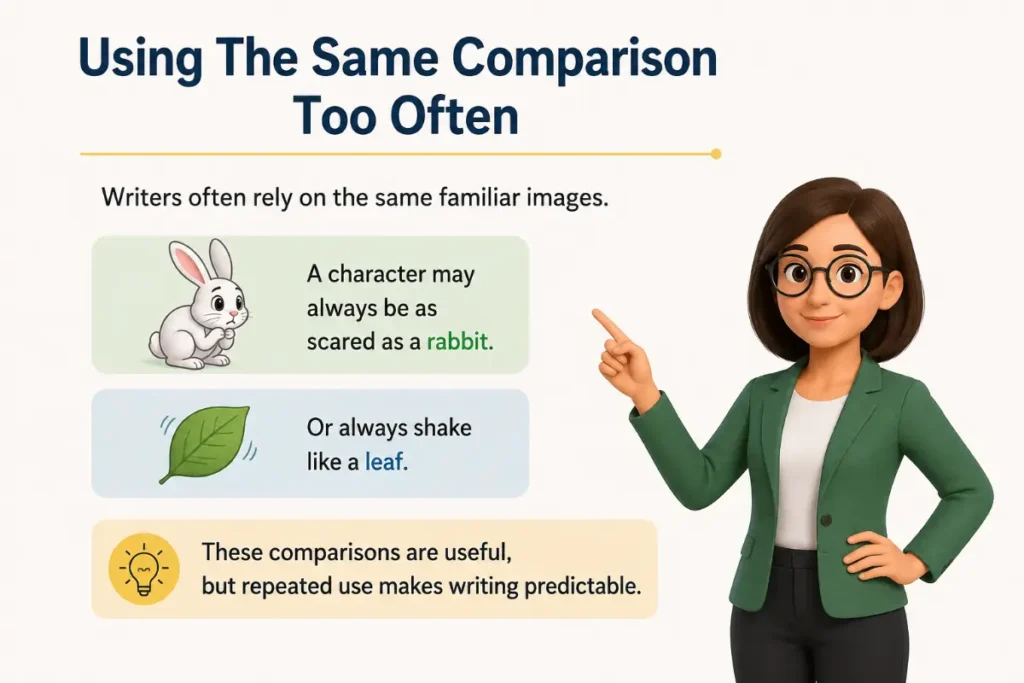
Using The Same Comparison Too Often
Writers often rely on the same familiar images.
A character may always be as scared as a rabbit or always shake like a leaf.
These comparisons are useful but repeated use makes writing predictable.
Try changing the image according to the situation.
Choosing An Image That Does Not Match The Emotion
A simile should make sense.
If your character feels mildly nervous before a presentation then comparing the feeling to being trapped in a burning building may be too extreme.
Match the strength of the image with the strength of the emotion.
Making The Simile Too Complicated
A comparison should help the reader rather than make them stop and decode it.
Simple images often work best.
His hands shook like leaves in the wind.
The reader understands it immediately.
Mixing Multiple Comparisons
Avoid piling several unrelated images into one sentence.
For example:
She was like a bird and a storm and a frozen statue and a racing horse.
That becomes distracting.
Choose one strong image and let it do the work.
Using A Simile Without Explaining The Character
A simile is strongest when it connects to an action or physical detail.
Instead of:
He was like a frightened bird.
Try:
He backed toward the wall like a frightened bird searching for a place to hide.
The added action makes the image more useful.
Memory Tips
The easiest way to remember strong fear similes is to think about five physical reactions.
Shake.
Think of leaves branches feathers and loose objects.
Race.
Think of drums footsteps runners and waves.
Freeze.
Think of statues ice photographs and locked doors.
Escape.
Think of birds rabbits horses and swimmers.
Hide.
Think of mice shadows small animals and people behind closed doors.
These five ideas can help you create fresh comparisons whenever you need them.
You can also remember a simple formula.
Character reaction + like or as + vivid image.
For example:
Her hands shook like leaves in the wind.
His heart raced like a drum in a quiet room.
She stood as still as a statue.
He ran like a rabbit escaping a fox.
This formula gives you a starting point without forcing you to copy a fixed phrase.
Related Grammar And Usage Notes
A simile usually uses like or an as…as structure to create a comparison.
The like structure is straightforward.
He ran like a frightened rabbit.
The as…as structure uses an adjective or participle between the two as words.
She was as nervous as a bird in a storm.
The two structures can both create effective comparisons.
A useful distinction is that a simile makes the comparison explicit. A metaphor usually states the comparison more directly.
For example:
Her hands shook like leaves.
This is a simile.
Her hands were leaves in the storm.
This is a metaphor.
The first tells the reader that the two things are being compared. The second presents one thing as another.
Simile Or Metaphor
Both can describe fear.
He was as nervous as a cat near a strange dog.
This is a simile.
Fear was a shadow behind him.
This is a metaphor.
Use a simile when you want the comparison to feel clear and direct. Use a metaphor when you want the image to feel stronger or more symbolic.
Simile Or Idiom
A simile creates a comparison.
An idiom is an established expression whose meaning may not be obvious from its individual words.
For example:
She was as scared as a rabbit.
This is a simile.
He had butterflies in his stomach.
This is an idiomatic expression for nervousness.
Both can make writing more expressive but they work differently.
How Writers Can Make Fear Feel Real
Strong fear writing does not depend on dramatic vocabulary alone. Specific details usually do more work.
Instead of writing:
She was extremely scared.
Show what fear did to her.
Her fingers shook as she reached for the door handle.
Then add a fitting comparison.
Her fingers shook like leaves in a cold wind.
Now the reader sees the fear.
You can also describe breathing.
He breathed like someone who had just finished a race.
Or movement.
She moved like a rabbit crossing an open field.
Or silence.
He became as quiet as a room after midnight.
The key is observation. Think about how fear changes the body and behavior. Then compare that reaction with something readers already understand.
How To Use These Similes In School Writing
Students often need vivid language for stories essays and descriptive paragraphs.
The safest approach is to choose a simple comparison that directly supports the scene.
For example:
The boy was as nervous as a student waiting outside the principal’s office.
This is easy to understand and fits a school setting.
For creative writing you can use more imaginative comparisons.
Her fear moved through her like cold water beneath a door.
The image is less literal and creates a stronger atmosphere.
Don’t add a simile just because an assignment asks for figurative language. Make sure it adds something.
A good simile should help the reader see hear or feel the moment.
How To Use Similes In Professional Writing
Formal writing usually needs restraint.
A creative story may benefit from several vivid comparisons. A business report usually doesn’t need them.
For professional communication a simple comparison can sometimes clarify an idea.
For example:
The team entered the meeting as nervous as students before a difficult exam.
That could work in a personal article or speech.
However a formal report may simply say:
The team entered the meeting with visible nervousness.
The right choice depends on the purpose of the writing.
Figurative language is most effective when it serves the reader.
Key Takeaways
- A simile compares one thing with another using words such as like or as.
- Fear can be described through physical reactions such as shaking freezing breathing quickly and wanting to escape.
- The strongest comparisons create a clear picture rather than simply adding dramatic words.
- Match the intensity of the simile with the intensity of the fear.
- Use different images when describing different kinds of fear.
- Avoid repeating the same rabbit leaf or deer comparison throughout a piece of writing.
- Keep your comparisons simple enough for the reader to understand immediately.
- Connect the simile with an action or physical detail whenever possible.
- Use gentle comparisons for mild nervousness and stronger images for intense fear.
- The best simile feels natural inside the sentence rather than looking like decoration.
Conclusion
Similes for Being Scared help writers turn an invisible emotion into a vivid, relatable image. Instead of simply telling readers that someone feels frightened, you can show fear through trembling hands, a racing heart, frozen movements, or an overwhelming urge to escape.
The best comparisons are specific and fit the scene. A trembling leaf can describe someone shaking with fear. A pounding drum can represent a racing heart, while ice or a statue can show someone frozen in terror. A frightened bird or rabbit can capture the instinct to flee from danger.
Avoid forcing a dramatic comparison into every sentence. Choose an image that suits the character, setting, and intensity of the moment. When a simile feels natural, readers won’t just understand the fear. They’ll feel it.
FAQs
What Are Similes for Being Scared?
Similes for being scared are comparisons that help readers visualize fear and understand how it feels. They often use the words like or as to connect an emotion with a familiar image. For example, someone might be described as as still as a statue or like a deer caught in headlights. These comparisons make descriptions of fear more vivid, expressive, and memorable.
What Is a Good Simile for Being Scared?
A good simile for being scared is like a deer caught in headlights. It describes someone who feels so frightened or shocked that they freeze in place. Another example is as scared as a rabbit sensing danger. The best simile depends on the situation and whether you want to express sudden fright, nervousness, or deep fear.
What Is a Simile for Extreme Fear?
A powerful simile for extreme fear is like a small boat tossed around by towering waves. This comparison suggests that someone feels helpless and overwhelmed by a frightening situation. Other comparisons involving a person trapped in darkness or caught in a violent storm can also convey intense fear and vulnerability.
What Is a Simile for Being Nervous?
A useful simile for nervousness is as nervous as a student waiting for an important exam. It captures the worry and uncertainty someone may feel before a challenging event. Other examples include like a runner waiting for the starting signal and as tense as a guitar string pulled too tight. These comparisons help readers imagine the physical and emotional effects of nervousness.
What Is a Simile for a Racing Heart?
A racing heart can be compared to a drum beating rapidly inside a silent room. This image suggests that the heartbeat feels loud and impossible to ignore. Another option is like a horse galloping at full speed, which emphasizes the rapid rhythm of a frightened person’s heartbeat.
What Is a Simile for Shaking With Fear?
A common simile for trembling with fear is as shaky as a leaf in the wind. It compares a person’s trembling to the movement of a leaf caught in a breeze. You could also describe someone as like a candle flame flickering in a draft to suggest delicate, uncontrollable shaking.
Can a Simile Describe Mild Fear?
Yes. Similes can describe mild fear, uneasiness, or uncertainty without suggesting extreme terror. For example, someone might feel as uneasy as a traveler in an unfamiliar city. This comparison conveys discomfort and uncertainty rather than overwhelming panic. Mild fear similes are useful when a character feels apprehensive about an unfamiliar situation.
Can I Use These Similes in Creative Writing?
Yes. Similes for fear are useful in short stories, poems, personal essays, descriptive assignments, and other forms of creative writing. Choose a comparison that matches the character’s emotions and the atmosphere of the scene. For a stronger effect, connect the simile to a physical reaction, such as trembling hands, a racing heartbeat, or frozen movements.
What Is the Difference Between a Simile and a Metaphor?
A simile compares two things using words such as like or as, while a metaphor describes one thing as another without making the comparison explicit.
- Simile: “She shook like a leaf.”
- Metaphor: “Fear was a storm inside her.”
Both literary devices make descriptions more vivid, but they create different effects. Similes make the comparison explicit, while metaphors present the comparison more directly.
How Do I Make a Fear Simile More Original?
To create an original simile, focus on the character’s specific reaction rather than simply describing them as scared. If the character is trembling, think of things that shake uncontrollably. If they freeze, consider objects that remain completely still. Then choose an image that fits the setting and mood. Fresh, detailed comparisons often make writing more engaging than familiar expressions.
What Are Some Simple Similes for Being Scared?
Here are some easy-to-understand similes that work well in school assignments, stories, and everyday writing:
- As still as a statue — describes someone frozen with fear.
- Like a rabbit hiding from a fox — suggests fear of approaching danger.
- As shaky as a leaf in the wind — describes trembling.
- Like a bird trapped indoors — conveys panic and helplessness.
- As nervous as a student before an exam — expresses worry and anticipation.
- Like a deer caught in headlights — describes sudden fear and shock.
These simple comparisons help readers picture different kinds of fear, from mild nervousness to sudden panic.

Idioms, Expressions & Figurative Language
Mason Ellsworth is an American language writer with a passion for English expressions, figurative language, and everyday communication. He explains idioms, similes, popular phrases, and commonly misunderstood expressions in a straightforward, engaging style that helps readers improve both their writing and spoken English.