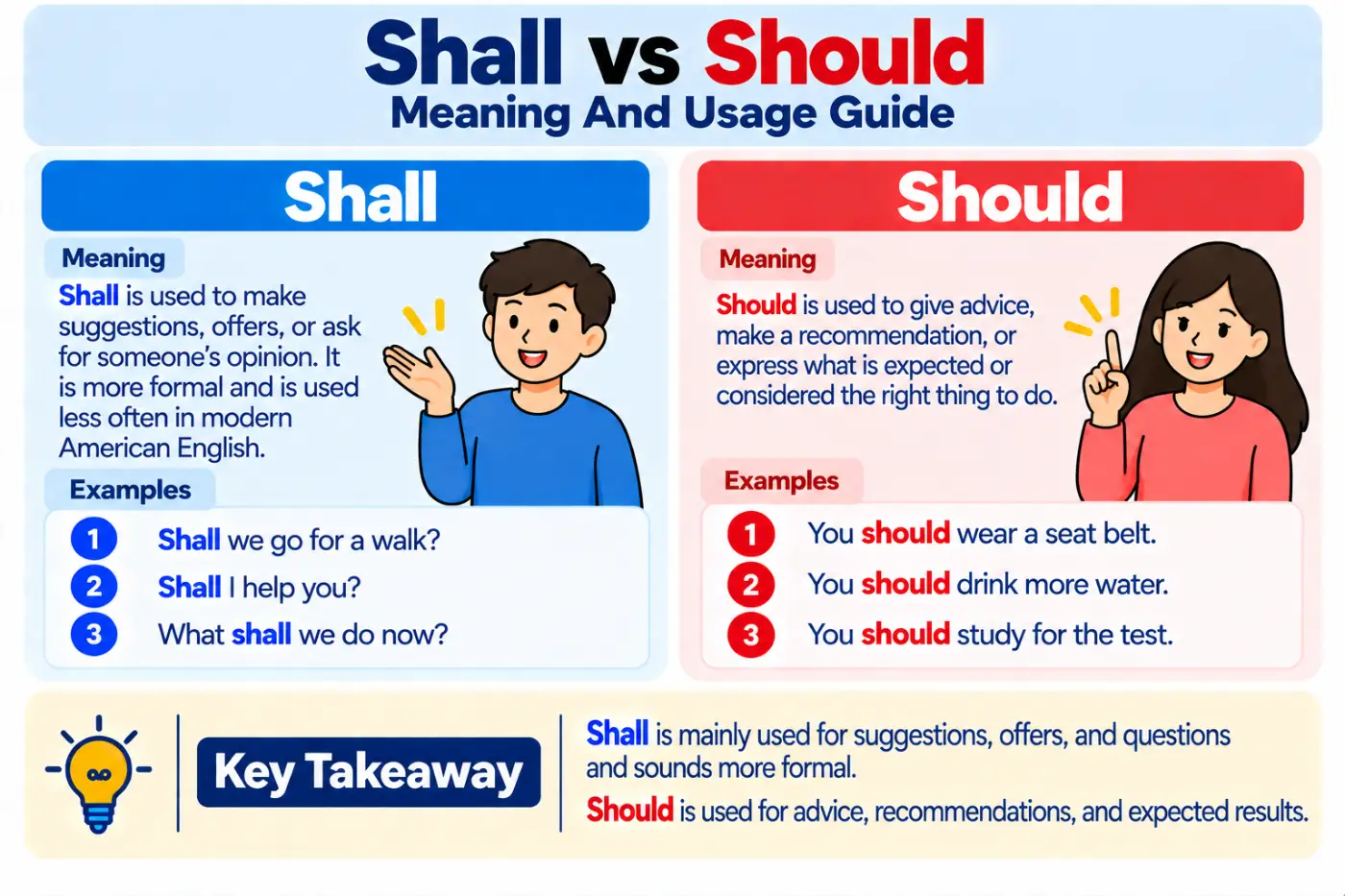
Shall Vs Should Meaning And Usage Guide

Shall Vs Should Meaning And Usage Guide

Shall vs should can be confusing because both words belong to the same family of modal verbs and both can relate to future actions. They can also appear in formal rules reported speech questions and conditional sentences. The difference becomes much easier once you focus on the speaker’s purpose. Shall commonly points to a future … Read more

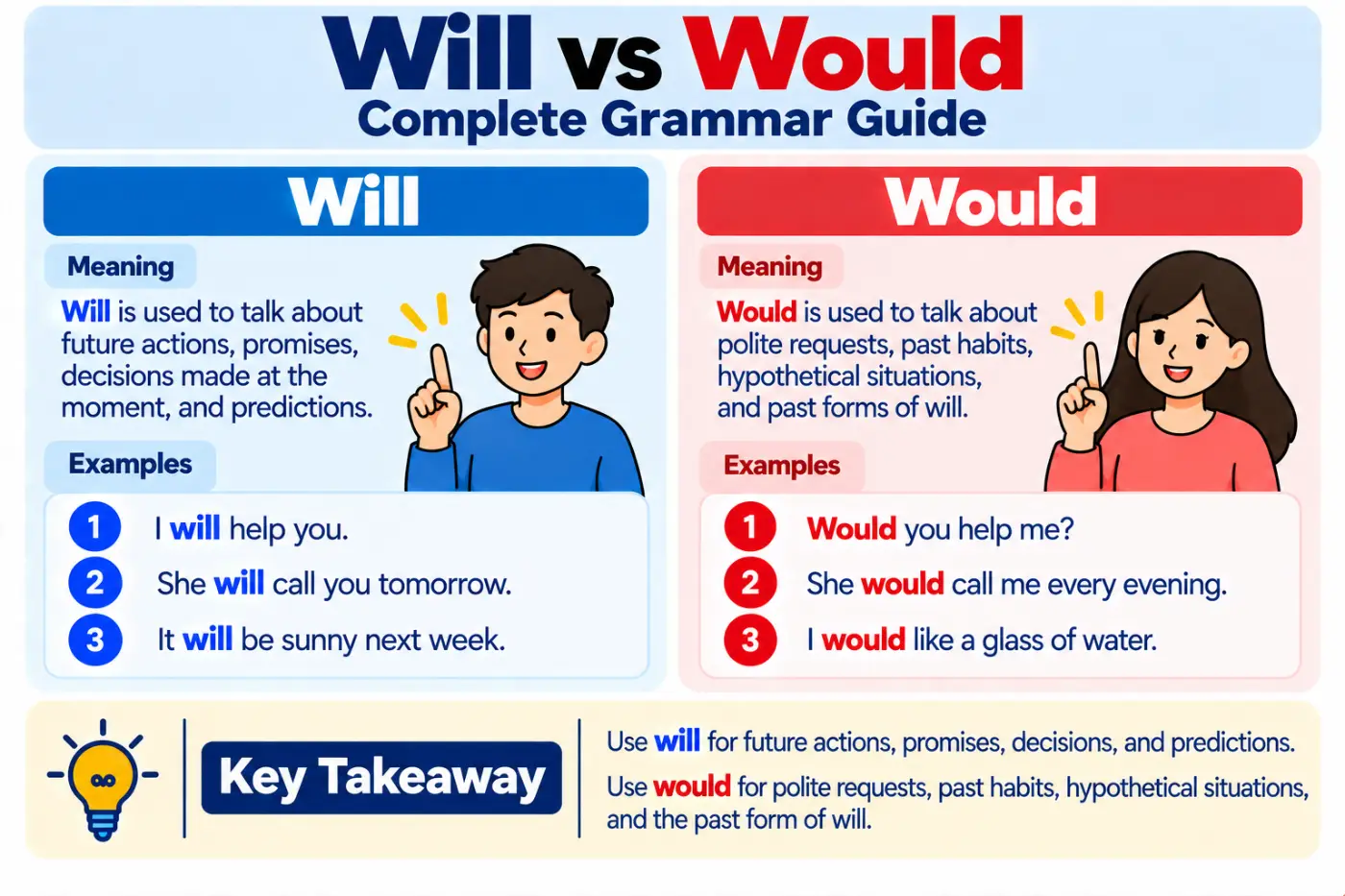
Will vs Would Complete Grammar Guide

Will vs Would Complete Grammar Guide

Will vs would can confuse even strong English learners because both modal verbs connect to the future and both can appear in conditional sentences. The difference becomes clearer when you look at what the speaker means. Will generally points toward a future action or shows a firm decision. Would creates more distance and often makes … Read more

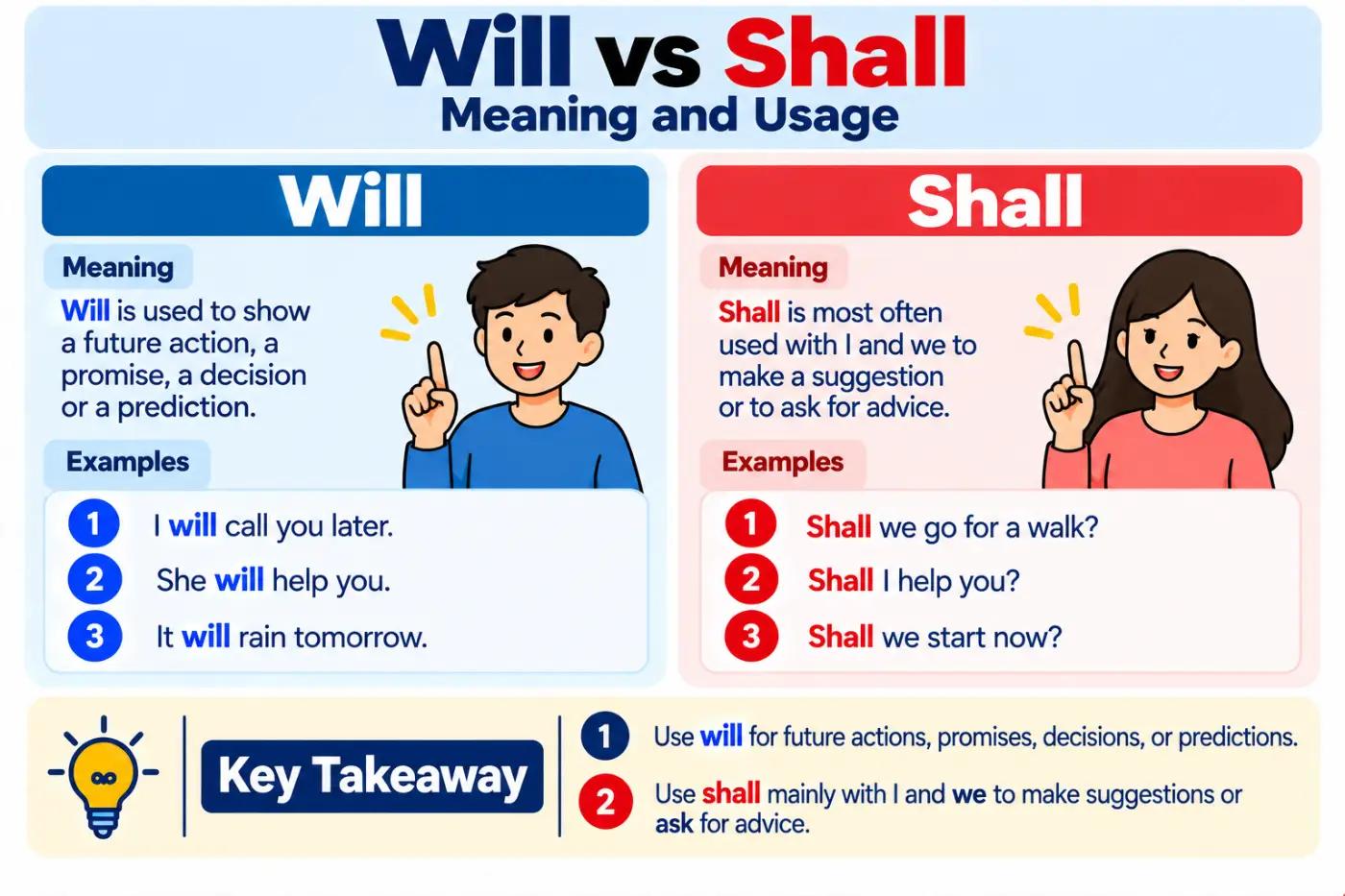
Will vs Shall Meaning and Usage

Will vs Shall Meaning and Usage

Will vs shall can seem confusing because both modal verbs can talk about the future. In modern American English, will is the normal choice in most statements about future events. You can say I will call you tomorrow or She will arrive at six. You usually don’t need shall in these situations. Still, shall hasn’t … Read more

Must vs Should Meaning and Usage Guide

Must vs Should Meaning and Usage Guide

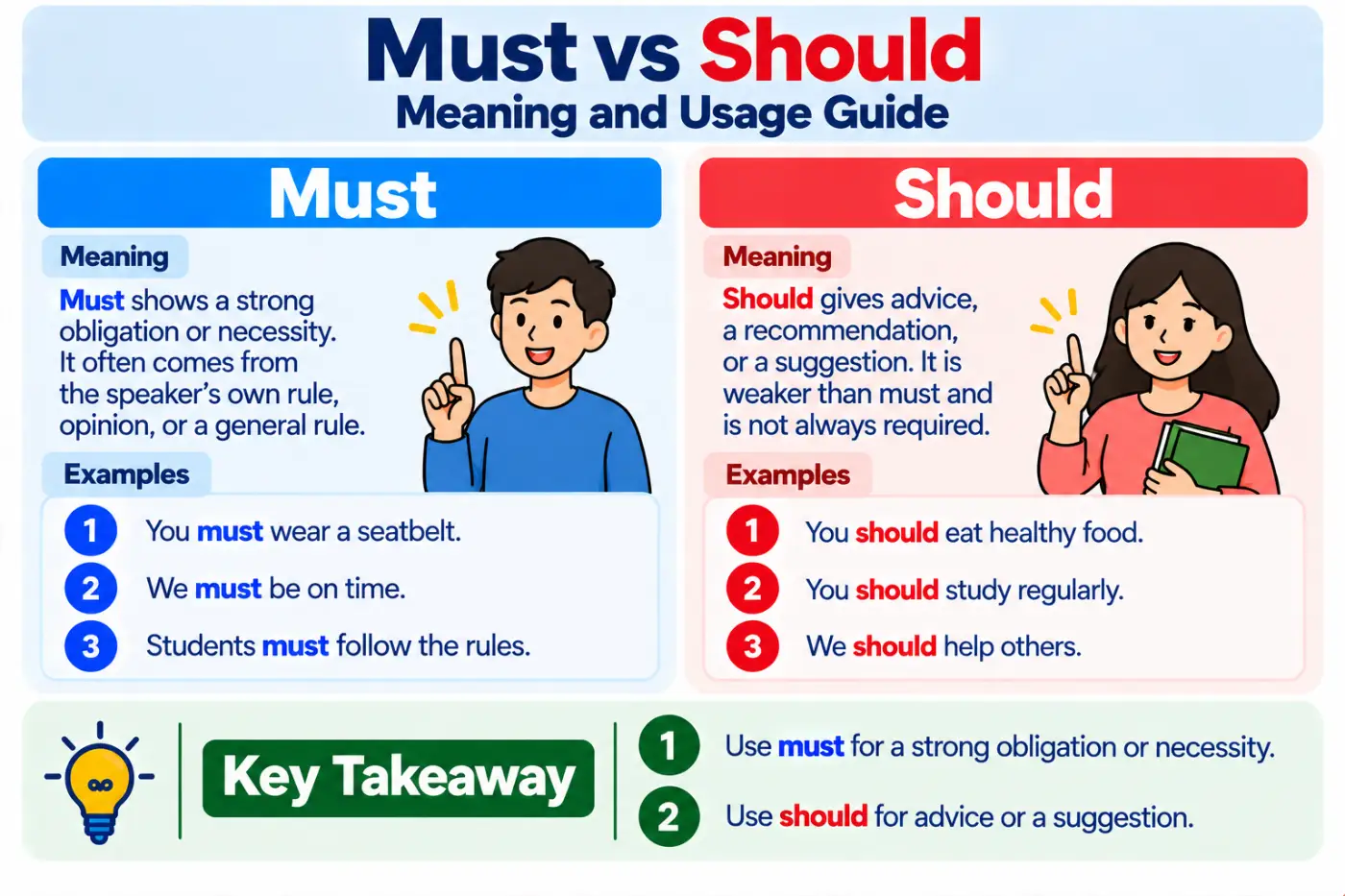
Must vs should can confuse English learners because both modal verbs can tell someone what to do. The difference becomes clear when you look at the strength and source of the idea. Must usually presents something as necessary or required. Should usually presents something as a good idea expected action or reasonable choice. Think of … Read more

Must vs Have to Meaning and Usage Guide

Must vs Have to Meaning and Usage Guide

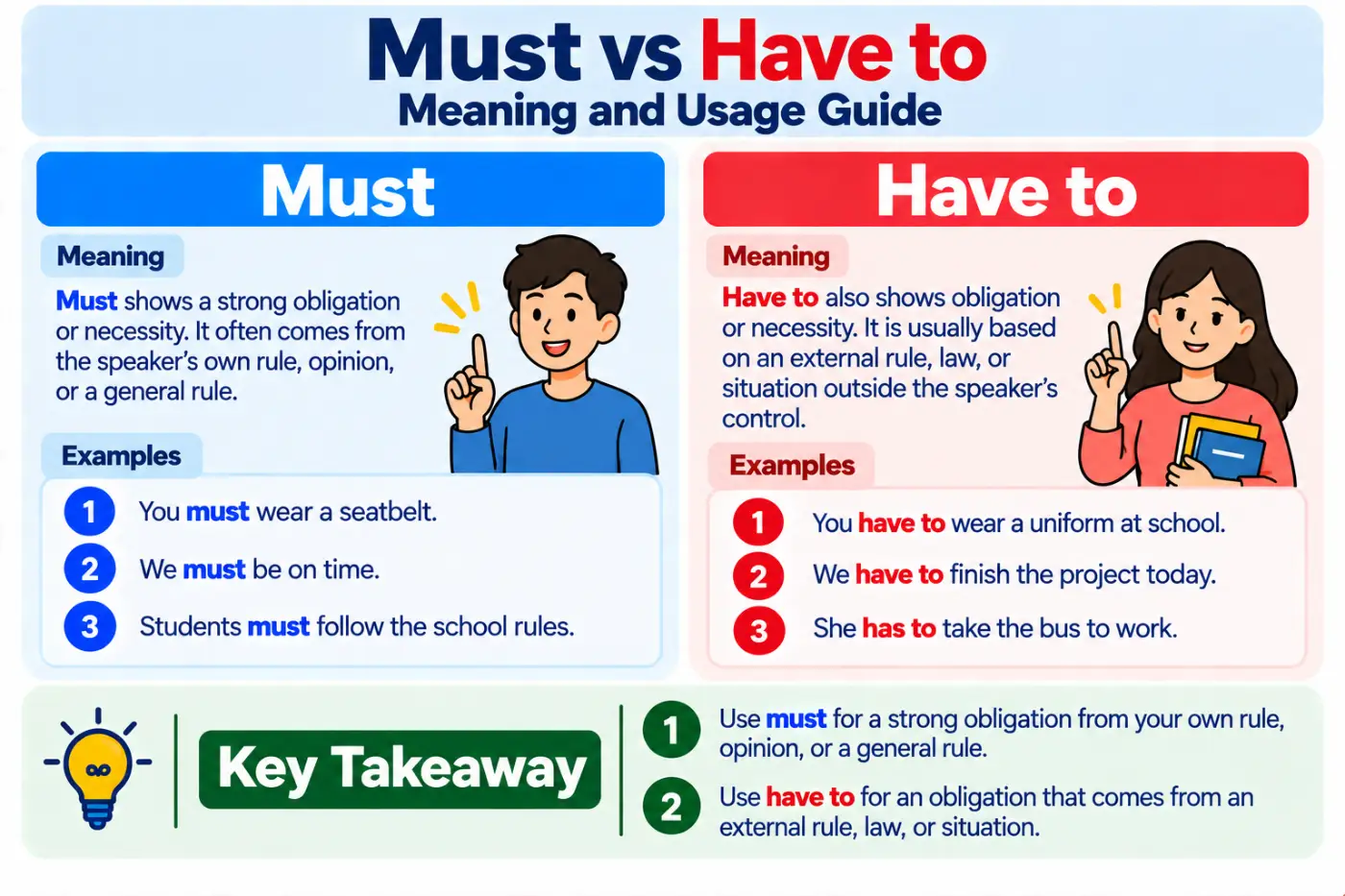
Must vs have to is one of the most common grammar questions for English learners because both forms can express necessity. You can use either form in many situations and still communicate the basic idea correctly. The difference becomes clearer when you look at where the obligation comes from and how the speaker presents it. … Read more

Could vs Would Explained With Clear Examples

Could vs Would Explained With Clear Examples

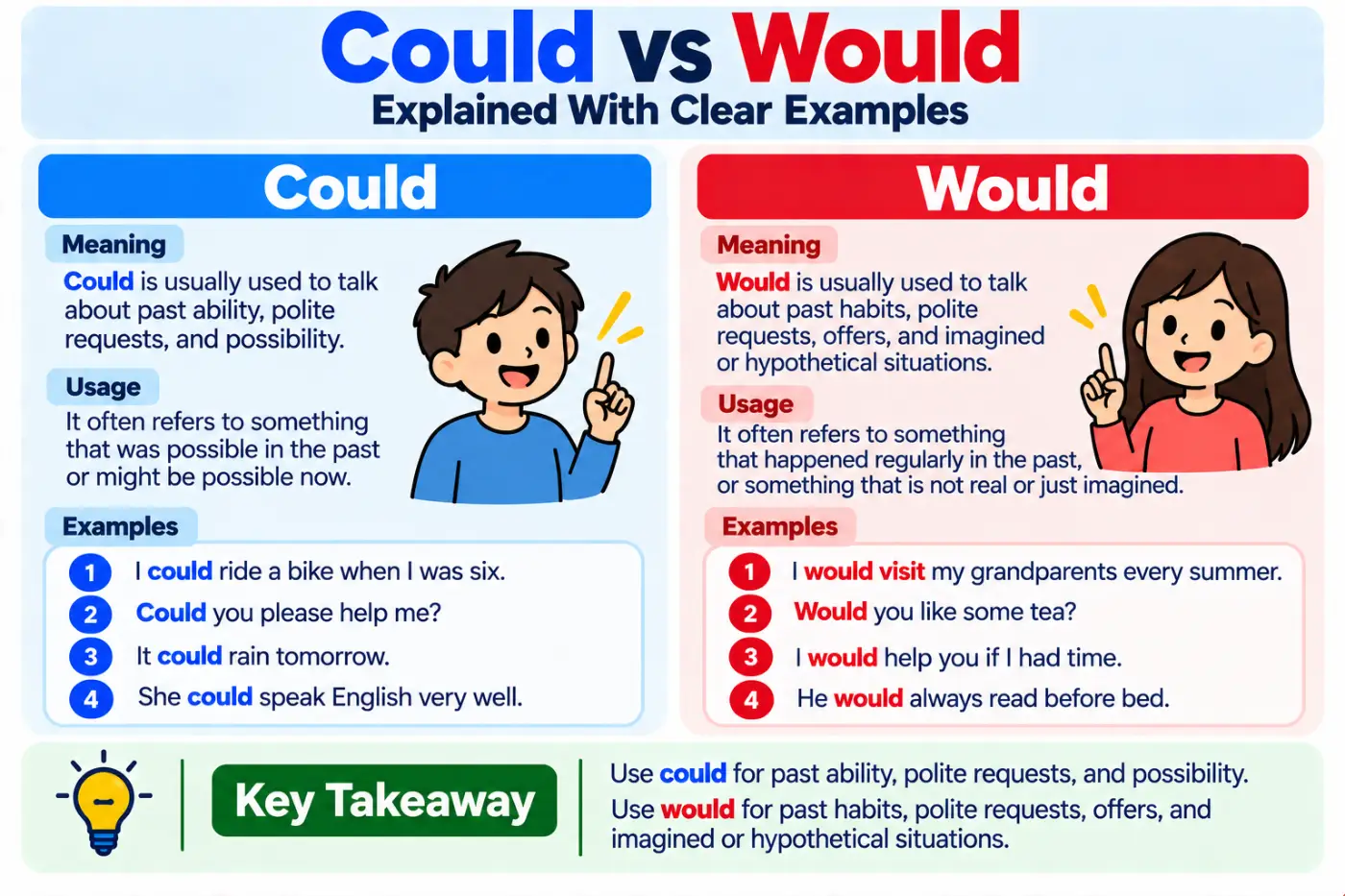
Could vs would becomes much easier once you focus on the meaning behind each modal verb. Could commonly connects to ability, possibility, permission, and polite requests. Would commonly connects to willingness, preferences, imagined results, polite offers, and repeated past actions. Both words are modal verbs. They work with the base form of another verb and … Read more

Could vs Can Explained With Examples

Could vs Can Explained With Examples

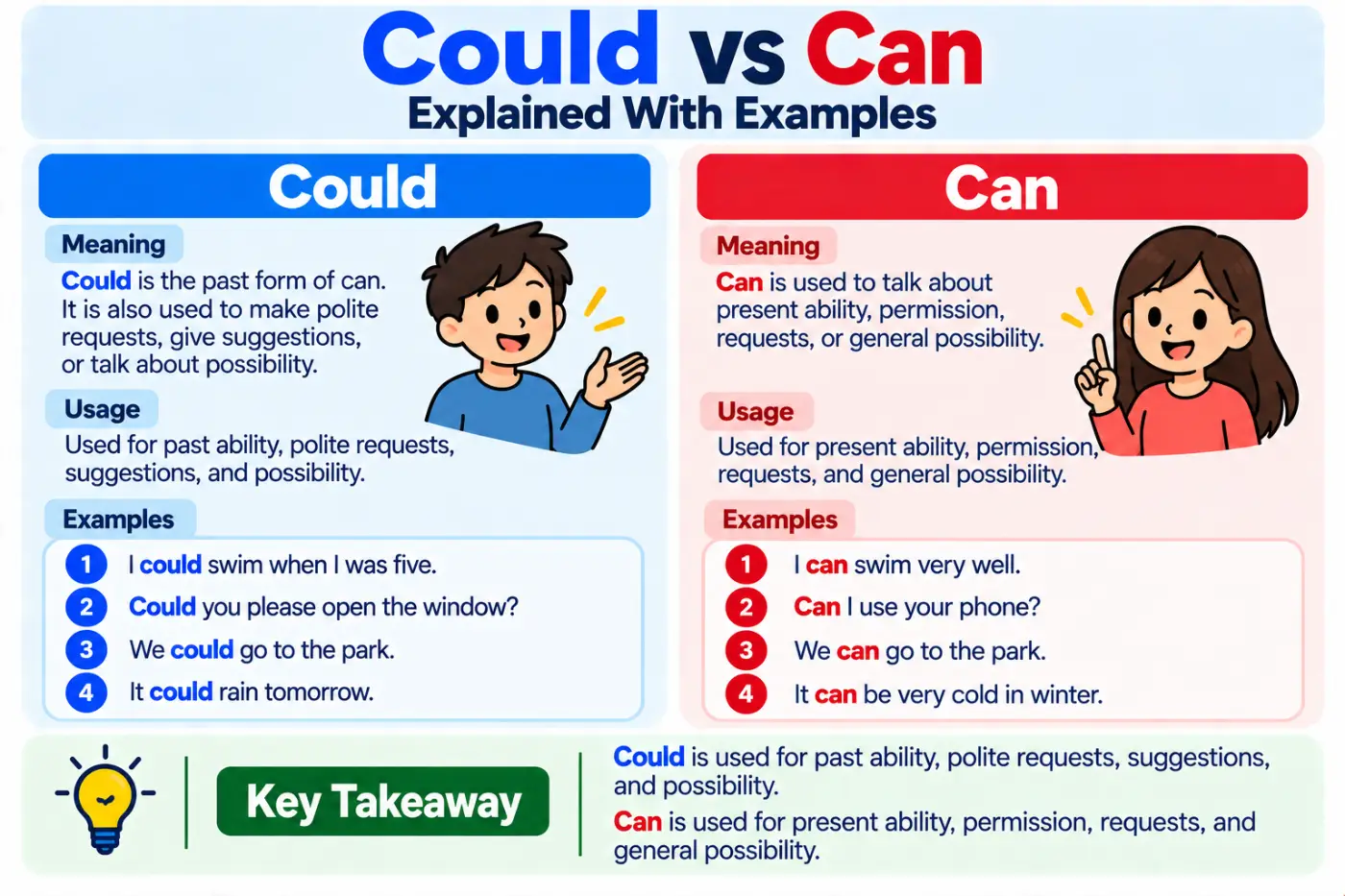
Could vs can often confuses English learners because both words talk about ability, possibility, and requests. The difference becomes much clearer when you focus on time, certainty, and politeness. Can usually sounds more direct and certain. Could often moves the meaning into the past or makes a statement softer and less certain. Native speakers use … Read more

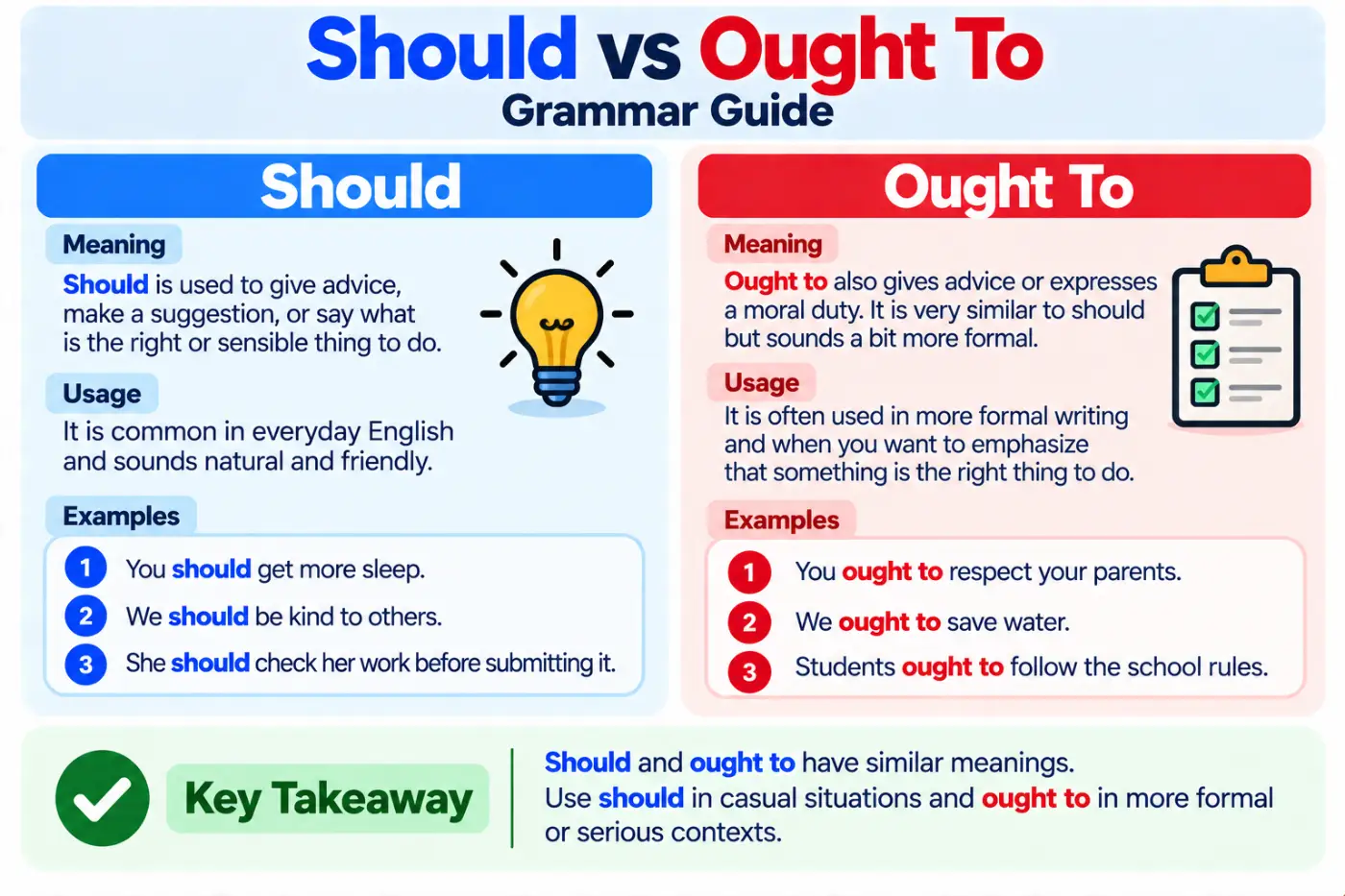
Should vs Ought To Grammar Guide

Should vs Ought To Grammar Guide

Should vs ought to can confuse English learners because both forms can express advice, expectation, duty, and a sense that something is the right thing to do. In many sentences, you can replace one with the other without changing the basic meaning. The difference usually comes from tone, frequency, and sentence structure rather than a … Read more

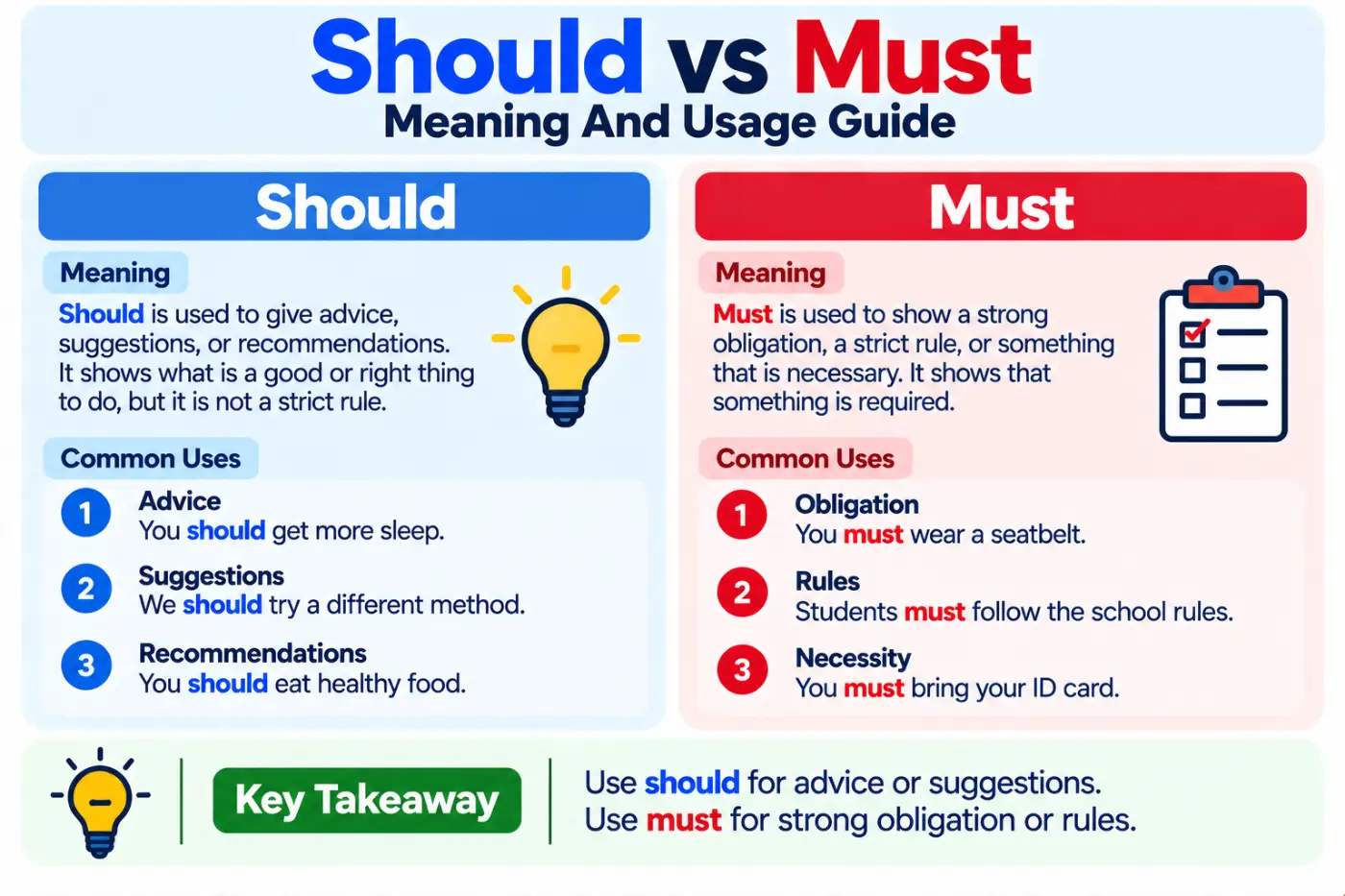
Should vs Must Meaning And Usage Guide

Should vs Must Meaning And Usage Guide

Should vs must often confuses English learners because both modal verbs can talk about actions that need to happen. The difference lies mainly in strength and meaning. Should usually tells someone what is advisable or expected. Must usually tells someone what is necessary or required. The choice becomes easier when you focus on the speaker’s … Read more