
Tree Similes can turn an ordinary description into something readers can see and feel. Instead of saying that a tree was tall you might say it stood like a tower above the quiet field. Instead of calling its branches strong you might describe them as arms holding up the sky.
Trees offer endless possibilities for comparison because they change with the seasons and appear in so many forms. A young sapling can look delicate like a candle flame while an ancient oak can stand like a weathered guardian. A tree covered in autumn leaves can glow like a sunset and bare winter branches can look like dark fingers against a pale sky.
The best comparisons do more than make a sentence colorful. They communicate a specific quality. A comparison can suggest strength age beauty loneliness movement danger comfort or even mystery.
This collection gives you more than 120 original examples organized by meaning. Each one includes a short explanation so you can understand why the comparison works and how to use it naturally in your own writing.
Short Answer
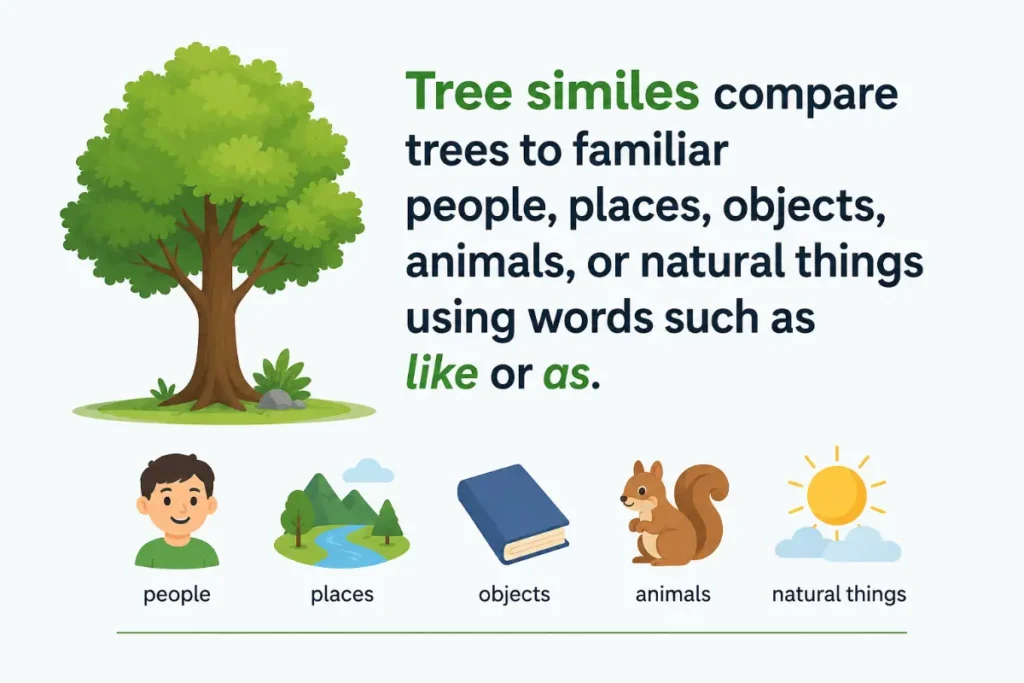
Tree similes compare trees to familiar people places objects animals or natural things using words such as like or as. They can show height strength age beauty movement color or mood. A strong comparison helps readers picture a tree instead of simply being told that it is tall old beautiful or strong.
Table Of Contents
- What Tree Similes Mean.
- Why Writers Use Tree Similes.
- How To Write A Strong Tree Simile.
- Tree Similes About Height.
- Tree Similes About Strength.
- Tree Similes About Age.
- Tree Similes About Beauty.
- Tree Similes About Leaves.
- Tree Similes About Branches.
- Tree Similes About Roots.
- Tree Similes About Movement.
- Tree Similes About Seasons.
- Tree Similes About Forests.
- Tree Similes About Mood.
- Tree Similes For Creative Writing.
- Tree Similes For Children.
- Common Mistakes.
- Memory Tips.
- Related Usage Notes.
- FAQs.
- Key Takeaways.
- Conclusion.
What Tree Similes Mean
A simile is a comparison between two different things that share a particular quality. English commonly uses like or as to make the comparison clear.
For example:
The tree was like a giant umbrella.
The comparison connects the tree’s wide canopy with an umbrella. The reader immediately gets an idea of its shape.
A simile doesn’t say that the tree literally is an umbrella. It uses the familiar image of an umbrella to help the reader picture the tree.
This makes similes especially useful in descriptive writing. A plain statement gives information. A well chosen comparison gives the reader an image.
Consider these two sentences.
The tree was very old.
The tree stood like a silent grandfather who had watched generations grow.
The second sentence creates a stronger emotional picture. It suggests age wisdom patience and history without explaining each quality separately.
Why Writers Use Tree Similes
Trees are excellent subjects for figurative language because they have recognizable shapes textures colors and behaviors.
A writer can compare a tall tree with a tower. A spreading canopy can resemble an umbrella. Twisted branches can look like reaching hands. Roots can resemble gripping fingers. Autumn leaves can shine like coins.
The comparison also depends on the mood of the passage.
A peaceful scene might use a comparison such as:
The tree rested like a quiet guardian beside the pond.
A frightening scene might use:
The bare branches reached like crooked fingers into the fog.
The tree hasn’t changed completely. The comparison changes the way the reader experiences it.
That is the real strength of a simile. It gives a familiar subject a fresh personality.
How To Write A Strong Tree Simile
A useful simile starts with the quality you want to show.
Ask yourself what the tree is doing or what you want the reader to notice.
Is it tall.
Is it moving in the wind.
Once you know the quality choose something familiar that shares that quality.
For height you might compare a tree to a tower.
For beauty you might compare its blossoms to stars.
The strongest comparisons feel natural. They don’t need complicated vocabulary or several ideas packed into one sentence.
Tree Similes About Height
Tall trees naturally invite comparisons with towers mountains buildings and other vertical objects.
1. The tree stood like a tower above the field.
This emphasizes impressive height.
2. The pine rose like a green spear toward the sky.
The spear comparison highlights the tree’s narrow upward shape.
3. The tree stretched like a skyscraper above the smaller plants.
This gives the tree a huge urban scale.
4. The oak towered like a castle wall over the garden.
The comparison suggests both height and strength.
5. The cedar climbed like a ladder toward the clouds.
This creates an image of steady upward growth.
6. The tree reached like a mountain peak into the blue sky.
The comparison emphasizes its enormous height.
7. The poplar stood like a tall candle beside the road.
The narrow shape makes the candle image effective.
8. The tree rose like a flagpole from the center of the field.
This highlights its straight vertical form.
9. The giant redwood stood like a column beneath the clouds.
The column comparison suggests great height and solid structure.
10. The tree looked like a green tower from across the valley.
This shows how tall it appears from a distance.
Tree Similes About Strength
Trees can symbolize endurance because their trunks and roots hold them in place through changing conditions.
11. The oak stood like an iron pillar in the storm.
This emphasizes strength and stability.
12. The old tree held its ground like a soldier.
The comparison suggests courage and endurance.
13. The trunk was as solid as a stone wall.
This focuses on the trunk’s sturdy appearance.
14. The roots gripped the earth like strong hands.
The comparison gives the roots a sense of power.
15. The tree stood like a fortress against the wind.
The fortress image suggests protection and resistance.
16. The cedar was as sturdy as a bridge.
This highlights structural strength.
17. The branches stretched like strong arms above the house.
The arms suggest both strength and protection.
18. The tree held the hillside like a giant anchor.
The anchor comparison emphasizes stability.
19. The old oak stood like a shield against the winter wind.
The shield suggests protection.
20. The trunk was as tough as an old wooden beam.
This creates a practical and familiar image.
Tree Similes About Age
Old trees can suggest history wisdom patience and survival.
21. The oak stood like an old grandfather in the yard.
The comparison suggests age and quiet dignity.
22. The tree looked as ancient as a forgotten monument.
This emphasizes its great age.
23. Its trunk was as wrinkled as an old man’s hands.
The bark is compared with wrinkled skin.
24. The tree stood like a silent witness to generations.
The comparison suggests that it has remained while people have changed.
25. The ancient cedar looked like a storyteller who had lost his voice.
This gives the tree a mysterious personality.
26. Its bark was as weathered as an old wooden door.
The comparison focuses on age and exposure.
27. The oak stood like a relic from another age.
This makes the tree feel distant in time.
28. Its branches spread like the arms of an Aging guardian.
The comparison combines age with protection.
29. The ancient tree looked as patient as a stone statue.
This emphasizes stillness and endurance.
30. The tree stood like a keeper of forgotten memories.
The image suggests history without stating it directly.
Tree Similes About Beauty
Trees can become powerful images of beauty when their flowers leaves or shape catch the light.
31. The flowering tree looked like a cloud of pink stars.
This creates a delicate image of blossoms.
32. The cherry tree was as beautiful as a spring painting.
The comparison emphasizes seasonal beauty.
33. The blossoms shone like tiny pearls against the branches.
The pearls suggest delicacy and brightness.
34. The tree looked like a crown covered in flowers.
This focuses on the beauty of the canopy.
35. The leaves sparkled like green jewels after the rain.
The comparison highlights droplets and sunlight.
36. The tree stood like a sculpture in the middle of the garden.
This emphasizes its shape.
37. The blossoms were like little stars scattered across the branches.
The star comparison suggests brightness and abundance.
38. The tree looked as graceful as a dancer in a quiet room.
The comparison focuses on its shape and balance.
39. The canopy spread like a painted ceiling above the path.
This creates a strong visual image.
40. The tree glowed like a lantern beneath the evening sky.
The comparison suggests warmth and beauty.
Tree Similes About Leaves
Leaves offer some of the richest possibilities for comparison because they change color move in the wind and fall with the seasons.
41. The leaves fluttered like tiny birds.
This emphasizes light movement.
42. The green leaves were as fresh as morning rain.
The comparison suggests freshness.
43. The autumn leaves glowed like pieces of fire.
This emphasizes bright orange and red colors.
44. The leaves fell like golden confetti.
The comparison creates a festive image.
45. The leaves danced like children in the wind.
This gives the movement a playful quality.
46. The leaves rustled like whispers in the dark.
The comparison focuses on sound.
47. The leaves shimmered like silk in the sunlight.
This emphasizes smooth movement and brightness.
48. The brown leaves scattered like scraps of paper across the ground.
This creates a more ordinary autumn image.
49. The leaves trembled like nervous hands.
The comparison creates a sense of uncertainty.
50. The green canopy looked like a sea of leaves.
The sea image emphasizes size and movement.
Tree Similes About Branches
Branches can look like arms fingers roads rivers or veins depending on their shape.
51. The branches reached like open arms.
This creates a welcoming image.
52. The bare branches looked like crooked fingers.
The comparison works especially well in dark or winter scenes.
53. The branches spread like veins across the sky.
This highlights their intricate structure.
54. The limbs twisted like ropes around the trunk.
The comparison emphasizes unusual shapes.
55. The branches stretched like arms over the pond.
The arms suggest protection.
56. The thin branches were as delicate as spider webs.
This emphasizes their fragile appearance.
57. The branches pointed like arrows toward the clouds.
The comparison focuses on direction.
58. The limbs curved like old wooden bridges.
This highlights their unusual shape.
59. The branches moved like dancers in the wind.
The comparison gives them graceful motion.
60. The tree’s limbs spread like a giant hand across the field.
This creates a strong image of width.
Tree Similes About Roots
Roots usually stay hidden but they can create powerful comparisons when exposed.
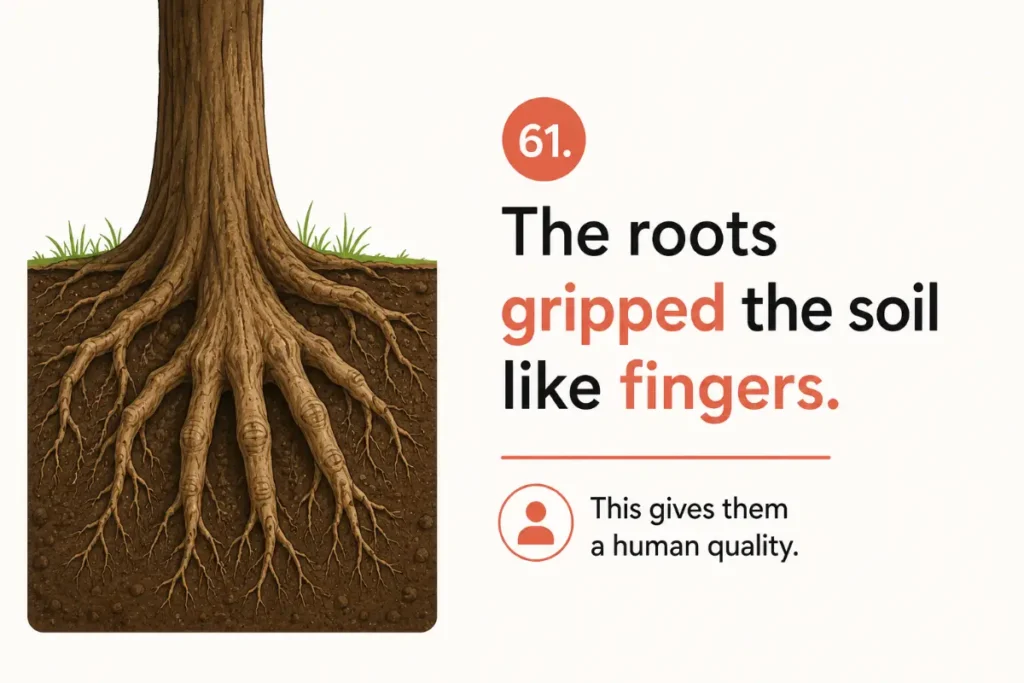
61. The roots gripped the soil like fingers.
This gives them a human quality.
62. The roots spread like underground rivers.
The comparison emphasizes their hidden reach.
63. The exposed roots curled like sleeping snakes.
The snake image highlights their twisting shape.
64. The roots clung to the cliff like climbers holding a rope.
This emphasizes their grip.
65. The roots ran beneath the ground like tangled threads.
The comparison suggests complexity.
66. The old roots looked like knotted hands.
This works well for ancient trees.
67. The roots held the earth like a net.
The net comparison suggests a wide underground structure.
68. The roots stretched like buried branches beneath the soil.
This shows how roots mirror the visible structure.
69. The roots twisted like ropes around the rocks.
The comparison emphasizes strength and shape.
70. The roots anchored the tree like chains holding a ship.
The ship comparison highlights stability.
Tree Similes About Movement
Trees don’t walk but their leaves branches and crowns can appear to move dramatically.
71. The tree swayed like a boat on the waves.
This gives its movement a gentle rhythm.
72. The branches waved like dancers greeting a crowd.
The comparison creates lively movement.
73. The leaves shook like tiny bells in the wind.
The image combines movement with sound.
74. The tree bent like a bow beneath the storm.
The comparison emphasizes flexibility.
75. The branches danced like ribbons in the breeze.
This creates a light graceful image.
76. The leaves spun like coins in the air.
The comparison highlights quick movement.
77. The young tree trembled like a child in the cold.
This gives the movement an emotional quality.
78. The tall pines swayed like sailors on a rolling deck.
The comparison suggests rhythmic movement.
79. The branches rocked like arms at a concert.
This creates a lively modern image.
80. The canopy moved like a dark wave beneath the wind.
The comparison emphasizes broad movement.
Tree Similes About Seasons
Seasonal changes give writers a chance to compare trees with colors objects moods and scenes.
81. The spring tree bloomed like a garden waking from sleep.
This suggests renewal.
82. The blossoms appeared like stars after sunset.
The comparison emphasizes sudden beauty.
83. The summer tree stood like a green umbrella.
The broad canopy creates the image.
84. The autumn oak burned like a torch of red and gold.
The comparison emphasizes intense color.
85. The autumn leaves fell like warm colored snow.
This combines a winter image with autumn colors.
86. The winter tree stood like a skeleton against the sky.
The comparison emphasizes bare branches.
87. The frosted branches glittered like silver wires.
This highlights ice and light.
88. The spring leaves opened like small green hands.
The comparison suggests growth.
89. The summer canopy was as thick as a green blanket.
The blanket image suggests shade and comfort.
90. The winter branches looked like black lace against the clouds.
The comparison emphasizes their intricate pattern.
Tree Similes About Forests
A single tree can be striking but a group of trees creates an entirely different scene.
91. The forest stood like an army along the mountain.
The comparison emphasizes numbers and order.
92. The pine trees rose like green spears across the hillside.
The repeated narrow shapes create the image.
93. The forest looked like a sea of green.
The sea comparison emphasizes its size.
94. The trees stood like silent guards beside the road.
This creates a protective feeling.
95. The forest was as dark as a closed room.
The comparison emphasizes limited light.
96. The trees crowded together like people in a busy station.
The comparison highlights density.
97. The forest stretched like a green carpet across the valley.
This emphasizes its broad coverage.
98. The trees looked like giant umbrellas beneath the rain.
The comparison focuses on their canopies.
99. The woodland whispered like a room full of quiet voices.
The comparison focuses on natural sounds.
100. The forest rose like a wall between the village and the mountains.
This emphasizes the forest’s size and position.
Tree Similes About Mood
A tree can help establish the emotional tone of an entire scene.
101. The lonely tree stood like a forgotten traveler.
The comparison creates a feeling of isolation.
102. The tree rested like a tired old guard.
This suggests age and exhaustion.
103. The bare tree looked like a shadow against the moon.
The comparison creates a mysterious mood.
104. The tree stood like a peaceful guardian beside the lake.
This gives the scene a calm feeling.
105. The twisted tree looked like a creature from a nightmare.
The comparison creates fear.
106. The tree leaned like a tired man after a long day.
The human comparison suggests weariness.
107. The tree stood as quietly as a sleeping child.
This creates a peaceful atmosphere.
108. The dark branches reached like hands in a nightmare.
The comparison creates tension.
109. The tree looked like a lonely ship lost in a field.
The unusual comparison emphasizes isolation.
110. The old oak stood like a patient friend in the empty yard.
The comparison gives the tree warmth and companionship.
Tree Similes For Creative Writing
Creative writing often benefits from comparisons that do more than describe appearance. They can hint at personality history conflict or emotion.
111. The ancient tree stood like a keeper guarding a secret.
This creates mystery.
112. The tree bent like an old storyteller leaning toward his listener.
The comparison gives the tree a human personality.
113. Its branches reached like hungry hands toward the fading light.
The comparison creates tension.
114. The tree stood like a lonely lighthouse in the middle of the meadow.
The lighthouse suggests guidance and isolation.
115. Its leaves whispered like friends sharing secrets.
The comparison creates intimacy.
116. The tree looked like a giant holding the earth beneath its feet.
The comparison emphasizes scale and strength.
117. Its roots clung to the mountain like a stubborn climber.
The comparison suggests determination.
118. The branches spread like a protective mother sheltering her children.
The comparison creates warmth and protection.
119. The tree rose like a dark question against the evening sky.
The comparison creates mystery and uncertainty.
120. The ancient forest stood like a forgotten kingdom beyond the road.
The comparison gives the forest a sense of distance and wonder.
121. The tree’s shadow stretched like a long road across the grass.
The comparison focuses on shape.
122. The falling leaves drifted like letters no one had sent.
The comparison creates a reflective mood.
123. The tree stood like a patient witness to the changing town.
The comparison suggests history.
124. The branches reached like old hands toward the stars.
The comparison gives the tree a timeless quality.
125. The forest breathed like a sleeping giant beneath the moon.
The comparison makes the forest feel alive.
126. The young sapling stood like a hopeful child among the older trees.
The comparison suggests youth and possibility.
127. The tree leaned over the path like an old friend offering shade.
The comparison gives the tree a welcoming personality.
128. The autumn canopy glowed like a thousand small fires.
The comparison emphasizes brilliant seasonal color.
129. The rain slid from the leaves like beads from a glass necklace.
The comparison highlights the shape and shine of water droplets.
130. The bare branches scratched the sky like charcoal marks on paper.
The comparison focuses on their dark thin appearance.
Tree Similes For Children
Children often understand similes best when the comparison uses familiar objects animals and experiences.
131. The tree was tall like a giant.
The giant gives children an easy image for great height.
132. The leaves danced like butterflies.
The comparison makes movement easy to imagine.
133. The tree was as wide as a giant umbrella.
The umbrella gives a familiar picture of the canopy.
134. The apples hung like red ornaments.
The comparison makes the fruit look bright and decorative.
135. The branches reached like friendly hands.
The comparison creates a warm image.
136. The leaves fell like colorful snow.
This makes falling leaves easier to picture.
137. The trunk was as thick as a barrel.
The barrel gives a simple image of width.
138. The tree stood like a giant guarding the garden.
The giant gives the tree a playful personality.
139. The blossoms looked like little stars.
The star comparison creates a simple image of beauty.
140. The roots curled like sleeping snakes.
The snake comparison makes their shape memorable.
Common Mistakes With Tree Similes
Strong figurative writing depends on more than adding like or as to a sentence. Several common problems can make a simile feel weak.
Using A Random Comparison
A comparison should have a clear connection to the quality you want to show.
The tree was like a refrigerator.
That sentence doesn’t give the reader much useful information unless the context explains why the comparison matters.
A stronger choice would connect the tree with something that shares its shape size color movement or emotional effect.
Explaining Too Much
A simile should do some of the descriptive work for you.
The tree was like a huge umbrella because its branches spread out widely and gave everyone shade.
The explanation may be useful in a lesson but creative writing often works better with a cleaner sentence.
The tree spread like a huge umbrella over the picnic area.
The image does the work naturally.
Using The Same Comparison Repeatedly
If every tree is compared to a giant or tower the writing becomes predictable.
Try changing the comparison according to the scene.
A tall tree might be a tower.
A spreading tree might be an umbrella.
An old tree might be a guardian.
A bare tree might be lace against the sky.
The comparison should match the specific detail.
Choosing An Image That Doesn’t Fit The Mood
A frightening scene and a cheerful comparison can clash.
For example:
The twisted branches reached like friendly hands.
That could work in a children’s story but may weaken a horror scene.
For a darker mood you might write:
The twisted branches reached like crooked fingers.
The image now supports the mood.
Overloading One Sentence
Too many comparisons can make writing feel crowded.
The tree stood like a tower with branches like arms and leaves like stars while its roots were like snakes and its trunk was like a wall.
Each comparison may work alone but together they compete for attention.
Choose the strongest image and let it stand.
Memory Tips
Remember the basic purpose of a simile.
A simile helps a reader picture one thing by comparing it with another familiar thing.
A useful formula is:
Subject + like or as + familiar image.
For example:
The tree was like a tower.
The leaves moved like butterflies.
The trunk was as strong as stone.
The formula is simple but the quality of the comparison depends on the image you choose.
A good memory trick is to ask three questions.
- What do I want the reader to notice.
- What familiar thing has the same quality.
- Can I connect the two naturally with like or as.
If the tree is tall think about towers.
If it is colorful think about fire jewels or paintings.
This approach gives you fresh comparisons without forcing them.
Related Grammar And Usage Notes
A simile is a form of figurative language. It doesn’t make the comparison literally true.
The sentence:
The tree was like a giant.
doesn’t claim that the tree is actually a giant. It asks the reader to imagine the tree’s size or presence through the familiar idea of a giant.
A metaphor works differently.
The tree was a giant.
That sentence directly identifies the tree with a giant. It doesn’t use like or as.
Both devices can create vivid writing but they have different grammatical structures.
Similes also work with more than visual qualities.
They can describe sound.
The leaves rustled like whispers.
They can describe movement.
The branches swayed like dancers.
They can describe texture.
The bark felt as rough as sandpaper.
They can describe mood.
The lonely tree stood like a forgotten traveler.
This flexibility makes similes useful in essays stories poems descriptive paragraphs and classroom assignments.
When To Use Tree Similes In Writing
Tree Similes work especially well in descriptive writing because they help readers visualize natural scenes.
In a school essay you might use a simple comparison to make a paragraph more vivid.
In a nature description you can compare colors shapes sounds and movement.
The key is restraint. A few strong comparisons usually have more impact than a page filled with them.
Think of figurative language like seasoning in food. A little can bring the whole dish to life. Too much can hide the main flavor.
How To Choose The Best Tree Simile
The best comparison depends on what you want the reader to experience.
For a peaceful scene choose gentle images.
The tree rested like a quiet guardian beside the lake.
For a dramatic scene choose stronger images.
The tree rose like a spear against the storm.
For a magical scene choose imaginative images.
The blossoms glittered like stars caught in the branches.
For a sad scene choose images that suggest loneliness.
The tree stood like a forgotten traveler in the empty field.
For a children’s story choose familiar and playful comparisons.
The leaves danced like butterflies.
The right simile isn’t always the most unusual one. It is the one that communicates the intended idea quickly and clearly.
Key Takeaways
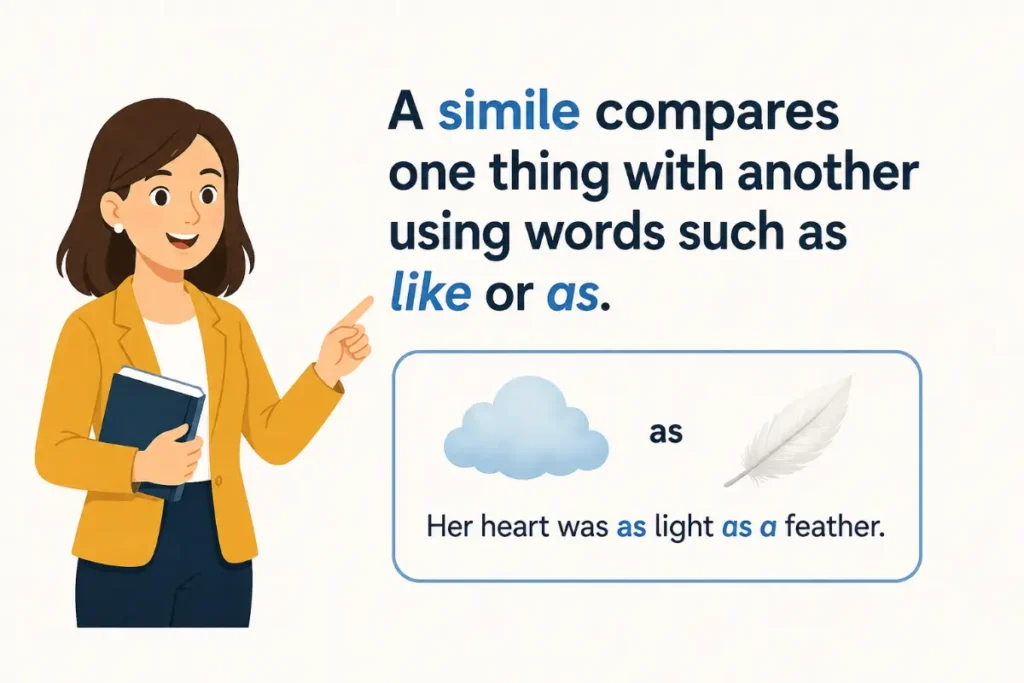
- A simile compares one thing with another using words such as like or as.
- Tree Similes can describe height strength age beauty color movement shape sound and mood.
- The best comparisons have a clear connection between the tree and the image being used.
- A tall tree can be compared with a tower a spear or a skyscraper.
- A strong tree can be compared with a fortress an anchor or an iron pillar.
- An old tree can be compared with a grandfather a monument or a guardian.
- Leaves can be compared with butterflies stars fire silk or falling snow.
- Branches can be compared with arms fingers veins or ribbons.
- Roots can be compared with fingers ropes rivers or chains.
- A good simile should strengthen the description rather than simply decorate it.
- Avoid using the same comparison again and again.
- Match the comparison with the mood of the scene.
- Simple images are often more powerful than complicated ones.
- A few well chosen comparisons can make descriptive writing much more vivid.
Conclusion
Tree Similes give writers a simple way to turn ordinary descriptions into memorable images. A tree can become a tower when you want to show height a guardian when you want to suggest protection or a dancer when you want to capture movement. Leaves can become fire stars or butterflies depending on the scene.
The strongest comparisons are clear purposeful and connected to a specific quality. You don’t need complicated language to create a powerful image. Start with what you want the reader to notice then find something familiar that shares that quality.
The best Tree Similes don’t merely make writing sound pretty. They help readers see the scene feel its mood and remember the image long after they finish reading.
FAQs
What Is A Tree Simile?
A tree simile is a comparison that describes a tree or something connected with a tree by using like or as. It can compare height strength color shape movement age or mood with something familiar. For example the tree stood like a tower compares its height with the height of a tower.
What Are Some Good Tree Similes?
Good examples include the tree stood like a tower the leaves danced like butterflies and the old oak stood like a patient guardian. The best choice depends on the quality you want to emphasize. A strong simile gives readers a clear image instead of simply telling them that a tree is tall beautiful old or strong.
How Do You Write A Simile About A Tree?
Start by choosing one quality of the tree. Then think of something familiar that shares that quality. Finally connect the two with like or as. For example if the tree has a wide canopy you might write the tree spread like a giant umbrella. Keeping the comparison focused usually makes the sentence stronger.
Can A Tree Simile Describe Leaves?
Yes. Leaves are excellent subjects for similes because they have color movement texture and sound. You can write that autumn leaves glowed like fire or that green leaves shimmered like silk. The comparison should match the specific quality you want readers to notice.
Can Tree Similes Be Used In School Writing?
Yes. Tree Similes can make school writing more descriptive and engaging. They can work well in creative writing descriptive paragraphs poems and nature essays. Choose clear comparisons that support your main idea. Avoid filling every sentence with figurative language because too many comparisons can make the writing difficult to follow.
What Is The Difference Between A Tree Simile And A Tree Metaphor?
A simile makes a comparison using words such as like or as. A metaphor makes the comparison directly. The tree stood like a giant is a simile. The tree was a giant is a metaphor. Both can create vivid images but they use different structures.
What Are Good Tree Similes For Creative Writing?
Creative writing allows more imaginative comparisons. You might describe an ancient tree as a keeper guarding a secret or its bare branches as charcoal marks across the sky. The best creative comparisons connect with the mood and setting instead of simply trying to sound unusual.
Can A Tree Simile Describe A Forest?
Yes. A forest can be compared with many large or complex things. You might describe it as a sea of green a wall across a valley or a sleeping giant beneath the moon. The comparison should reflect the forest’s size shape sound movement or mood.
Why Are Tree Similes Useful?
Tree Similes help readers visualize natural scenes. Instead of simply saying that a tree is tall you can compare it with a tower. Instead of saying that its branches move in the wind you can compare them with dancers. These comparisons make descriptions more memorable and can also establish mood.
How Many Similes Should I Use In One Paragraph?
There is no fixed number. Use enough to make the description vivid without making it crowded. One or two strong comparisons may be enough for a short paragraph. If every sentence contains a simile the writing can start to feel forced. Choose the images that contribute the most.

Idioms, Expressions & Figurative Language
Mason Ellsworth is an American language writer with a passion for English expressions, figurative language, and everyday communication. He explains idioms, similes, popular phrases, and commonly misunderstood expressions in a straightforward, engaging style that helps readers improve both their writing and spoken English.