
Dog similes make ordinary writing more vivid and memorable. Instead of simply calling someone loyal, you can describe them as as loyal as a faithful dog. To capture a child’s endless energy, you might say they are as energetic as a puppy at play. These comparisons help readers picture the quality you want to describe.
Dogs have many traits that inspire creative comparisons. They can be loyal, playful, curious, stubborn, protective, energetic, gentle, sleepy, affectionate, or fearless. Their familiar behaviors give writers plenty of ways to describe people, feelings, actions, and everyday situations in simple, relatable language.
A good simile does more than make a sentence sound interesting. It creates a clear mental image, adds personality, and helps the reader connect with your message. The most effective comparisons also fit the tone of the writing. A funny scene might call for a playful puppy comparison, while a serious moment may need an image of a loyal and protective dog.
Short Answer
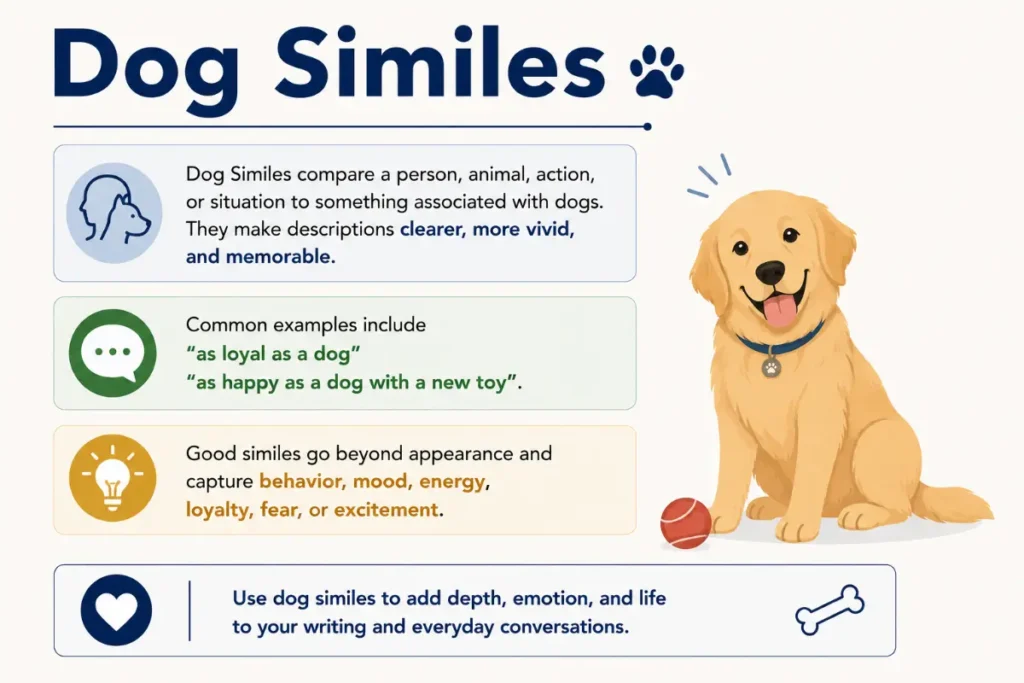
Dog Similes compare a person animal action or situation to something associated with dogs. They make descriptions clearer more vivid and memorable. Common examples include as loyal as a dog and as happy as a dog with a new toy. Good similes go beyond appearance and capture behavior mood energy loyalty fear or excitement.
Table Of Contents
- What A Dog Simile Means
- How Dog Similes Work
- Loyalty And Trust
- Happiness And Excitement
- Energy And Playfulness
- Curiosity And Attention
- Protection And Courage
- Speed And Movement
- Sleep And Laziness
- Noise And Sound
- Appearance And Physical Description
- Emotions And Personality
- Stubbornness And Persistence
- Friendship And Affection
- Funny And Playful Comparisons
- Creative Writing Examples
- Common Mistakes
- Memory Tips
- Related Grammar And Usage Notes
- Key Takeaways
- FAQs
- Conclusion
What A Dog Simile Means
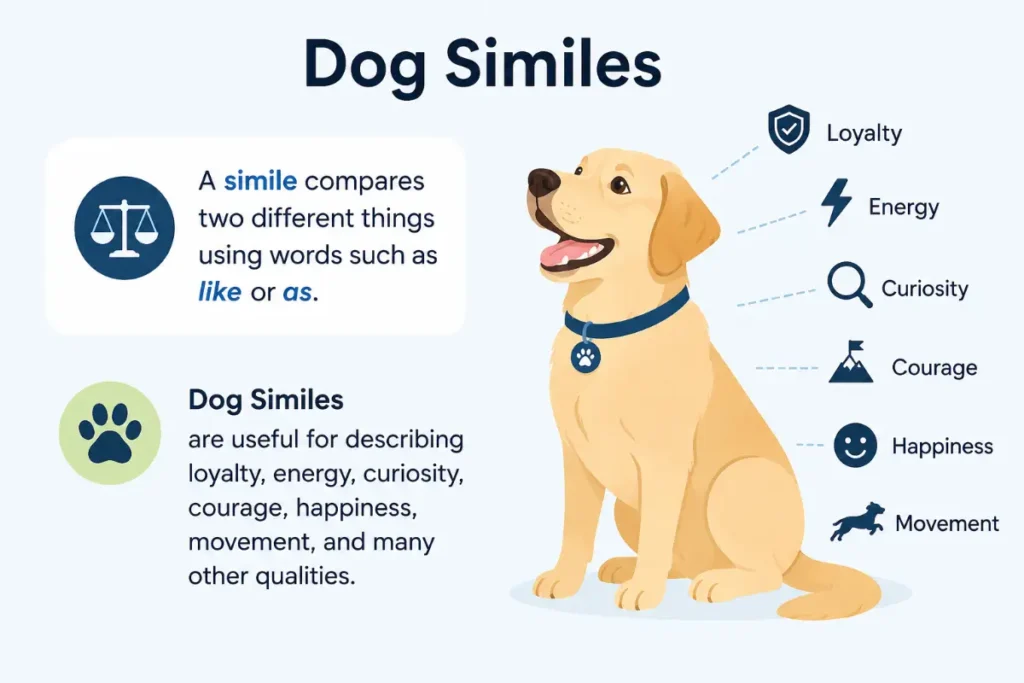
A simile is a figure of speech that compares two different things using words such as like or as. The comparison helps readers understand an idea through a familiar image.
For example:
He was as loyal as a dog.
The sentence does not say that he is literally a dog. It compares his loyalty with the loyalty commonly associated with a faithful companion.
Another example is:
The children raced around the yard like excited puppies.
The comparison gives us an immediate picture of children moving quickly and enthusiastically.
A simile can compare people with dogs. It can also compare actions emotions sounds movements or situations with something a dog might do.
The goal is clarity and imagery.
How Dog Similes Work
A good simile has a clear point of comparison.
Consider this sentence:
She was as alert as a guard dog.
The important quality is alertness.
Now consider:
He slept like a dog after a long walk.
The important quality is deep or comfortable sleep.
The dog itself is not the point. The quality associated with the dog is.
This is why a strong simile should have a recognizable connection between the two things being compared. If the connection feels random the sentence may confuse the reader.
The most useful comparisons also fit the tone.
A children’s story can use playful images such as as bouncy as a puppy chasing a ball.
A serious story might use something stronger such as as watchful as a trained guard dog.
The same animal can inspire very different comparisons depending on the quality you want to show.
Loyalty And Trust
Dogs are widely associated with companionship and loyalty. That makes them useful when describing people who remain dependable and devoted.
Examples Of Loyalty Similes
- As loyal as a faithful dog. This describes someone who stays devoted to a person they care about.
- As faithful as a dog waiting by the door. This suggests patience and devotion.
- Like a dog beside its favorite person. This describes someone who stays close to a trusted friend.
- As dependable as a dog guarding its home. This suggests reliability.
- As devoted as a dog following its owner. This describes strong attachment.
- Like a dog that never leaves your side. This works well for a loyal friend.
- As trustworthy as an old family dog. This creates a warm sense of reliability.
- As steady as a dog waiting for its master. This suggests patience and commitment.
- Like a loyal dog at the end of a long day. This creates a comforting image of companionship.
- As devoted as a dog protecting its family. This emphasizes deep loyalty.
- Like a dog that recognizes you from across the street. This suggests familiarity and affection.
- As faithful as a dog returning to the same doorstep. This emphasizes lasting attachment.
Happiness And Excitement
Dogs can express excitement with their whole bodies. Wagging tails jumping paws and eager faces make them useful symbols of joy.
Examples Of Happiness Similes
- As happy as a dog with a new toy. This describes simple unrestrained happiness.
- As cheerful as a puppy in fresh grass. This suggests carefree joy.
- Like a dog hearing the word walk. This describes sudden excitement.
- As thrilled as a puppy chasing bubbles. This gives a playful image of delight.
- As joyful as a dog greeting its favorite person. This describes warm happiness.
- Like a puppy discovering a room full of toys. This suggests wonder and excitement.
- As delighted as a dog finding a hidden treat. This describes unexpected pleasure.
- As bright as a puppy with a wagging tail. This suggests visible happiness.
- Like a dog racing toward an open field. This creates an image of freedom and excitement.
- As excited as a puppy before its first walk. This works well for anticipation.
- Like a dog celebrating after a long day. This gives a lively image of relief and happiness.
- As pleased as a dog resting beside its favorite person. This suggests peaceful contentment.
Energy And Playfulness
Puppies are especially useful for describing restless energy. Their constant movement makes them natural comparisons for children athletes and lively personalities.
Examples Of Energy Similes
- As energetic as a puppy at play. This describes someone who seems to have endless energy.
- Like a puppy chasing its own tail. This suggests constant movement.
- As lively as a dog racing through a park. This gives a strong sense of physical energy.
- Like a puppy bouncing across the room. This works for someone who cannot sit still.
- As playful as a puppy with a rope toy. This describes someone who loves fun.
- Like a dog chasing a ball across a field. This suggests determined physical activity.
- As restless as a puppy before breakfast. This describes someone eager to get moving.
- Like a puppy discovering snow for the first time. This suggests energetic curiosity.
- As bouncy as a puppy greeting visitors. This describes someone overflowing with enthusiasm.
- Like a dog sprinting after a thrown stick. This suggests sudden intense activity.
- As spirited as a young dog in an open yard. This describes a lively personality.
- Like a puppy that has just learned how to run. This suggests uncontrolled excitement.
Curiosity And Attention
Dogs often investigate unfamiliar sounds smells people and objects. This makes them useful comparisons for curious minds and alert behavior.
Examples Of Curiosity Similes
- As curious as a dog sniffing a new bag. This describes someone eager to investigate.
- Like a puppy exploring every corner of a room. This suggests active curiosity.
- As interested as a dog hearing a strange sound. This describes sudden attention.
- Like a dog discovering a new scent. This suggests fascination with something unfamiliar.
- As inquisitive as a puppy meeting a new visitor. This describes someone who wants to know more.
- Like a dog inspecting an unfamiliar box. This suggests careful investigation.
- As attentive as a dog watching a squirrel. This describes intense concentration.
- Like a puppy following every new smell. This suggests someone easily drawn toward new discoveries.
- As watchful as a dog near an open gate. This describes someone paying close attention.
- Like a dog listening for footsteps. This suggests focused awareness.
- As observant as a dog noticing every movement. This describes sharp attention.
- Like a puppy investigating a rustling bag. This gives curiosity a playful quality.
Protection And Courage
Dogs can also represent bravery alertness and protection. These comparisons work especially well in stories and descriptions of strong personalities.
Examples Of Protection Similes
- As protective as a guard dog. This describes someone who strongly protects others.
- As brave as a dog facing a loud storm. This suggests courage during fear.
- Like a watchdog guarding the gate. This describes someone who remains alert and ready.
- As fearless as a dog defending its home. This emphasizes courage.
- Like a loyal dog standing between danger and its family. This creates a strong protective image.
- As alert as a guard dog at midnight. This suggests intense awareness.
- Like a dog barking at a stranger near the door. This describes an immediate protective response.
- As watchful as a dog guarding a sleeping house. This suggests quiet vigilance.
- Like a dog standing firmly at the doorway. This describes determination and protection.
- As courageous as a dog protecting its young. This highlights bravery driven by care.
- Like a watchdog that never sleeps. This suggests constant attention.
- As ready as a trained dog waiting for a command. This describes someone prepared to act.
Speed And Movement
Dogs can move quickly and suddenly. These comparisons are useful when describing running jumping rushing or changing direction.
Examples Of Speed Similes
- As fast as a dog chasing a ball. This describes quick movement.
- Like a greyhound racing across a track. This suggests exceptional speed.
- As quick as a puppy chasing a leaf. This creates a playful sense of speed.
- Like a dog racing toward the front door. This suggests sudden movement.
- As swift as a dog chasing a squirrel. This emphasizes quick reaction.
- Like a dog sprinting across an open field. This creates an image of freedom and speed.
- As rapid as a dog running after its favorite toy. This suggests energetic movement.
- Like a puppy darting between chairs. This describes fast unpredictable movement.
- As quick as a dog spotting an open gate. This suggests immediate action.
- Like a dog racing down the beach. This creates an image of speed and freedom.
- As nimble as a young dog jumping over a log. This describes agility.
- Like a dog weaving through a crowded park. This suggests flexible quick movement.
Sleep And Laziness
Dogs also give writers useful images for rest. A sleeping dog can suggest comfort exhaustion laziness or deep relaxation.
Examples Of Sleep Similes
- As sleepy as a dog after a long walk. This describes deep tiredness.
- Like a dog curled up beside the fireplace. This suggests comfort and relaxation.
- As peaceful as a sleeping dog. This describes calmness.
- Like a tired dog resting on a cool floor. This suggests complete physical relief.
- As still as a dog sleeping in the afternoon sun. This creates a peaceful image.
- Like a dog after a day at the park. This describes someone completely worn out.
- As relaxed as a dog stretched across a sofa. This suggests total comfort.
- Like a puppy asleep after a busy morning. This describes a child or person who has finally run out of energy.
- As comfortable as a dog in its favorite bed. This describes contentment.
- Like an old dog resting under a shady tree. This creates a quiet relaxed mood.
- As lazy as a dog on a warm afternoon. This describes someone who does not want to move.
- Like a sleepy puppy refusing to leave its blanket. This creates a humorous image of reluctance.
Noise And Sound
Dogs make many recognizable sounds. Barking whining growling panting and howling can inspire comparisons for loudness rhythm and emotion.
Examples Of Sound Similes
- As loud as a dog barking at the mail carrier. This describes a strong sudden noise.
- Like a dog howling at the moon. This creates a dramatic sound image.
- As sharp as a puppy’s sudden bark. This describes a piercing sound.
- Like a dog growling at a stranger. This suggests a low threatening sound.
- As noisy as a yard full of excited puppies. This describes cheerful chaos.
- Like a dog whining for attention. This describes a repeated plaintive sound.
- As restless as a dog scratching at a door. This combines sound and behavior.
- Like a puppy barking at its own reflection. This creates a funny image of repeated noise.
- As loud as dogs greeting each other through a fence. This describes energetic noise.
- Like a dog howling in an empty street. This creates a lonely dramatic mood.
Appearance And Physical Description
Dogs come in countless shapes sizes and textures. Their appearance can inspire playful comparisons for hair faces eyes posture and movement.
Examples Of Appearance Similes
- As soft as a puppy’s ears. This describes something gentle and smooth.
- Like a dog with freshly brushed fur. This suggests neatness and softness.
- As shaggy as an old sheepdog. This describes untidy or thick hair.
- Like a fluffy puppy after a bath. This suggests softness and a slightly messy appearance.
- As bright eyed as a curious puppy. This describes someone who looks alert and interested.
- Like a dog with its ears raised. This suggests alertness.
- As scruffy as a street dog after a rainy day. This describes a messy appearance.
- Like a puppy with oversized paws. This can describe someone young or awkward.
- As furry as a winter coated dog. This describes something covered in thick hair.
- Like a small dog standing proudly beside a large one. This creates a humorous contrast.
- As alert as a dog with raised ears. This describes someone who looks ready to react.
- Like a dog shaking water from its coat. This creates a vivid image of sudden movement.
Emotions And Personality
Dogs can represent many different human qualities. Their familiar behavior gives writers a simple way to describe emotional states.
Examples Of Emotional Similes
- As nervous as a dog at the vet. This describes strong anxiety.
- Like a dog hiding during fireworks. This suggests fear and discomfort.
- As confused as a puppy in a new house. This describes uncertainty.
- Like a dog waiting for its owner to return. This suggests longing and patience.
- As jealous as a dog watching another pet get attention. This describes possessiveness.
- Like a dog hearing an unfamiliar voice. This suggests suspicion or uncertainty.
- As embarrassed as a puppy caught chewing a shoe. This creates a humorous image of embarrassment.
- Like a dog after being caught stealing food. This suggests guilt or awkwardness.
- As lonely as a dog waiting beside an empty doorway. This creates a strong image of sadness.
- Like a dog searching for its favorite person. This suggests longing.
- As calm as a dog sleeping in its owner’s lap. This describes complete comfort.
- Like a dog seeing its family after a long absence. This suggests overwhelming happiness.
Stubbornness And Persistence
Dogs can also inspire comparisons for persistence. A determined dog may keep chasing a toy digging at a spot or waiting for attention.
Examples Of Persistence Similes
- As stubborn as a dog refusing to leave the park. This describes someone who will not change their mind.
- Like a dog chasing the same ball again and again. This suggests persistence.
- As persistent as a dog scratching at a closed door. This describes someone who refuses to give up.
- Like a dog digging for something hidden. This suggests determination.
- As determined as a dog following a scent. This describes focused persistence.
- Like a puppy refusing to surrender its favorite toy. This suggests stubborn attachment.
- As persistent as a dog waiting for a treat. This describes someone who keeps asking.
- Like a dog returning to the same spot. This suggests repeated effort.
- As tenacious as a dog holding onto a rope toy. This describes someone who does not give up easily.
- Like a dog that keeps chasing a moving ball. This suggests continued effort despite setbacks.
Friendship And Affection
Dogs often appear in writing as symbols of companionship. These comparisons work well for warm relationships and affectionate behavior.
Examples Of Friendship Similes
- As affectionate as a dog greeting you at the door. This describes warm affection.
- Like a dog resting its head on your knee. This suggests trust and closeness.
- As friendly as a puppy meeting a new neighbor. This describes an open welcoming personality.
- Like a dog following its favorite friend around the yard. This suggests close companionship.
- As warm as a dog curled beside you on a cold night. This describes emotional comfort.
- Like a dog waiting patiently beside its companion. This suggests dependable friendship.
- As welcoming as a dog wagging its tail at the door. This creates a cheerful friendly image.
- Like a puppy leaning against your leg. This suggests trust and affection.
- As comforting as a dog sleeping beside you. This describes emotional reassurance.
- Like a dog greeting an old friend. This suggests familiarity and happiness.
Funny And Playful Comparisons
Humorous similes can make writing feel more relaxed. Dogs provide plenty of material because their behavior can be wonderfully unpredictable.
Examples Of Funny Similes
- As confused as a dog chasing a laser dot. This describes someone trying to understand something strange.
- Like a dog wearing an oversized sweater. This creates a funny visual image.
- As surprised as a puppy seeing its reflection. This describes sudden surprise.
- Like a dog trying to catch a falling leaf. This suggests pointless but enthusiastic effort.
- As dramatic as a dog pretending its bath is the end of the world. This describes exaggerated reactions.
- Like a dog carrying a stick twice its size. This suggests determination mixed with poor judgment.
- As distracted as a dog hearing a squirrel outside. This describes someone who loses focus instantly.
- Like a puppy tangled in its own leash. This suggests awkwardness.
- As proud as a dog carrying a muddy stick into the house. This describes misplaced pride.
- Like a dog staring at an empty food bowl. This suggests exaggerated disappointment.
- As suspicious as a dog examining a new vacuum cleaner. This creates a humorous image of caution.
- Like a dog trying to sit on a tiny cushion. This describes someone forcing themselves into an unsuitable situation.
Creative Writing Examples
Similes become especially useful in stories because they can replace flat descriptions with images that have movement and emotion.
Consider this sentence:
The boy was nervous.
It communicates the idea but gives the reader little to picture.
Now compare it with:
The boy was as nervous as a dog waiting outside a veterinarian’s office.
The second sentence creates a stronger emotional image.
Here are more examples that show how the comparisons can work inside complete passages.
Mia ran across the playground like a puppy chasing a ball.
The sentence gives her movement a playful quality. It suggests speed excitement and youthful energy.
He stood by the gate as watchful as a guard dog.
This makes the character seem alert and protective.
After the long hike she slept like a tired dog beside the fire.
The comparison emphasizes exhaustion and comfort.
The children burst into the classroom like puppies released into a yard.
This suggests sudden energetic movement.
His face lit up like a dog greeting its favorite person.
This shows genuine happiness.
She followed the strange sound like a curious dog following a new scent.
The comparison emphasizes curiosity and determination.
The old man remained as loyal as a family dog.
This creates a warm image of lasting devotion.
The little boy clung to the toy like a puppy refusing to surrender its favorite ball.
This shows stubborn attachment in a playful way.
The crowd became as noisy as a yard full of excited dogs.
This gives the reader a quick sense of loud cheerful chaos.
He watched the doorway like a dog waiting for its owner to return.
This creates a feeling of patience and expectation.
How To Choose The Right Comparison
Not every dog related comparison works in every sentence. The trick is to identify the quality you want to emphasize first.
If you want to describe loyalty choose an image involving companionship.
If you want to create humor choose an unusual but recognizable dog behavior.
This approach keeps your similes focused.
A weak comparison can feel random. A strong one feels natural because the reader immediately understands the connection.
Common Mistakes
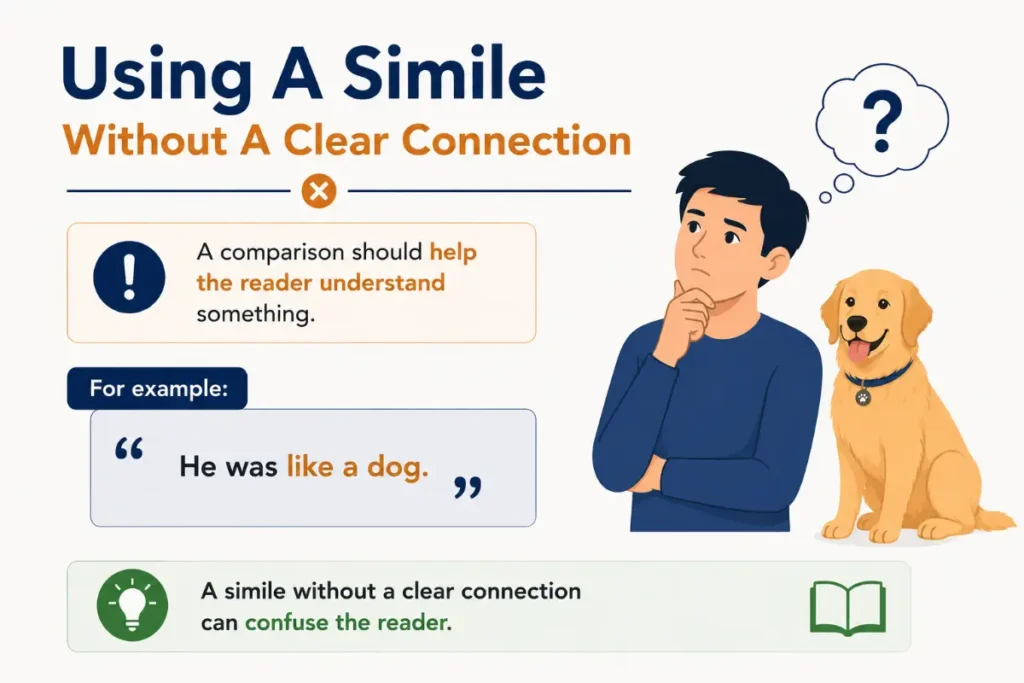
Using A Simile Without A Clear Connection
A comparison should help the reader understand something.
For example:
He was like a dog.
This sentence is too vague. Dogs have many qualities. Is the person loyal energetic nervous playful protective or stubborn?
A stronger sentence identifies the quality.
He was as loyal as a faithful dog.
Now the reader knows exactly what the comparison means.
Making Every Comparison About Loyalty
Dogs are strongly associated with loyalty but that is only one possible quality.
You can also write about energy curiosity courage sleepiness affection speed stubbornness and humor.
Using different qualities keeps your writing fresh.
Choosing A Comparison That Does Not Match The Mood
A funny puppy comparison may weaken a serious emotional scene.
If your character is facing danger a guard dog comparison may work better than a playful puppy image.
Always consider the tone before choosing the simile.
Mixing Similes And Metaphors
A simile usually uses like or as.
She ran like a dog chasing a ball.
A metaphor makes a direct comparison.
She was a racing dog.
Both can create imagery but they work differently.
Forcing A Simile Into Every Sentence
Similes are powerful because they add emphasis. If every sentence contains one the effect can become tiring.
Use them at moments where an image adds something valuable.
Memory Tips
A simple way to remember how similes work is to think of them as a bridge.
One side contains the thing you want to describe.
The other side contains a familiar image.
The comparison creates the bridge.
For example:
He was loyal like a faithful dog.
The person is on one side.
The dog is on the other.
Loyalty connects them.
Another useful trick is to ask one question before writing a simile.
What quality am I trying to show?
If the answer is energy choose a playful dog.
If the answer is loyalty choose a faithful companion.
This method helps you create comparisons instead of simply copying familiar phrases.
Related Grammar And Usage Notes
A simile often uses like when comparing two things.
For example:
He ran like a dog chasing a ball.
Another common structure uses as.
For example:
She was as loyal as a faithful dog.
The two structures are similar but not identical.
The as pattern commonly follows this structure:
as + adjective + as
Examples include:
As loyal as a dog.
As alert as a guard dog.
The like pattern normally compares an action or appearance with something else.
Examples include:
He ran like a dog chasing a ball.
She followed me like a puppy.
The children scattered like dogs released into a yard.
The key is to make the comparison natural.
A simile should also preserve the intended meaning. If you compare someone to a dog without identifying the relevant quality the reader may interpret the sentence in a way you did not intend.
Dog Similes For Different Writing Purposes
Different types of writing call for different comparisons.
For Children’s Stories
Use playful and easy images.
As bouncy as a puppy.
Like a dog chasing bubbles.
As curious as a puppy exploring a new room.
Children usually respond well to images they can picture quickly.
For Fiction
Fiction allows more imaginative comparisons.
He watched the doorway like a tired dog waiting for a familiar footstep.
This creates mood as well as meaning.
For Essays
Keep the comparison clear and relevant.
The new student followed the group like a puppy following its litter.
The comparison should support the point instead of distracting from it.
For Speeches
Choose memorable comparisons.
A good friend can be as dependable as a faithful dog.
Simple images are often easier for listeners to remember.
For Everyday Conversation
Use natural expressions.
He was running around like a puppy.
She was as excited as a dog before a walk.
Conversational similes should sound effortless rather than overly literary.
How Writers Can Create Original Similes
Original similes do not require complicated vocabulary. They require observation.
Watch what dogs actually do.
A dog might tilt its head when it hears something strange.
A puppy might tumble over its own paws.
A tired dog might collapse onto a cool floor.
A protective dog might stare at a doorway.
A playful dog might race after a ball.
These small behaviors can become useful comparisons.
For example:
She tilted her head like a dog hearing a strange whistle.
That comparison is more specific than simply saying she looked confused.
Another example is:
He collapsed into the chair like a tired dog after a long walk.
The reader immediately understands the exhaustion.
Specific behavior creates stronger imagery than a vague animal comparison.
Why Dog Based Comparisons Feel Familiar
Dogs are familiar to many readers. Their behaviors are easy to recognize and often carry strong emotional associations.
A wagging tail can suggest happiness.
A barking dog can suggest alertness.
A sleeping dog can suggest comfort.
A playful puppy can suggest energy.
A guard dog can suggest protection.
A dog waiting by the door can suggest loyalty.
Because these images are concrete the reader does not need a long explanation. The comparison does some of the work for you.
That is one of the main strengths of a good simile.
Key Takeaways
- A simile compares two different things using words such as like or as.
- Dog Similes are useful for describing loyalty energy curiosity courage happiness movement and many other qualities.
- The strongest comparisons focus on one clear quality.
- Puppy comparisons usually work well for playfulness curiosity and youthful energy.
- Guard dog comparisons can suggest protection alertness and courage.
- Sleeping dog comparisons can suggest comfort tiredness or relaxation.
- Specific dog behavior usually creates stronger imagery than a vague comparison.
- Avoid forcing a simile into every sentence.
- Match the comparison to the mood and purpose of your writing.
- Original similes come from observing behavior and connecting it to a human quality.
Conclusion
Dog similes make writing more vivid by comparing people, actions, or feelings to familiar dog behaviors. Dogs are known for their loyalty, energy, curiosity, courage, affection, stubbornness, and playfulness. These qualities offer plenty of ways to describe different moods and situations.
The best simile highlights one specific quality. A playful puppy can represent boundless energy, while a protective guard dog can symbolize courage and loyalty. Choose a comparison that matches the meaning you want to convey.
Keep your comparisons natural and relevant instead of forcing them into every sentence. When a simile fits the context, it helps readers picture the idea clearly and remember it long after they finish reading.
FAQs
What Are Dog Similes?
Dog similes compare a person, object, action, or feeling with a dog or its behavior. They use words such as like or as to connect two ideas. For example, as loyal as a faithful dog describes strong devotion, while like a puppy chasing a ball suggests excitement and energy. These comparisons make writing more vivid by highlighting qualities such as loyalty, curiosity, happiness, and courage.
What Is a Good Simile for Loyalty?
A good example is as loyal as a faithful dog. Dogs are often associated with companionship and devotion, making this comparison easy to understand. Another option is like a dog that never leaves your side. This image works well when describing a close friend who offers support and stays with someone through difficult times.
What Is a Simile for Happiness?
You can say as happy as a dog with a new toy to describe someone who feels excited and joyful. Another example is like a dog greeting its favorite person at the door. This comparison captures the warmth and enthusiasm of seeing someone you love. Both similes work well in stories, personal essays, and informal descriptions.
What Is a Simile for Energy?
As energetic as a puppy at play is a simple way to describe someone who is lively and full of energy. You could also write like a puppy bouncing across the room. This comparison helps readers picture someone who keeps moving, jumping, and exploring. It works especially well when describing children or anyone who struggles to sit still.
What Is a Simile for Curiosity?
As curious as a dog sniffing an unfamiliar bag describes someone eager to discover something new. Another example is like a puppy exploring every corner of a room. Both comparisons suggest active interest and a desire to investigate. They can add personality to a story by showing how a character reacts to unfamiliar places, objects, or experiences.
What Is a Simile for Courage?
You can write as brave as a dog protecting its family to describe someone who faces danger to protect others. Another option is like a watchdog standing firm at the gate. This image suggests alertness, determination, and a willingness to defend what matters. These similes can describe a courageous character, a protective friend, or someone who stands up for others.
What Is a Simile for Tiredness?
As sleepy as a dog after a long walk is a natural way to describe someone who feels exhausted and ready to rest. Another example is like a tired dog curled up beside the fire. This comparison creates a peaceful image of warmth and comfort. It works well in descriptive writing when you want readers to picture someone relaxing after a busy day.
Can Similes About Dogs Be Used in Formal Writing?
Yes. Dog similes can make formal writing more engaging when they support the main idea. The key is to choose a comparison that suits the subject and tone. For example, a writer might use a dog guarding its home to illustrate vigilance or responsibility. However, playful comparisons may feel out of place in serious academic or professional writing unless they serve a clear purpose.
What Is the Difference Between a Dog Simile and a Dog Metaphor?
A dog simile compares two things using words such as like or as. For example, She ran like a puppy chasing a ball compares someone’s movement with a puppy’s playful behavior.
A metaphor makes the comparison directly. For example, She was a racing puppy describes the person as a puppy without using like or as. Both figures of speech create vivid images, but they express comparisons in different ways.
How Can I Make a Dog Simile More Original?
To create an original dog simile, focus on a specific behavior rather than relying on familiar phrases. Think about how a dog follows a scent, reacts to a strange sound, protects its home, carries a favorite toy, or explores a new place. Then connect that behavior to the quality you want to describe.
For example, He followed the mystery like a hound following a fresh trail suggests determination and curiosity. Specific details help make your comparisons more memorable and give your writing a stronger sense of character.

Idioms, Expressions & Figurative Language
Mason Ellsworth is an American language writer with a passion for English expressions, figurative language, and everyday communication. He explains idioms, similes, popular phrases, and commonly misunderstood expressions in a straightforward, engaging style that helps readers improve both their writing and spoken English.