
Cat similes can turn an ordinary sentence into something readers can see and feel. Compare these two sentences: She walked quietly across the room. She walked like a cat across the room. The second sentence creates a much clearer picture. You can almost imagine the careful steps and silent movement. That is the power of a well chosen simile.
A simile is a figure of speech that compares two different things using words such as like or as. Writers use similes to make an idea easier to imagine or give a description more personality. Cats offer an especially rich source of comparisons because they can be graceful and playful one moment and fierce or mysterious the next.
This guide gives you more than 120 original examples. You’ll find comparisons for appearance personality movement sounds emotions behavior writing and everyday conversation. Each example comes with a short explanation so you can understand exactly what the comparison communicates.
Short Answer
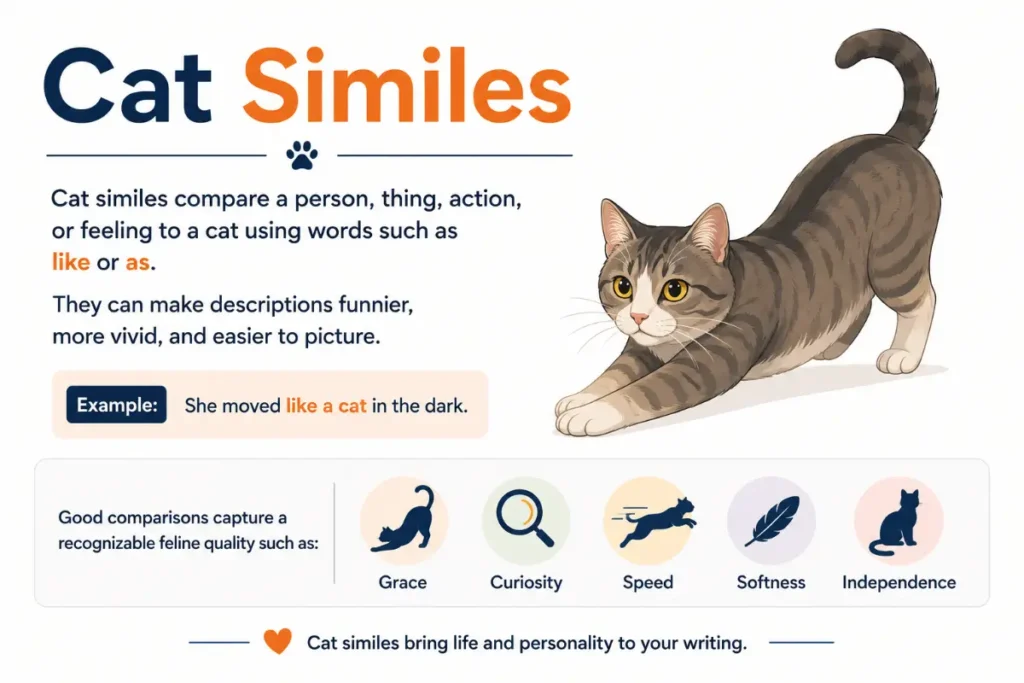
Cat similes compare a person thing action or feeling to a cat using words such as like or as. They can make descriptions funnier more vivid and easier to picture. For example: She moved like a cat in the dark. Good comparisons capture a recognizable feline quality such as grace curiosity speed softness or independence.
Table Of Contents
- What Is A Cat Simile.
- Why Cats Work So Well In Similes.
- Cat Similes For Appearance.
- Cat Similes For Movement.
- Cat Similes For Personality.
- Cat Similes For Sounds.
- Cat Similes For Feelings.
- Cat Similes For Speed And Agility.
- Cat Similes For Quietness.
- Cat Similes For Curiosity.
- Cat Similes For Independence.
- Cat Similes For Playfulness.
- Funny Cat Similes.
- Cute Cat Similes.
- Powerful Cat Similes.
- Cat Similes For Creative Writing.
- Common Mistakes With Similes.
- How To Create Your Own Similes.
- Memory Tips.
- Related Figurative Language.
- Frequently Asked Questions.
- Key Takeaways.
- Conclusion.
What Is A Cat Simile
A cat simile is a comparison that uses a cat or a feline quality to describe something else.
For example:
He moved like a cat through the hallway.
The person is not literally a cat. The comparison tells us that he moved quietly and carefully.
Another example is:
Her eyes were as bright as a cat watching a bird.
The comparison emphasizes alertness and focused attention.
Similes usually use like or as to connect the two ideas.
A simple pattern is:
Subject + verb + like + cat comparison.
Example:
The child climbed like a cat.
Another common pattern is:
As + adjective + as + comparison.
Example:
She was as quiet as a cat at midnight.
The goal isn’t to say that two things are identical. The goal is to highlight one shared quality.
That distinction matters. A strong simile doesn’t compare everything about two things. It focuses on one memorable feature.
Why Cats Work So Well In Similes
Cats have many recognizable traits. People commonly associate them with qualities such as grace curiosity stealth flexibility independence softness and alertness.
That gives writers plenty of material.
A cat can creep across a floor without making much noise. It can spring from the ground with surprising speed. It can stare at something with intense concentration.
Each behavior creates a different comparison.
A character who moves quietly might move like a cat.
A curious child might investigate everything like a cat exploring a new room.
A relaxed person might stretch like a cat waking from a nap.
A proud person might carry themselves like a cat that owns the room.
The best similes choose a quality that readers instantly recognize.
Cat Similes For Appearance
Appearance based comparisons help readers picture people animals objects and scenes.
- Her eyes were like bright cat eyes in the dark.
This emphasizes eyes that look striking and noticeable. - His hair was as soft as a kitten’s fur.
This creates an image of extremely soft hair. - The baby had cheeks as round as a sleepy kitten.
The comparison highlights roundness and softness. - Her smile was as warm as a cat curled beside a fire.
This suggests comfort and warmth. - His face was as alert as a cat watching a mouse.
This emphasizes sharp attention. - The dancer was as graceful as a cat stepping across a narrow wall.
This highlights balance and elegance. - Her fingers were quick like a cat’s paws.
The comparison suggests fast delicate movement. - The child’s eyes were as curious as a kitten discovering a new room.
This creates a picture of wide eyed curiosity. - His movements were smooth like a cat stretching in sunlight.
The comparison suggests effortless physical control. - Her posture was as proud as a cat sitting on a windowsill.
This gives the character a confident appearance. - The scarf felt soft like a kitten against your cheek.
The comparison focuses on texture. - His coat was as sleek as a black cat under moonlight.
This suggests a smooth polished appearance. - Her face was as calm as a cat asleep in a sunny window.
The comparison creates a peaceful image. - The child looked as alert as a cat hearing a strange sound.
This shows sudden attention. - His eyes were sharp like a cat spotting movement across the yard.
This suggests strong visual awareness.
Cat Similes For Movement
Cats are famous for controlled movement. Their ability to move silently and quickly makes them useful comparisons for physical action.
- She slipped through the doorway like a cat.
This suggests quiet movement. - He walked as softly as a cat on carpet.
The comparison emphasizes silence. - The dancer moved like a cat across the stage.
This suggests grace and balance. - The child climbed the fence like a cat chasing a bird.
This emphasizes agility. - She jumped over the puddle like a cat avoiding water.
The comparison creates a playful image. - He landed as lightly as a cat on a windowsill.
This suggests a gentle landing. - The gymnast twisted like a cat in midair.
The comparison highlights flexibility. - She crept through the room like a cat hunting in the shadows.
This suggests careful silent movement. - The fox moved like a cat through the tall grass.
The comparison emphasizes stealth. - He darted away like a cat startled by a loud noise.
This shows sudden movement. - She stretched like a cat waking after a long nap.
The comparison communicates slow comfortable movement. - The athlete turned like a cat changing direction mid chase.
This highlights agility. - He crouched like a cat preparing to spring.
This suggests readiness and controlled energy. - The child crawled like a kitten exploring a new corner.
This creates an image of cautious curiosity. - She moved as smoothly as a cat crossing a quiet room.
This suggests effortless movement.
Cat Similes For Personality
Cats have personalities that can range from affectionate to aloof. That variety makes them useful for character descriptions.
- He was as independent as a cat that prefers its own company.
This suggests self reliance. - She was curious like a kitten with a new toy.
This describes someone eager to explore. - He was as stubborn as a cat refusing to leave a favorite chair.
This gives stubbornness a humorous quality. - She was playful like a kitten chasing a loose thread.
This suggests energy and fun. - He was as watchful as a cat guarding its favorite spot.
This emphasizes alertness. - She was as patient as a cat waiting beside a mouse hole.
This highlights controlled patience. - He was mysterious like a cat disappearing into the night.
This suggests secrecy. - She was as confident as a cat walking into a room it already owns.
This creates a bold image. - He was affectionate like a cat curling beside someone it trusts.
This suggests warmth and attachment. - She was as independent as a cat choosing when to come home.
This emphasizes freedom. - He was cautious like a cat approaching an unfamiliar object.
This suggests careful judgment. - She was as unpredictable as a cat changing its mind at the last second.
This adds humor to unpredictable behavior. - He was alert like a cat hearing footsteps outside the door.
This suggests constant awareness. - She was as relaxed as a cat sleeping in the afternoon sun.
This describes someone completely at ease. - He was curious like a kitten inspecting every box in the room.
This emphasizes an eager desire to investigate.
Cat Similes For Sounds
Cats produce several recognizable sounds. Their meows purrs hisses and cries can inspire vivid comparisons.
- Her voice was soft like a cat’s purr.
This suggests a gentle soothing voice. - The engine hummed like a giant cat purring.
This creates a playful comparison for a low steady sound. - The child’s laugh was light like a kitten’s playful chirp.
This suggests a small cheerful sound. - The wind whispered like a cat moving through dry leaves.
This creates a quiet natural sound. - His warning sounded like a cat’s hiss.
This suggests tension and hostility. - The old machine growled like an angry cat.
This gives the machine an animal quality. - Her soft singing sounded like a cat purring beside a warm window.
This emphasizes comfort. - The baby cried like a kitten calling for its mother.
This suggests a small urgent sound. - The alarm shrieked like a cat startled in the night.
This creates a sharp image. - The floorboards creaked like a cat sneaking across an old house.
This gives an ordinary sound a mysterious quality.
Cat Similes For Feelings
Animals can make abstract emotions easier to picture. A cat can represent comfort fear excitement loneliness irritation or contentment.
- She was as nervous as a cat in an unfamiliar room.
This suggests uncertainty and discomfort. - He was as relaxed as a cat stretched out in the sun.
This describes complete relaxation. - She was as excited as a kitten discovering a box.
This communicates playful excitement. - He looked as frightened as a cat caught in a sudden storm.
This emphasizes fear. - She was as content as a cat curled under a warm blanket.
This suggests deep comfort. - He was restless like a cat waiting beside a closed door.
This describes impatience and unease. - She was as lonely as a cat sitting alone on a cold porch.
This creates a strong emotional image. - He was as irritated as a cat disturbed during a nap.
This gives annoyance a humorous edge. - She was as curious as a kitten hearing a strange sound.
This suggests excitement mixed with uncertainty. - He was as tense as a cat ready to run.
This describes physical and emotional tension. - She felt as peaceful as a cat sleeping through a rainy afternoon.
This suggests deep calm. - He was as restless as a cat trapped indoors during a storm.
This emphasizes an inability to settle down. - She was as cautious as a cat approaching a stranger.
This shows emotional hesitation. - He was as angry as a cat defending its territory.
This creates a strong picture of anger. - She was as happy as a kitten playing in a patch of sunlight.
This gives happiness an innocent quality.
Cat Similes For Speed And Agility
Cats can move from complete stillness to sudden action in an instant. That makes them useful when describing speed and reflexes.
- He ran like a cat chasing a bird.
This suggests fast focused movement. - She sprang forward like a cat after a falling leaf.
This emphasizes sudden acceleration. - The athlete reacted as quickly as a cat spotting movement.
This highlights fast reflexes. - He dodged the ball like a cat avoiding a splash.
This suggests quick reaction. - She climbed the tree like a cat chasing something above her.
This emphasizes natural agility. - The goalkeeper moved like a cat protecting its territory.
This suggests quick controlled movement. - He turned as sharply as a cat hearing a noise behind it.
This highlights sudden awareness. - She leaped like a cat springing onto a high shelf.
This creates a strong image of jumping ability. - The dancer changed direction like a cat chasing a moving shadow.
This suggests flexibility and speed. - He reacted as fast as a cat reaching for a falling object.
This emphasizes quick reflexes. - She crossed the room like a cat avoiding a wet floor.
This combines speed with careful movement. - The runner moved like a cat released from a narrow box.
This suggests sudden energetic movement. - He ducked like a cat avoiding a swinging branch.
This emphasizes instinctive reaction. - She moved as quickly as a cat chasing a toy.
This gives the movement an energetic tone. - The goalkeeper sprang like a cat from a windowsill.
This highlights sudden physical power.
Cat Similes For Quietness
Cats are natural symbols of quiet movement. These comparisons work especially well in suspense and storytelling.
- He entered the room like a cat in the dark.
This suggests almost silent movement. - She walked as quietly as a cat crossing a sleeping house.
This emphasizes silence. - The thief moved like a cat through the shadows.
This creates a stealthy image. - He slipped away like a cat before anyone noticed.
This suggests quick unnoticed movement. - She crept along the hallway like a cat stalking prey.
This emphasizes caution and silence. - The child approached the sleeping dog like a cat.
This suggests careful quiet movement. - He opened the door as quietly as a cat stepping onto a bed.
This emphasizes delicate movement. - She disappeared like a cat into the darkness.
This creates a mysterious feeling. - The spy moved as silently as a cat through an empty building.
This emphasizes stealth. - He crossed the floor like a cat avoiding broken glass.
This suggests both silence and caution.
Cat Similes For Curiosity
Curiosity is one of the strongest qualities associated with kittens. These examples work well for children characters and playful descriptions.
- The child was curious like a kitten exploring a cardboard box.
This suggests innocent curiosity. - She examined the machine like a cat inspecting a strange object.
This describes careful investigation. - He looked around like a kitten entering a new room.
This creates an image of wide eyed curiosity. - The students asked questions like kittens discovering something new.
This emphasizes eagerness to learn. - She studied the old photograph like a cat studying an unfamiliar toy.
This suggests close attention. - He followed the strange noise like a curious cat.
This describes someone who cannot resist investigating. - The child explored the garden like a kitten chasing every movement.
This creates a playful image. - She inspected every drawer like a cat searching a new house.
This suggests thorough curiosity. - He watched the magician like a cat watching a bird.
This highlights intense attention. - The toddler investigated the box like a kitten discovering its first hiding place.
This emphasizes innocent exploration.
Cat Similes For Independence
Cats can also symbolize independence and self direction.
- She lived like a cat that chose its own path.
This suggests freedom. - He was as independent as a cat wandering through an empty garden.
This emphasizes self reliance. - She made decisions like a cat choosing its favorite place to sleep.
This suggests personal preference. - He stood alone like a cat on a quiet rooftop.
This creates an image of solitude and confidence. - She followed her own plans like a cat ignoring every call from across the room.
This gives independence a humorous tone. - He was as self reliant as a cat finding its own way home.
This suggests confidence and resourcefulness. - She moved through life like a cat that answers to no one.
This emphasizes independence. - He protected his free time like a cat protecting its favorite corner.
This describes someone who values personal space.
Cat Similes For Playfulness
Cats and kittens offer plenty of comparisons for fun energetic behavior.
- The children played like kittens chasing each other around the yard.
This suggests energetic fun. - She danced like a kitten chasing a ribbon.
This creates a lively image. - He jumped around like a kitten discovering a new toy.
This suggests excitement. - The puppies tumbled like kittens wrestling on a blanket.
This emphasizes playful movement. - She laughed like a kitten playing in the sunlight.
This gives the laughter a cheerful quality. - He treated the new gadget like a kitten treats a dangling string.
This suggests fascination and playfulness. - The siblings raced around the house like kittens after a toy.
This creates an energetic family scene. - She spun across the room like a kitten chasing its own tail.
This suggests playful movement. - He explored the playground like a kitten discovering a new climbing post.
This emphasizes enthusiasm. - The puppy bounced around like a kitten after a long nap.
This gives the animal energetic movement.
Funny Cat Similes
Humor often comes from exaggerating a familiar cat behavior.
- He stretched like a cat that had just discovered the entire couch belonged to him.
This makes ordinary stretching sound proudly dramatic. - She stared at the empty bowl like a cat demanding an explanation.
This creates a funny picture of exaggerated disappointment. - He guarded the last cookie like a cat guarding its favorite chair.
This suggests ridiculous seriousness. - She ignored the alarm like a cat ignoring someone calling its name.
This creates a humorous comparison for stubbornness. - He sprawled across the bed like a cat convinced it paid the rent.
This exaggerates comfort and confidence. - She looked at the homework like a cat looking at a bath.
This communicates strong dislike in a playful way. - He protected his snack like a cat protecting a sunny windowsill.
This gives an ordinary possession exaggerated importance. - She entered the kitchen like a cat expecting dinner to appear by magic.
This creates a humorous image of expectation. - He avoided the chore like a cat avoiding a puddle.
This suggests deliberate avoidance. - She claimed the biggest chair like a cat claiming the warmest spot in the house.
This creates a funny image of territorial behavior.
Cute Cat Similes
Cute comparisons work especially well in personal writing stories cards captions and descriptions of children or pets.
- The baby curled up like a kitten in a warm blanket.
This creates a soft comforting image. - Her smile was as sweet as a kitten greeting its favorite person.
This emphasizes warmth. - He slept like a kitten after a long day of play.
This suggests peaceful deep sleep. - The puppy followed her like a kitten following a familiar voice.
This suggests trust and attachment. - The little girl hugged the stuffed animal like a kitten hugging a soft toy.
This creates a tender image. - His tiny hands were soft like kitten paws.
This emphasizes softness. - She curled beside her mother like a kitten beside its favorite companion.
This suggests closeness and comfort. - The child giggled like a kitten playing with a feather.
This creates a playful image. - He looked cozy like a kitten tucked into a blanket.
This emphasizes comfort. - Her eyes sparkled like a kitten discovering something exciting.
This highlights innocent excitement.
Powerful Cat Similes
A cat can also represent strength focus control and courage.
- He stood like a cat ready to defend its territory.
This suggests confidence and readiness. - She faced the challenge like a cat confronting a larger animal.
This emphasizes courage. - His eyes were focused like a cat watching its target.
This suggests intense concentration. - She waited like a cat before making a sudden leap.
This highlights patience and controlled power. - He attacked the problem like a cat pouncing on a moving target.
This suggests decisive action. - She remained calm like a cat before a sudden jump.
This shows controlled energy. - He watched the competition like a cat watching its surroundings.
This emphasizes awareness. - She moved with the confidence of a cat crossing a high wall.
This suggests balance and self assurance. - He faced the crowd like a cat standing its ground.
This emphasizes courage. - She waited as patiently as a cat watching a hidden mouse hole.
This suggests discipline and focus.
Cat Similes For Creative Writing
Writers can use feline comparisons to create atmosphere and character depth. The strongest examples don’t simply say that someone is like a cat. They show the exact feline behavior that matters.
- The old man moved like a cat through the silent house.
The comparison gives his movement a secretive quality. - Her thoughts darted like kittens chasing shadows.
This describes a restless and playful mind. - The moon watched over the rooftops like a cat guarding its territory.
This gives the moon a watchful personality. - The fog crept across the street like a cat searching for a place to hide.
This creates a mysterious atmosphere. - His smile appeared like a cat emerging from the shadows.
This suggests something subtle and unexpected. - The rain tapped against the window like a restless cat asking to come inside.
This gives the weather a playful personality. - She waited in the doorway like a cat deciding if a room was safe.
This suggests hesitation. - The young detective watched the suspect like a cat watching a bird.
This emphasizes concentration. - The child slipped through the crowd like a kitten weaving between chairs.
This suggests small quick movement. - His anger rose like a cat slowly arching its back.
This creates a strong image of tension building. - Her curiosity followed the strange sound like a cat following a hidden movement.
This emphasizes the urge to investigate. - The night settled over the town like a cat curling into darkness.
This creates a quiet atmospheric image.
How To Choose The Right Cat Comparison
A good simile depends on the quality you want to emphasize.
If you want to show quietness choose a cat moving through a dark room.
If you want to show playfulness choose a kitten chasing a toy.
And If you want to show grace choose a cat balancing on a narrow surface.
This approach keeps your comparisons precise. Instead of choosing the first cat image that comes to mind think about the exact emotion or quality you want the reader to notice.
Common Mistakes With Similes
Using A Comparison That Has No Clear Purpose
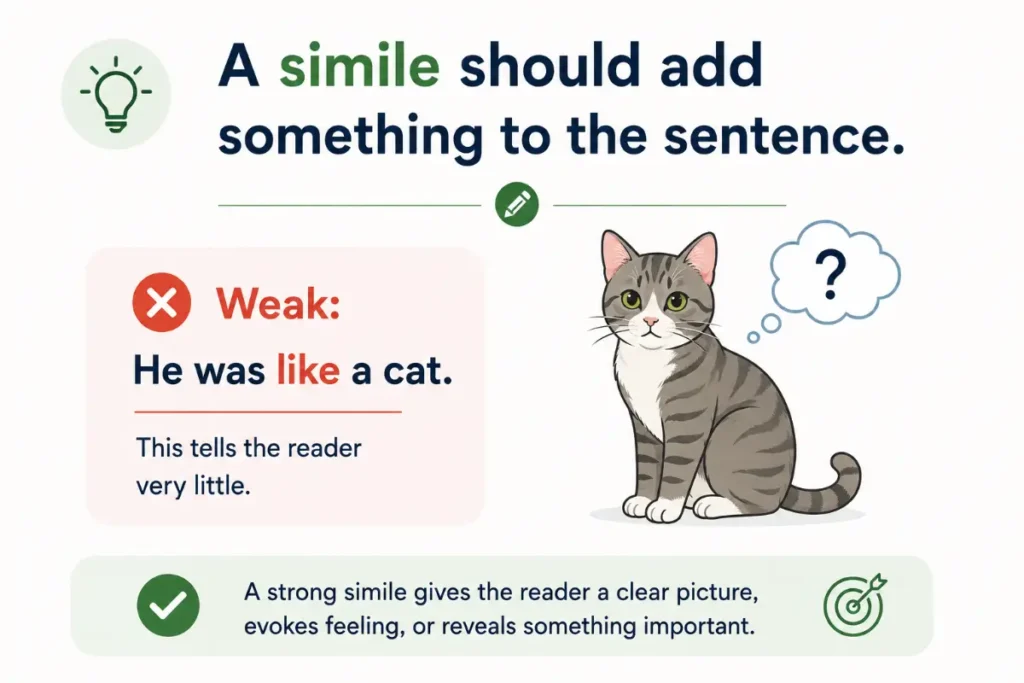
A simile should add something to the sentence.
Weak:
He was like a cat.
This tells the reader very little.
Stronger:
He moved like a cat through the dark hallway.
Now the reader understands the specific quality being compared.
Mixing Similes And Metaphors
A simile usually uses like or as.
She moved like a cat.
A metaphor makes a direct comparison.
She was a cat stalking through the hallway.
Both can work but they create different effects.
Choosing An Unclear Comparison
A comparison should be easy to picture.
If readers have to stop and figure out what the comparison means then it may not help the sentence.
Overusing Cat Comparisons
Even a great image loses its effect if it appears in every paragraph.
Use similes where they strengthen the description. Don’t add one simply because you can.
Forgetting The Exact Quality
A cat can be quiet fast curious graceful stubborn playful or independent.
These qualities aren’t interchangeable.
If your sentence is about speed then focus on feline agility.
If your sentence is about comfort then use an image of a sleeping cat.
Specific comparisons are almost always stronger than vague ones.
How To Create Your Own Cat Similes
Creating original comparisons becomes easier when you follow a simple process.
- Choose the quality you want to describe.
Maybe you want to describe silence.
- Think of a recognizable cat behavior connected with that quality.
A cat walking across a quiet room works well.
- Connect your subject to that behavior.
He moved like a cat crossing a sleeping house.
- Remove unnecessary words.
The final sentence should feel natural.
- Check the comparison.
Ask yourself what the reader is supposed to picture. If the answer is clear then the simile is doing its job.
This method works for almost any subject.
You can describe a person.
You can even describe an abstract idea.
For example:
Her curiosity was like a kitten that refused to stop exploring.
The comparison makes an invisible quality easier to imagine.
Memory Tips
The easiest way to remember useful similes is to connect common cat behaviors with the qualities they represent.
Quiet equals stealth.
Think of a cat walking across a dark room.
Fast equals agility.
Think of a cat springing toward a moving object.
Curious equals exploration.
Think of a kitten investigating a new box.
Calm equals comfort.
Think of a cat sleeping in sunlight.
Independent equals freedom.
Think of a cat wandering alone.
Angry equals defense.
Think of a cat protecting its territory.
Playful equals energy.
Think of a kitten chasing a toy.
Graceful equals balance.
Think of a cat walking along a narrow wall.
Once you have these mental pictures you can build your own comparisons instead of memorizing every example.
Related Grammar And Usage Notes
Similes are part of figurative language. They help writers communicate ideas through comparison rather than literal description.
The word like often introduces a simile.
She moved like a cat.
The word as can also create a comparison.
She was as quiet as a cat.
However not every sentence containing like or as is a simile.
For example:
I like cats.
Here like is a verb expressing preference.
She works as a teacher.
Here as introduces a role.
That means you should look at the function of the words rather than assuming every use of like or as creates figurative language.
Simile And Metaphor
A simile says that one thing is like another.
He moved like a cat.
A metaphor directly identifies one thing with another.
He was a cat in the darkness.
The simile is usually more explicit. The metaphor can feel stronger or more poetic.
Simile And Personification
Personification gives human qualities to nonhuman things.
The moon watched the street.
This is personification because the moon is described as performing a human action.
You can combine techniques.
The moon watched the town like a cat watching its territory.
This sentence uses personification and simile together.
Simile And Hyperbole
Hyperbole deliberately exaggerates.
He was as hungry as a cat that had never seen food.
The comparison may exaggerate the situation for humorous effect.
Good writers use these devices carefully. The goal is to strengthen an idea rather than decorate every sentence.
Why Cat Comparisons Are Effective In Storytelling
Strong storytelling depends on mental pictures.
Readers don’t simply process information. They imagine scenes.
Consider this sentence:
He waited quietly.
It communicates the basic idea.
Now consider:
He waited like a cat crouched beneath a table.
The second sentence gives the reader a physical image. You can picture the posture and the patience. You can also sense that the character may be watching and waiting for the right moment.
That is why comparisons can be powerful in fiction.
They compress several ideas into one image.
A cat crouched beneath a table suggests quietness patience alertness and possible action. The writer doesn’t need to explain all four qualities separately.
A good simile works almost like a shortcut for the imagination.
Why Cat Similes Work In Everyday Speech
You don’t need to be writing poetry or fiction to use figurative language.
People naturally use comparisons in everyday conversation.
She moves like a cat.
He’s curious like a kitten.
I slept like a cat in the sun.
The child was bouncing around like a kitten.
These phrases can make ordinary speech more expressive.
The trick is to keep the comparison natural. If the phrase sounds forced then a simpler description may work better.
Key Takeaways
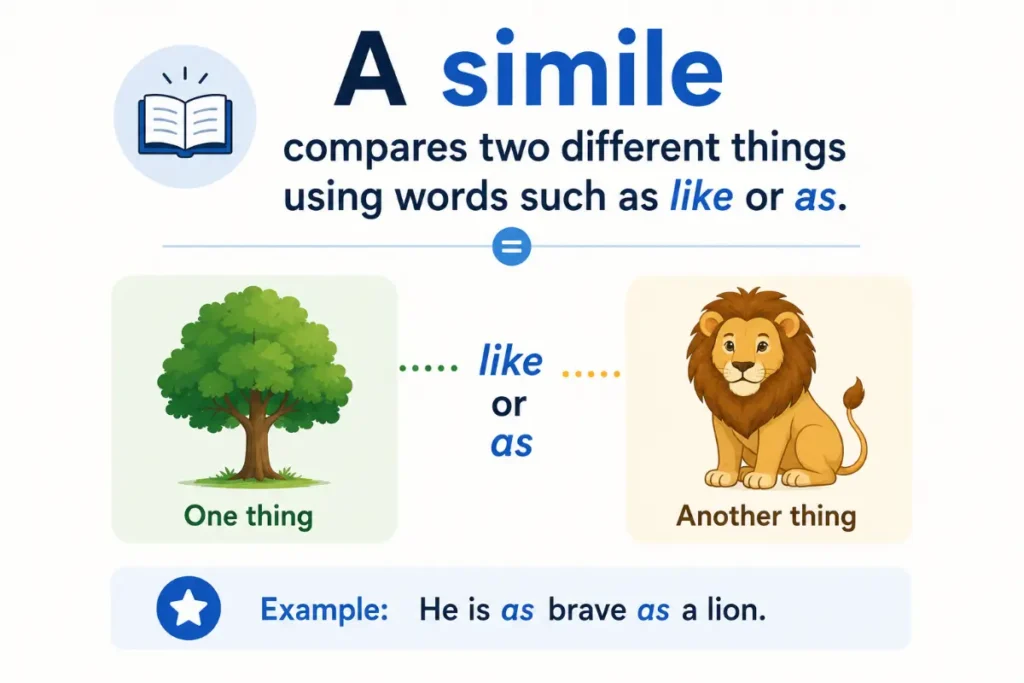
- A simile compares two different things using words such as like or as.
- Cat comparisons work because feline behavior gives readers familiar images of grace stealth curiosity speed independence and playfulness.
- A strong comparison focuses on one clear quality.
- Use quiet cats to describe stealth and careful movement.
- Use kittens to describe curiosity innocence and playful energy.
- Use a relaxed cat to describe comfort and calmness.
- Use an alert cat to describe focus attention and readiness.
- Use a defensive cat to describe anger confidence or determination.
- Don’t force a comparison into a sentence if it doesn’t add meaning.
- Original comparisons are often stronger than tired expressions because they give your writing a fresh image.
Conclusion
The best cat similes do more than compare a person or object to a feline. They give readers a clear image of a specific quality. A quiet character can move like a cat in the darkness. A curious child can explore like a kitten discovering a new room. Someone relaxed can be as peaceful as a cat sleeping in the sun.
The key is specificity. Think about the exact quality you want to show and then choose a cat behavior that naturally represents it. Grace calls for balance. Curiosity calls for exploration. Speed calls for a sudden leap. Comfort calls for a warm nap.
Once you start thinking in those images you can create fresh comparisons that make ordinary writing more vivid memorable and fun.
Frequently Asked Questions
What Is A Cat Simile?
A cat simile is a comparison between something and a cat or a feline quality. It normally uses like or as. For example: She moved like a cat through the hallway. The comparison doesn’t mean she is literally a cat. It highlights a shared quality such as quietness grace or stealth.
What Is A Good Cat Simile?
A strong example is He moved like a cat in the dark. It clearly communicates quiet careful movement. Other useful comparisons include as curious as a kitten for curiosity and as relaxed as a cat in the sun for calmness. The best choice depends on the quality you want to describe.
What Are Some Cute Cat Similes?
Cute examples include soft as a kitten’s fur and curled up like a kitten in a blanket. You can also compare a child’s playful behavior to a kitten chasing a toy. These comparisons work well in stories personal writing captions and descriptions of children or pets.
What Are Some Funny Cat Similes?
Funny comparisons often exaggerate familiar feline behavior. For example: He guarded the last cookie like a cat guarding its favorite chair. Another example is She ignored the alarm like a cat ignoring someone calling its name. Humor comes from applying a recognizable cat behavior to an ordinary human situation.
How Do You Use A Cat Simile In A Sentence?
Place the comparison where it clearly explains the quality you want to highlight. For example: The dancer moved like a cat across the stage. The phrase like a cat tells readers that the dancer moved with grace balance and control. A good simile should make the sentence more vivid rather than simply make it longer.
Can A Cat Simile Be Used In Academic Writing?
Yes but it depends on the purpose and subject. Figurative language can work in reflective writing creative assignments and some forms of persuasive writing. Formal academic writing usually favors precise literal language when presenting evidence or technical information. Use a simile when the comparison genuinely improves clarity or expression.
What Is The Difference Between A Cat Simile And A Cat Metaphor?
A simile makes the comparison explicit with words such as like or as. For example: She moved like a cat. A metaphor makes the comparison directly: She was a cat moving through the darkness. Both can create vivid imagery but a metaphor is usually more direct.
Why Are Cats Common In Similes?
Cats have many recognizable behaviors that translate easily into human descriptions. They can be quiet graceful curious playful fast cautious independent and alert. Because these qualities are easy to picture readers can understand the comparison quickly. That makes feline behavior useful for both everyday speech and creative writing.
Can I Create My Own Cat Similes?
Absolutely. Start with the quality you want to describe. Then think of a specific feline behavior that shows that quality. Finally connect your subject to the behavior with like or as. For example if you want to describe patience you might write She waited as patiently as a cat watching a mouse hole.
Are Cat Similes Only Used For People?
No. You can use them for animals objects weather sounds emotions and abstract ideas. For example The fog crept like a cat through the street describes weather. The engine purred like a giant cat describes a sound. The key is choosing a comparison that makes the subject easier to picture.

Idioms, Expressions & Figurative Language
Mason Ellsworth is an American language writer with a passion for English expressions, figurative language, and everyday communication. He explains idioms, similes, popular phrases, and commonly misunderstood expressions in a straightforward, engaging style that helps readers improve both their writing and spoken English.