
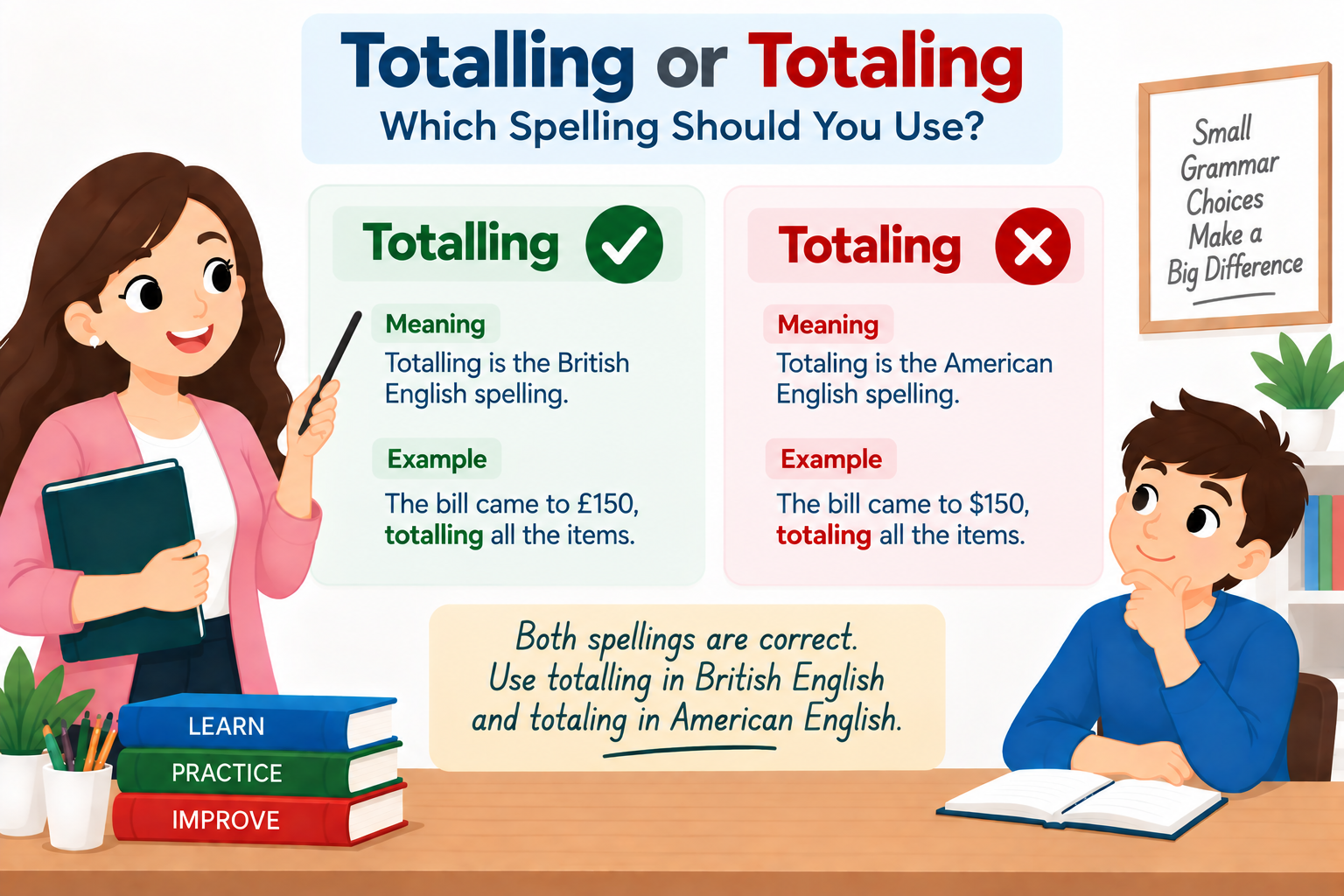
Totalling or totaling can seem confusing because the two words differ by only one letter. However both spellings are correct. American English normally uses totaling with one l while British English normally uses totalling with two l letters.
The word comes from the verb total which means to add amounts together and find the complete amount. For example you can total a group of expenses to find the final cost. When you describe that action in progress American English uses totaling and British English uses totalling.
For writers in the United States the choice is simple. Use totaling in school assignments business documents reports emails and general writing. If you’re following British English conventions use totalling. Neither form changes the meaning of the sentence.
Quick Answer
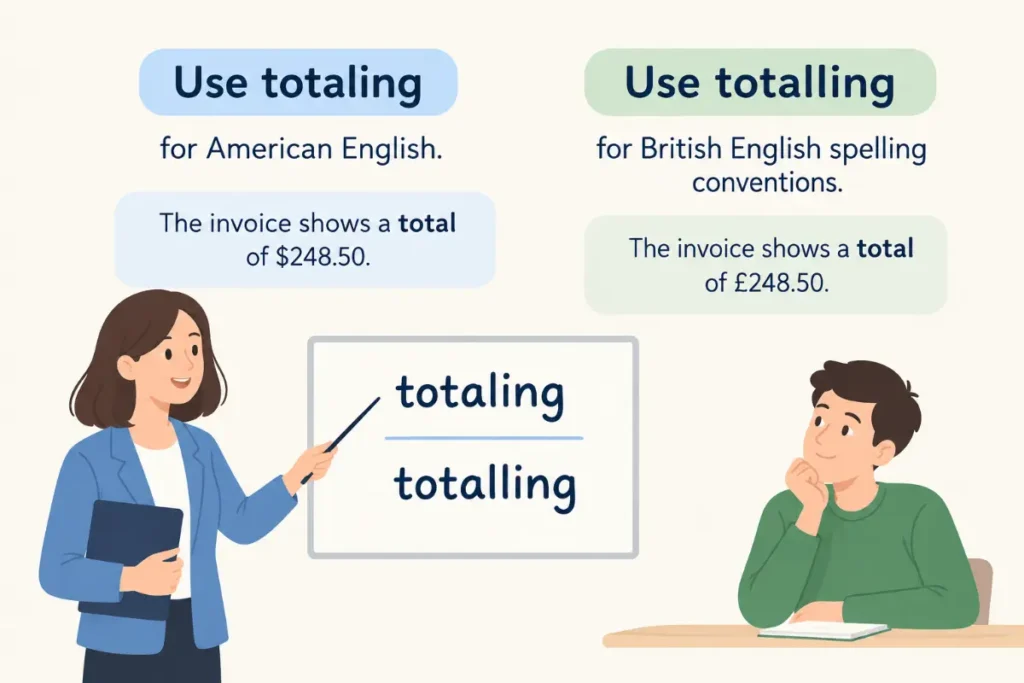
Totalling or totaling are both correct spellings of the present participle of the verb total. Totaling is the standard spelling in American English. Totalling is the standard spelling in British English and is also common in some other varieties of English. The meaning and pronunciation stay the same. The only difference is the regional spelling convention.
Table Of Contents
- The correct spelling in American English.
- The correct spelling in British English.
- What total means.
- Why the spelling changes.
- The spelling rule behind the difference.
- How totaling works in American English.
- How totalling works in British English.
- Examples in everyday writing.
- Totaling in financial writing.
- Totaling as a description of an amount.
- Common mistakes.
- Memory tips.
- Related forms of total.
- Pronunciation and meaning.
- Professional writing advice.
- Frequently asked questions.
- Key takeaways.
- Conclusion.
The Correct Spelling In American English
Totaling is the standard American English spelling.
American English normally keeps one l when the present participle of total is formed. The related past tense is totaled.
For example:
- The expenses are totaling more than $5,000.
- The invoices are totaling $8,400.
- The repairs are totaling nearly $2,000.
- The donations are totaling a record amount.
- The accountant is totaling the receipts.
- The project costs are totaling more than expected.
This spelling is the natural choice for a US audience.
If you’re writing for an American school newspaper company website financial report or general publication you should normally use totaling.
The Correct Spelling In British English
British English normally uses totalling with two l letters.
The related past tense is totalled.
For example:
- The expenses are totalling more than £5,000.
- The invoices are totalling £8,400.
- The repairs are totalling nearly £2,000.
- The donations are totalling a record amount.
- The accountant is totalling the receipts.
- The project costs are totalling more than expected.
The grammar is exactly the same. Only the spelling changes.
This pattern is common in British English with several verbs that end in l.
What Total Means
The word total can work as a noun adjective or verb.
As a noun total means the complete amount after smaller amounts have been added together.
For example:
The total is $500.
The total came to $1,200.
As an adjective total means complete or entire.
For example:
The project was a total success.
The company suffered a total loss.
As a verb total means to add amounts together or reach a particular amount.
For example:
The expenses total $4,000.
The three bills total $750.
The verb can then appear in its present participle form.
American English uses totaling.
British English uses totalling.
The basic meaning remains unchanged.
Why The Spelling Changes
The difference comes from regional spelling conventions.
American and British English share the same basic vocabulary and grammar but they don’t always spell words in exactly the same way. One familiar difference involves verbs that end in l.
American English often keeps one l before endings such as ed and ing.
British English often doubles the l.
This gives us familiar pairs such as:
| American English | British English |
|---|---|
| traveling | travelling |
| canceled | cancelled |
| canceling | cancelling |
| labeled | labelled |
| labeling | labelling |
| totaled | totalled |
| totaling | totalling |
The pattern isn’t simply a matter of one variety being right and the other being wrong. Both follow established spelling conventions.
That’s why an American editor may change totalling to totaling while a British editor may make the opposite choice.
The Spelling Rule Behind The Difference
The difference between totaling and totalling reflects a broader spelling pattern.
American English generally uses one l in many words of this type.
British English commonly doubles the final l.
The same contrast appears in the related past tense.
American English uses:
totaled
British English uses:
totalled
The present participle follows the same regional pattern.
American English uses:
totaling
British English uses:
totalling
This makes the forms easier to remember as pairs.
American English.
totaling and totaled.
British English.
totalling and totalled.
The spelling rule has some additional details and exceptions across English vocabulary. Still this simple pattern works well for total.
How Totaling Works In American English
In American English totaling is the present participle of total.
It can appear with forms of the verb be to describe an action in progress.
For example:
The accountant is totaling the invoices.
The staff are totaling the daily sales.
The manager was totaling the expenses when I called.
The word can also describe a combined amount.
For example:
The project includes expenses totaling $25,000.
The charity received donations totaling $75,000.
The company reported sales totaling $2 million.
In these sentences totaling tells the reader that the amount represents the combined value of the items being discussed.
This construction is common in business writing financial reports news writing and everyday descriptions of costs.
How Totalling Works In British English
British English uses totalling in exactly the same grammatical situations.
For example:
The accountant is totalling the invoices.
The staff are totalling the daily sales.
The manager was totalling the expenses when I called.
The project includes expenses totalling £25,000.
The charity received donations totalling £75,000.
The company reported sales totalling £2 million.
The grammar and meaning stay the same.
The additional l simply reflects the British spelling convention.
Examples In Everyday Writing
Seeing both forms side by side makes the difference easy to understand.
American English Examples
- The three bills are totaling $450.
- The repairs are totaling more than we expected.
- The project has costs totaling $20,000.
- The donations are totaling $15,000 so far.
- We spent two hours totaling the scores.
- The expenses are totaling nearly $7,500.
- The orders are totaling 2,000 units this month.
- The invoices are totaling $18,300.
- The purchases are totaling more than $1,000.
- The accountant is totaling the receipts.
British English Examples
- The three bills are totalling £450.
- The repairs are totalling more than we expected.
- The project has costs totalling £20,000.
- The donations are totalling £15,000 so far.
- We spent two hours totalling the scores.
- The expenses are totalling nearly £7,500.
- The orders are totalling 2,000 units this month.
- The invoices are totalling £18,300.
- The purchases are totalling more than £1,000.
- The accountant is totalling the receipts.
The important point is that the sentences don’t change grammatically. Only the spelling changes.
Totaling In Financial Writing
Totaling appears frequently in American financial and business writing.
Writers use it to describe combined costs revenue sales donations losses and other amounts.
For example:
The company reported expenses totaling $3 million.
The project received grants totaling $800,000.
The retailer recorded sales totaling $2.5 million.
The organization received donations totaling $400,000.
The construction project included several expenses totaling $1 million.
This structure is useful because it communicates numerical information efficiently.
Compare these two sentences:
The company received three payments with a combined value of $12,000.
The company received three payments totaling $12,000.
The second sentence is shorter and more direct.
British English uses the same structure with totalling.
For example:
The company received three payments totalling £12,000.
Totaling As A Description Of An Amount
One especially useful structure is a noun followed by totaling and an amount.
For example:
The project includes five stages totaling 40 hours.
The company has four offices totaling 600 employees.
The charity received ten gifts totaling $25,000.
The store recorded sales totaling $100,000.
The organization received several donations totaling $50,000.
In each sentence the word totaling connects the subject with a combined amount.
The construction works well because it avoids unnecessary wording.
Instead of saying:
The project includes five stages that have a combined duration of 40 hours.
You can write:
The project includes five stages totaling 40 hours.
The shorter version is clear and natural.
British English uses the same structure with totalling.
For example:
The project includes five stages totalling 40 hours.
The charity received ten gifts totalling £25,000.
The Difference Between Totaling And Totalling
The difference is spelling rather than meaning.
| Feature | American English | British English |
|---|---|---|
| Present participle | totaling | totalling |
| Past tense | totaled | totalled |
| Meaning | Add amounts together or reach an amount | Add amounts together or reach an amount |
| Pronunciation | Essentially the same | Essentially the same |
| Main spelling difference | One l | Two l letters |
| Common regional use | United States | United Kingdom |
The simplest rule is this.
Use totaling for standard American English.
Use totalling for standard British English.
The word doesn’t become a different verb when the spelling changes.
Common Mistakes
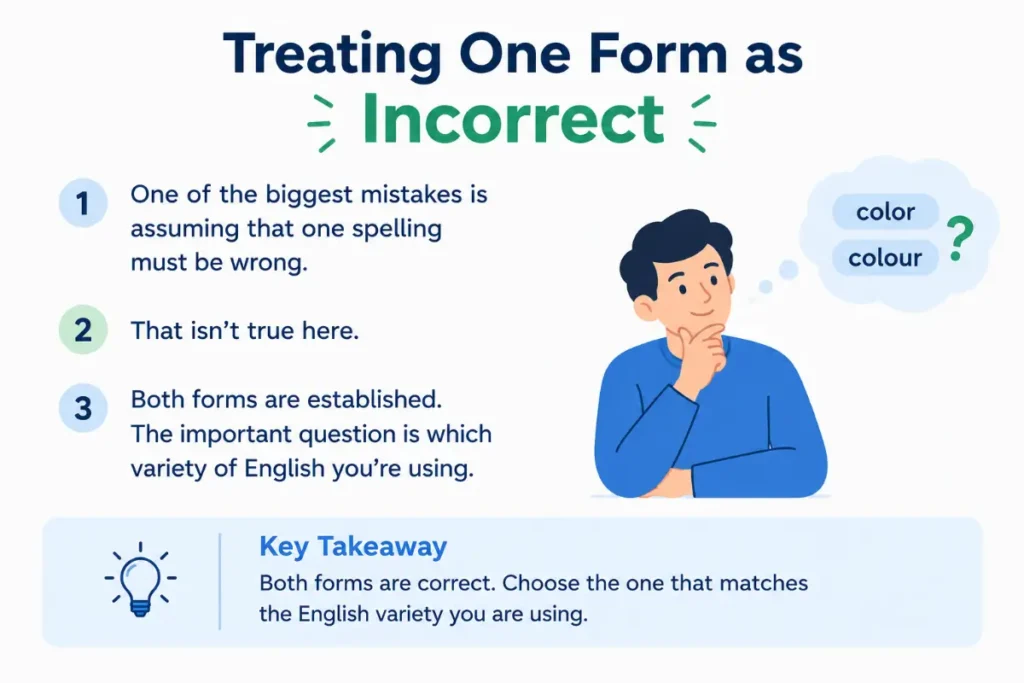
Treating Totalling As A Misspelling
Some writers see the extra l and assume totalling is incorrect.
It isn’t.
Totalling is a standard British English spelling.
If you’re writing for a US audience then totaling is the preferred form. If you’re writing according to British conventions then totalling is appropriate.
Treating Totaling As A Misspelling
The opposite mistake happens too.
Some writers assume that British English requires two l letters in every form of the word.
That isn’t a useful rule for American writing.
Totaling is the standard American spelling and is completely correct in US English.
Mixing Regional Spelling
A document can become inconsistent when it switches between American and British spelling.
For example an American report might use totaling in one paragraph and totalling in another.
Readers will understand both forms but the inconsistent style can make the document look poorly edited.
Choose one spelling system and use it throughout the document.
Confusing Totaling With Tallying
Totaling and tallying have related meanings but they aren’t always interchangeable.
To total something means to add amounts together and find the complete amount.
To tally something can mean to count items or record a running number.
For example:
The accountant is totaling the expenses.
The clerk is tallying the votes.
The first sentence focuses on calculating a final amount.
The second focuses on counting or recording items.
Confusing Totaling With Totalled
American English uses totaled as the past tense.
British English uses totalled.
For example:
American English.
The expenses totaled $5,000.
British English.
The expenses totalled £5,000.
The present participle follows the same regional pattern.
American English.
The expenses are totaling $5,000.
British English.
The expenses are totalling £5,000.
Assuming The Pronunciation Changes
The extra l in totalling doesn’t create an extra spoken sound.
Both forms have the same basic pronunciation.
The spelling difference is mainly a written distinction.
This is useful to remember because English spelling often contains letters that don’t create a separate sound.
Memory Tips
A simple memory trick can help you remember the correct form.
Think about your audience first.
For American English use one l.
Totaling.
For British English use two l letters.
Totalling.
You can also remember the related past forms.
American English:
totaling and totaled.
British English:
totalling and totalled.
Another useful method is to compare the word with other familiar regional spellings.
American English often uses:
- traveling.
- canceling.
- labeling.
- totaling.
British English often uses:
- travelling.
- cancelling.
- labelling.
- totalling.
Once you recognize this pattern the spelling becomes much easier to remember.
Related Forms Of Total
The word total can appear in several grammatical forms.
Total As A Noun
A total is the complete amount after smaller amounts have been combined.
For example:
The total was $750.
The final total came to $1,200.
Total As An Adjective
Total can describe something complete or entire.
For example:
The project was a total success.
The company suffered a total loss.
Total As A Verb
The verb total means to add amounts together or reach a particular amount.
For example:
The expenses total $5,000.
The three invoices total $4,200.
Totals As A Verb
Totals is the third person singular present form.
For example:
The bill totals $450.
The company totals its daily sales every evening.
Totaled In American English
Totaled is the standard American past tense and past participle.
For example:
The expenses totaled $4,500.
The repairs totaled $10,000.
Totalled In British English
Totalled is the standard British form.
For example:
The expenses totalled £4,500.
The repairs totalled £10,000.
Totaling In American English
Totaling is the American present participle.
For example:
The expenses are totaling $4,500.
Totalling In British English
Totalling is the British present participle.
For example:
The expenses are totalling £4,500.
Pronunciation And Meaning
The spelling difference doesn’t create a meaningful difference in pronunciation.
Both forms come from the same verb and express the same idea.
The base word total has different accent specific pronunciations across English speaking regions. However the additional l in totalling doesn’t add another syllable.
Both forms contain the same basic number of syllables.
The important lesson for English learners is that spelling and pronunciation don’t always change together.
In this case the written form changes according to regional convention while the spoken form remains essentially the same.
Professional Writing Advice
The best approach in professional writing is consistency.
If you’re writing for an American audience use totaling.
If you’re writing for a British audience use totalling.
Don’t change one form simply because another variety uses a different spelling.
This matters in business reports academic writing journalism technical documents school assignments websites and professional emails.
For a US audience the practical choice is totaling.
For a UK audience the practical choice is totalling.
If you’re editing an existing document first identify the spelling system used throughout the document. Then make your changes consistently.
When Totaling Is The Better Choice
For American English writing totaling is the natural choice.
Use it when you describe an action that involves adding amounts together.
For example:
The accountant is totaling the invoices.
Use it when describing a combined amount.
For example:
The invoices contain charges totaling $6,000.
Use it in business writing.
For example:
The company reported three expenses totaling $2 million.
Use it in general American writing whenever the verb total needs its present participle form.
The key point is simple.
American English uses one l.
When Totalling Is The Better Choice
For British English writing totalling is the natural choice.
Use it in the same grammatical situations.
For example:
The accountant is totalling the invoices.
The invoices contain charges totalling £6,000.
The company reported three expenses totalling £2 million.
The meaning remains unchanged.
The spelling simply follows British convention.
Is Totaling Or Totalling More Common In The United States
For standard American English totaling is the expected spelling.
American dictionaries and usage references recognize the one l form as the US spelling.
That makes totaling the natural choice for American websites articles reports school assignments and professional documents.
You may still encounter totalling in American contexts. This can happen when a text follows British or Canadian spelling conventions or when material has been copied from an international source.
That doesn’t make totalling the preferred US spelling.
Is Totalling Wrong In American English
No.
Totalling is a valid English spelling and is standard in British English.
However American English normally uses totaling.
So if you’re writing specifically in American English choose totaling for consistency.
The difference is similar to other regional spelling pairs such as traveling and travelling or canceled and cancelled.
Is Totaling Wrong In British English
No.
British readers understand totaling easily and may encounter it in American publications.
However totalling is the standard British spelling.
If you’re following British English style use totalling.
The important distinction is regional convention rather than meaning.
Does Canadian English Use Totaling Or Totalling
Canadian English can show both American and British spelling patterns.
Totalling is commonly used in Canadian English and can appear alongside other British style spellings.
Canadian English has developed its own combination of spelling preferences. For that reason a Canadian document may not follow the exact same pattern as a US document or a UK document.
If you’re writing specifically for Canadian readers follow the style guide required by your school employer publisher or organization.
Is Totaling A Verb
Yes.
Total is a verb when it means to add amounts together or reach a particular amount.
For example:
The costs total $9,000.
The repairs totaled $12,000.
The expenses are totaling $15,000.
The last example uses the present participle.
In British English the corresponding form is totalling.
For example:
The expenses are totalling £15,000.
Can Totaling Describe A Number
Yes.
One common structure uses totaling followed by an amount.
For example:
The company received donations totaling $50,000.
The project created costs totaling $100,000.
The store recorded sales totaling $20,000.
The organization received several payments totaling $8,000.
In each sentence the word tells the reader that the stated amount represents the combined value.
British English uses totalling in the same structure.
For example:
The company received donations totalling £50,000.
Totaling And Totalling In Formal Writing
Both forms work in formal writing when they match the regional spelling standard.
Neither form is inherently informal.
You can use them in:
- Academic papers.
- Business reports.
- Financial documents.
- News reports.
- Government documents.
- Research writing.
- Professional emails.
- Technical documents.
- School assignments.
- General informational content.
The main concern is consistency.
American English normally uses totaling.
British English normally uses totalling.
Expert Editor Insight
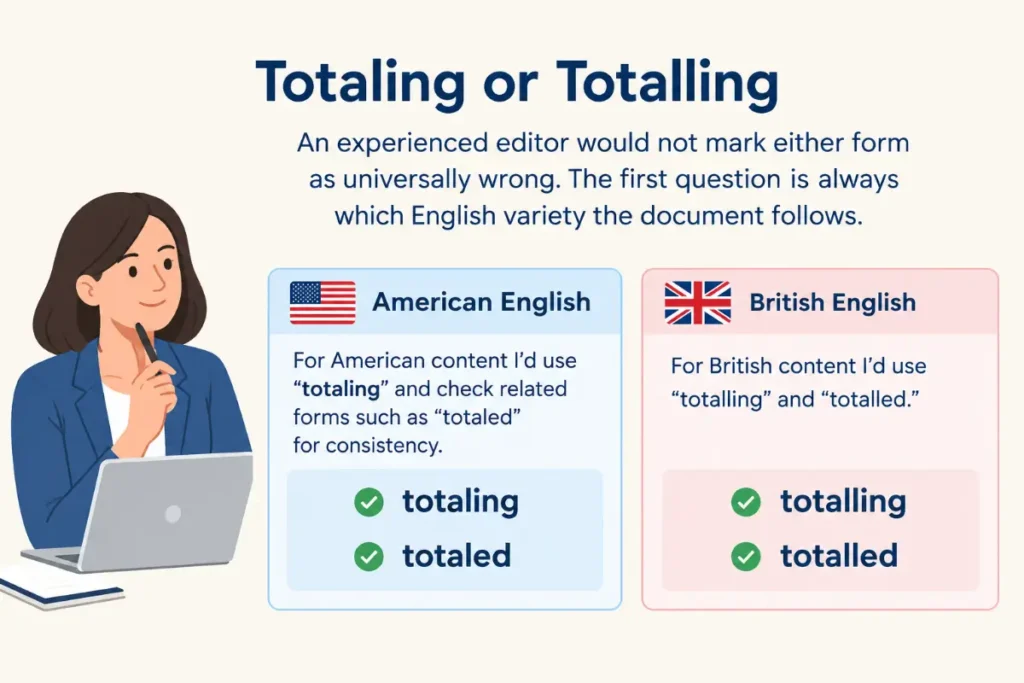
An experienced editor would not mark either form as universally wrong. The first question is always which English variety the document follows. For American content I’d use totaling and check related forms such as totaled for consistency. For British content I’d use totalling and totalled. Spelling software may accept both because both are legitimate forms, so a dictionary check alone may not settle the style question. The stronger editing habit is to establish the regional style before proofreading and then apply it consistently across the entire document.
Key Takeaways
- Totaling is the standard American English spelling.
- Totalling is the standard British English spelling.
- Both forms come from the verb total.
- Both forms have the same basic meaning.
- The spelling difference doesn’t change the pronunciation in any important way.
- American English normally uses totaled in the past tense.
- British English normally uses totalled in the past tense.
- Canadian English can use totalling along with other spelling patterns.
- The difference comes from regional spelling conventions.
- For US writing use totaling and keep your spelling consistent.
Conclusion
Totalling or totaling are both correct forms of the same English verb. American English normally uses totaling with one l while British English normally uses totalling with two l letters. The difference is a matter of spelling convention rather than meaning or grammar.
For American readers choose totaling in sentences such as The expenses are totaling $5,000 and The project includes costs totaling $20,000. For British readers use totalling in the same grammatical situations. The meaning stays the same.
The easiest way to remember the distinction is to connect one l with American English and two l letters with British English. Once you know that pattern the choice becomes straightforward. For standard US writing use totaling and for standard British writing use totalling.
Frequently Asked Questions
Is totaling the American spelling?
Yes. Totaling is the standard American English spelling of the present participle of total.
Is totalling the British spelling?
Yes. Totalling is the standard British English spelling. It contains two l letters before ing.
Do totaling and totalling mean the same thing?
Yes. Both forms refer to adding amounts together or describing a combined amount. The difference is regional spelling.
Should I use totaling in American English?
Yes. Use totaling when writing in standard American English.
Should I use totalling in British English?
Yes. Use totalling when following standard British English spelling.
Is totalled American or British?
Totalled is the standard British spelling. American English normally uses totaled.
Is totaled American or British?
Totaled is the standard American spelling. British English normally uses totalled.
Does the pronunciation change?
No. The spelling difference doesn’t create a separate pronunciation or change the meaning.
Why does British English double the l?
British English commonly doubles the final l in this type of verb before endings such as ed and ing. American English often keeps one l.
Can I use both spellings in one article?
You can but consistent regional spelling is better. Choose the form that matches the English variety used throughout your article.
Is totaling a real English word?
Yes. Totaling is a standard English word and the normal American English present participle of total.
Is totalling a real English word?
Yes. Totalling is a standard English word and the normal British English present participle of total.

Confusing Words, Spelling & Word Choice
Claire Whitmore is a U.S.-based English editor who writes about commonly confused words, spelling differences, and word choice. Her work helps readers understand subtle distinctions between similar-looking words through simple definitions, practical examples, and modern usage guidance in both American and British English.