Would vs Will Meaning And Grammar Rules

Would vs Will Meaning And Grammar Rules
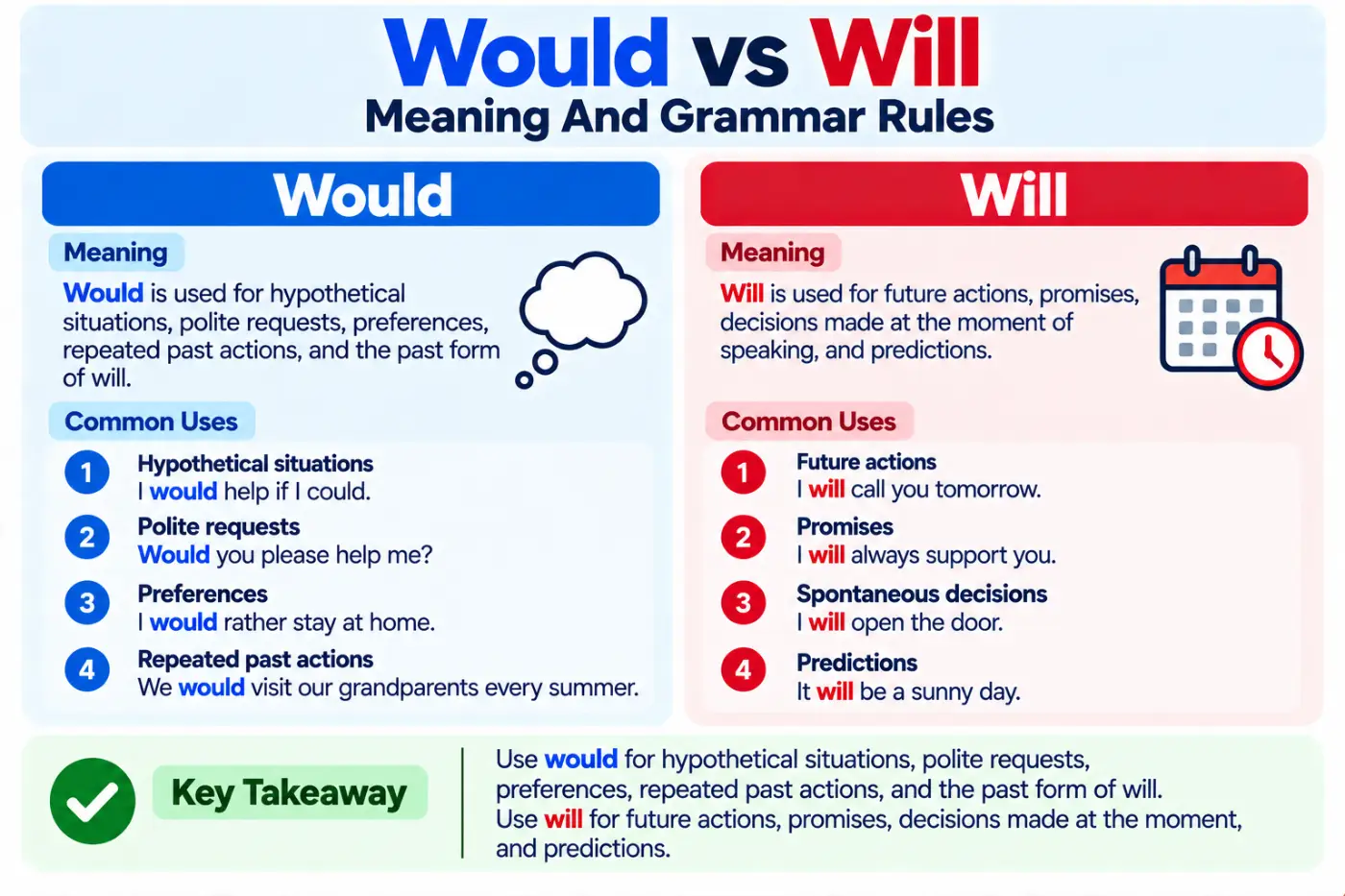
Would vs will can confuse English learners because both words are modal verbs that talk about actions, intentions, expectations, and conditions. They often appear in similar sentences, but they do not carry the same meaning. A small change from will to would can shift a sentence from a real future plan to an imagined situation … Read more
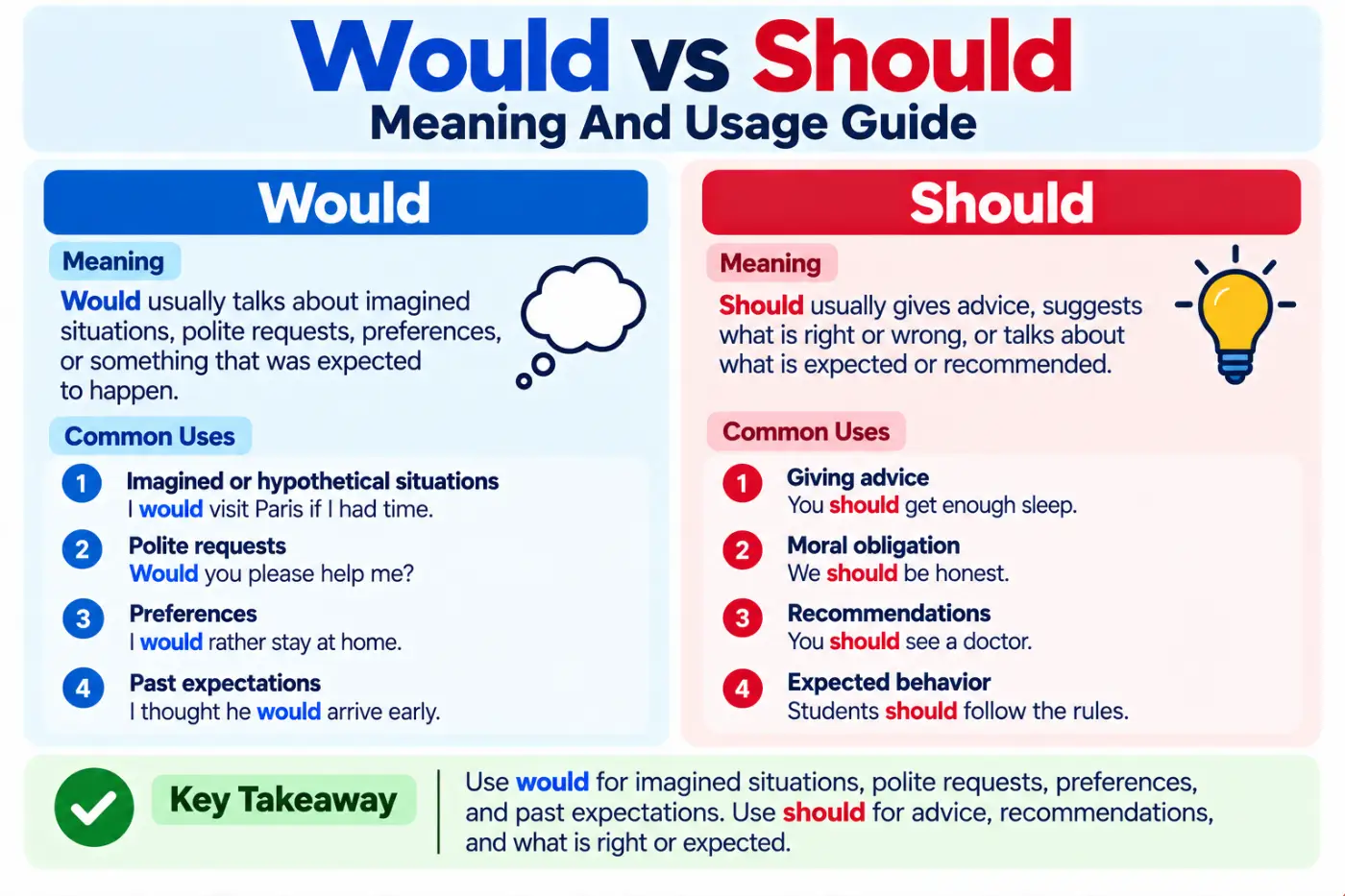
Would vs Should Meaning And Usage Guide

Would vs Should Meaning And Usage Guide

Would vs should can confuse learners because both words work as modal verbs and often appear before the base form of another verb. They can also appear in polite conversations and conditional sentences. Still their meanings are quite different. Once you understand the job each word performs the choice becomes much easier. Think of would … Read more

would vs could Meaning Difference And Usage

would vs could Meaning Difference And Usage

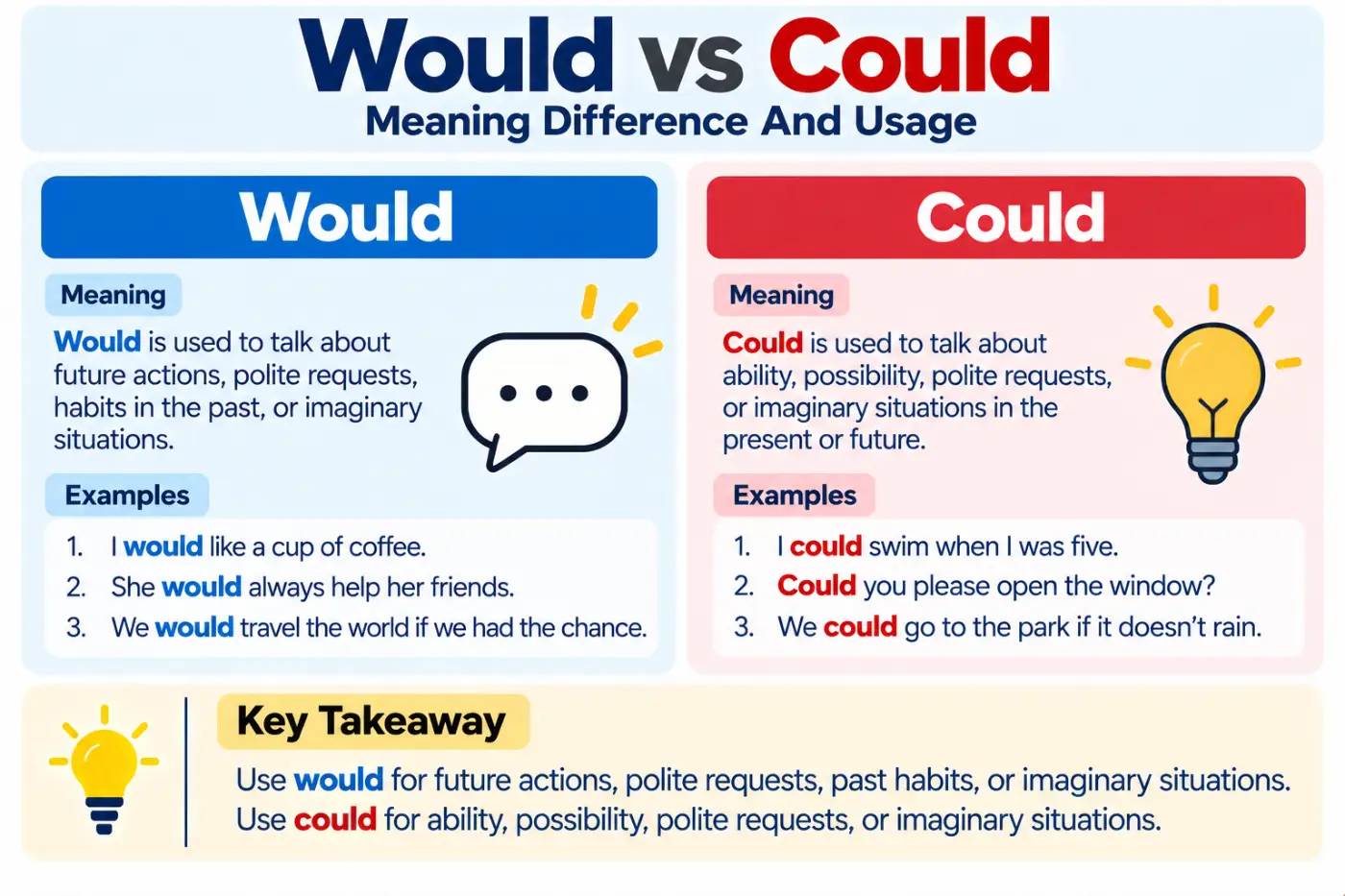
would vs could is a common grammar question because both words can appear in polite requests and imagined situations. The easiest starting point is this: would often focuses on willingness, preference, or an imagined result, while could often focuses on ability or possibility. The right choice depends on what you want the sentence to communicate. … Read more

might vs would Meaning Difference and Usage

might vs would Meaning Difference and Usage

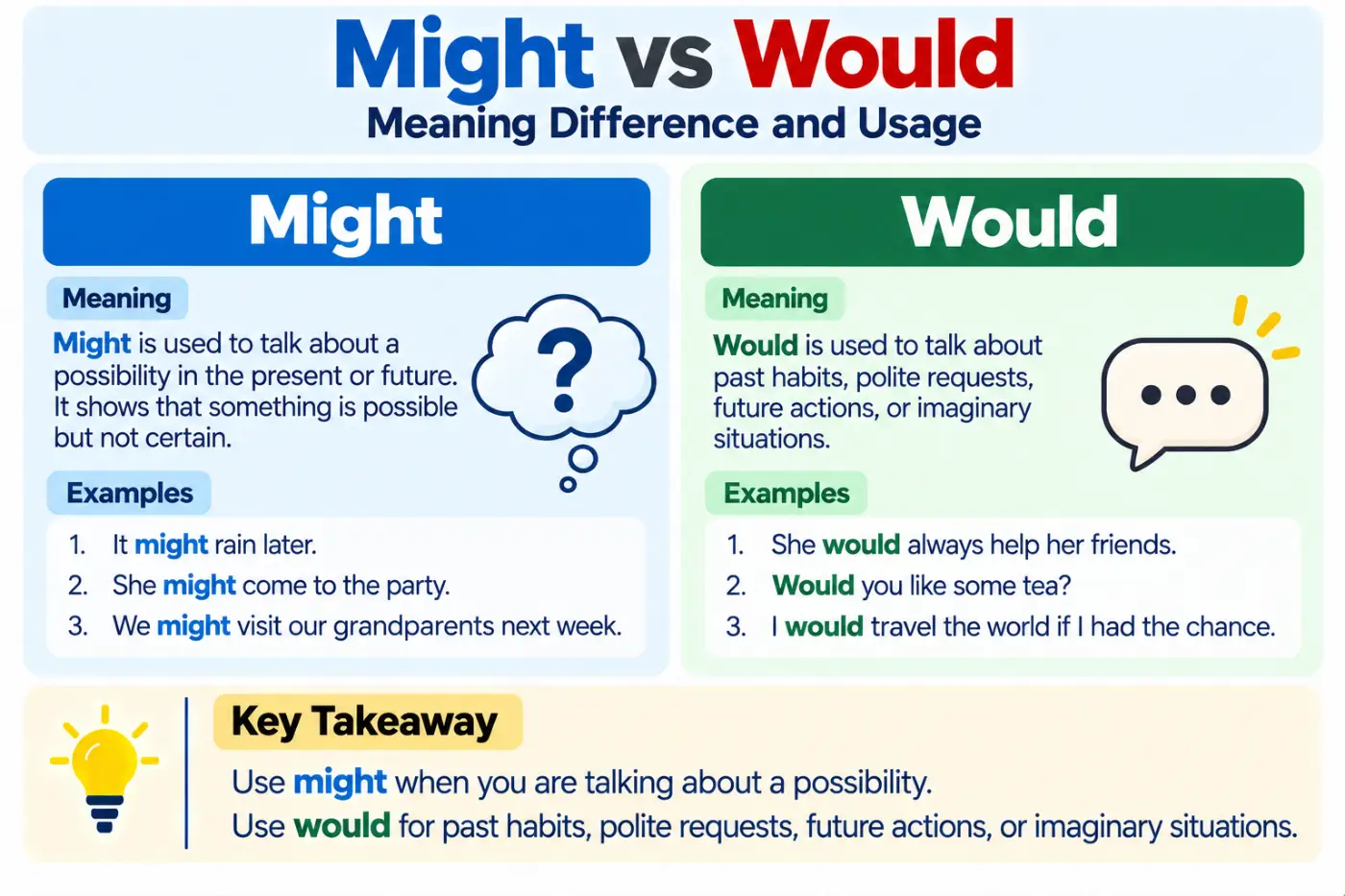
might vs would is a common grammar question because both words can appear in sentences about situations that are uncertain, imagined, or dependent on another event. They can sometimes occur in similar sentence patterns, but they don’t carry the same meaning. Might usually points to possibility, while would often connects an imagined condition with its … Read more

might vs could Meaning Difference And Usage

might vs could Meaning Difference And Usage

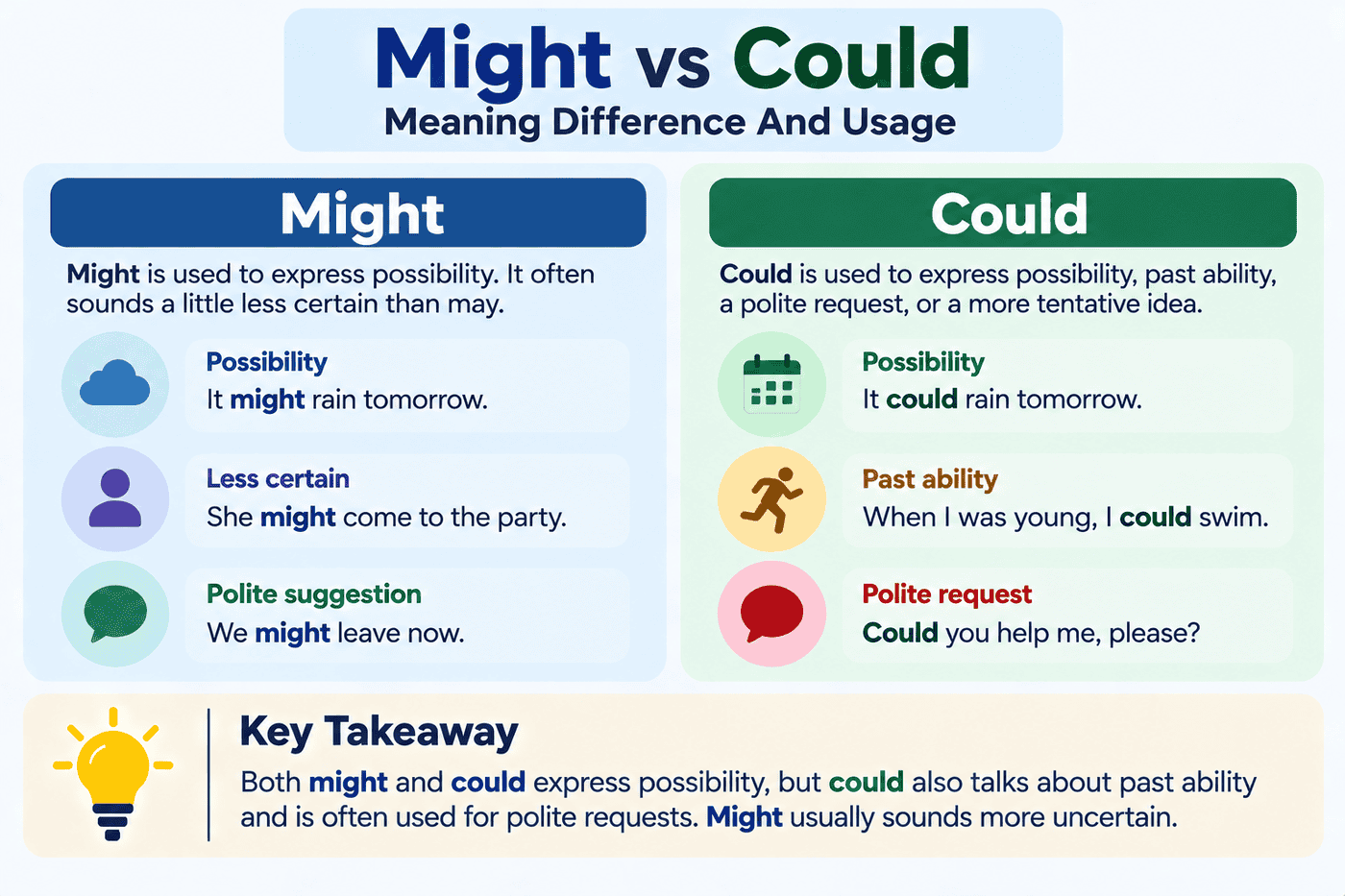
might vs could is a common grammar question because both modal verbs can express possibility. In many sentences, they can sound very similar, but they don’t always communicate the same idea. The main difference is that might often presents a possibility with uncertainty, while could often presents a possible outcome, available option, ability, or hypothetical … Read more

May vs Can Meaning and Correct Usage

May vs Can Meaning and Correct Usage

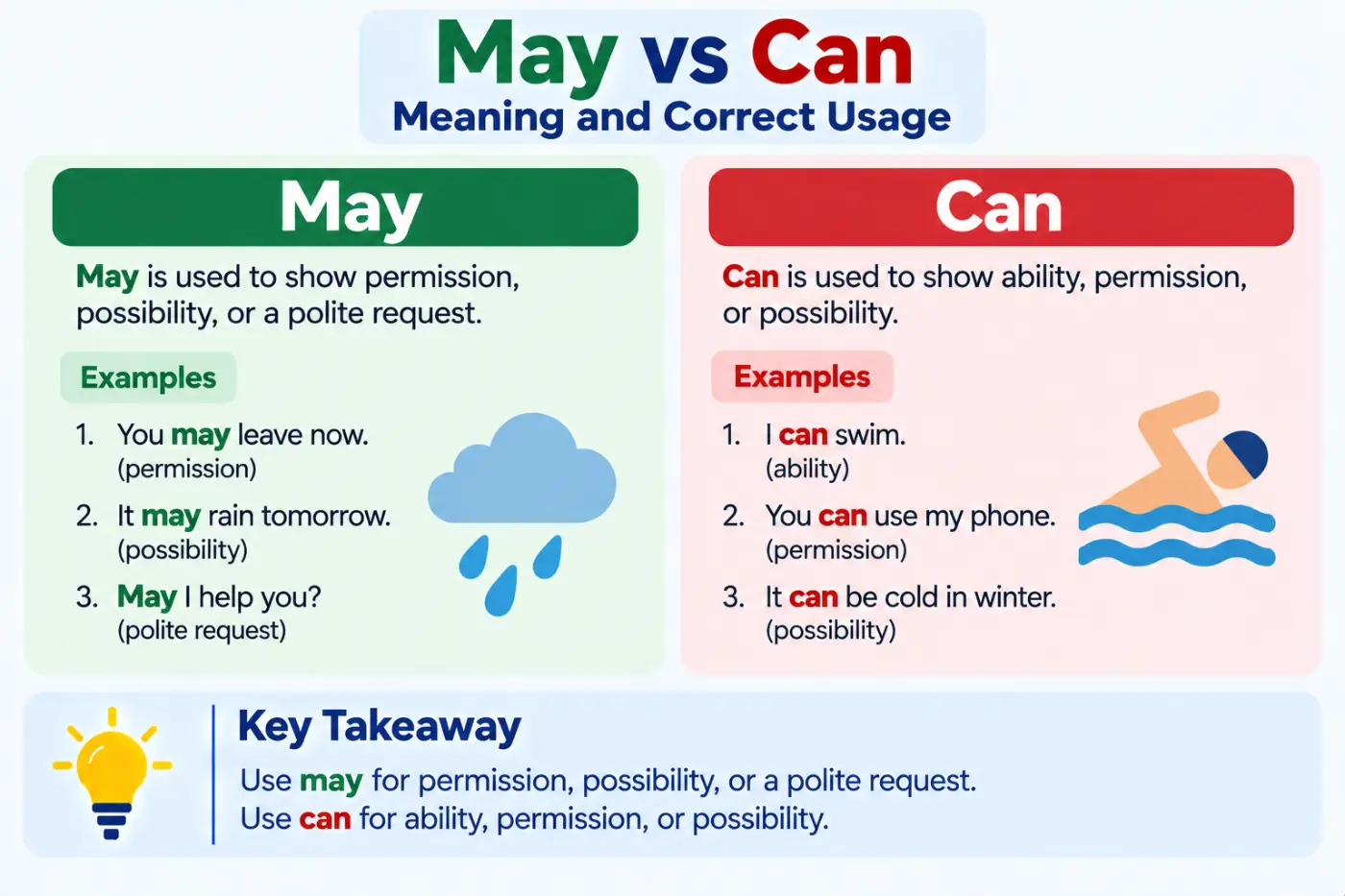
May vs can is one of those grammar questions that looks simple until you have to choose one in a real sentence. Both words can express permission and possibility, but can also has a strong connection with ability. May does not normally express physical or learned ability in standard English. The confusion becomes clearer when … Read more

May vs Shall Meaning and Grammar Guide

May vs Shall Meaning and Grammar Guide

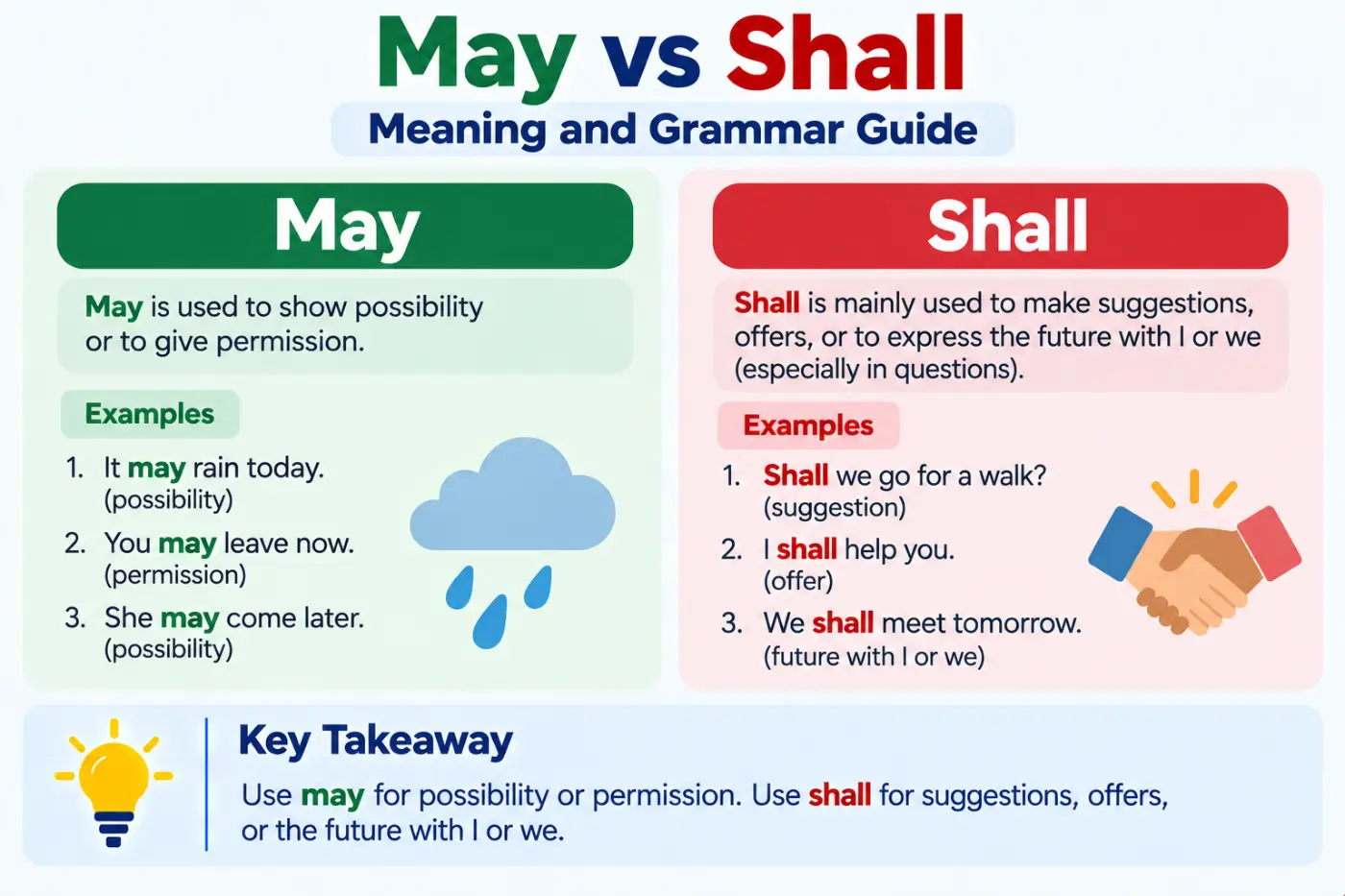
May vs shall can be confusing because both are modal verbs, yet they can communicate very different ideas. May commonly expresses permission or possibility, while shall can express a future action, a firm instruction, or a formal obligation. The intended meaning depends heavily on the sentence and the context. For example, You may leave now … Read more

May vs Might Meaning and Correct Usage

May vs Might Meaning and Correct Usage

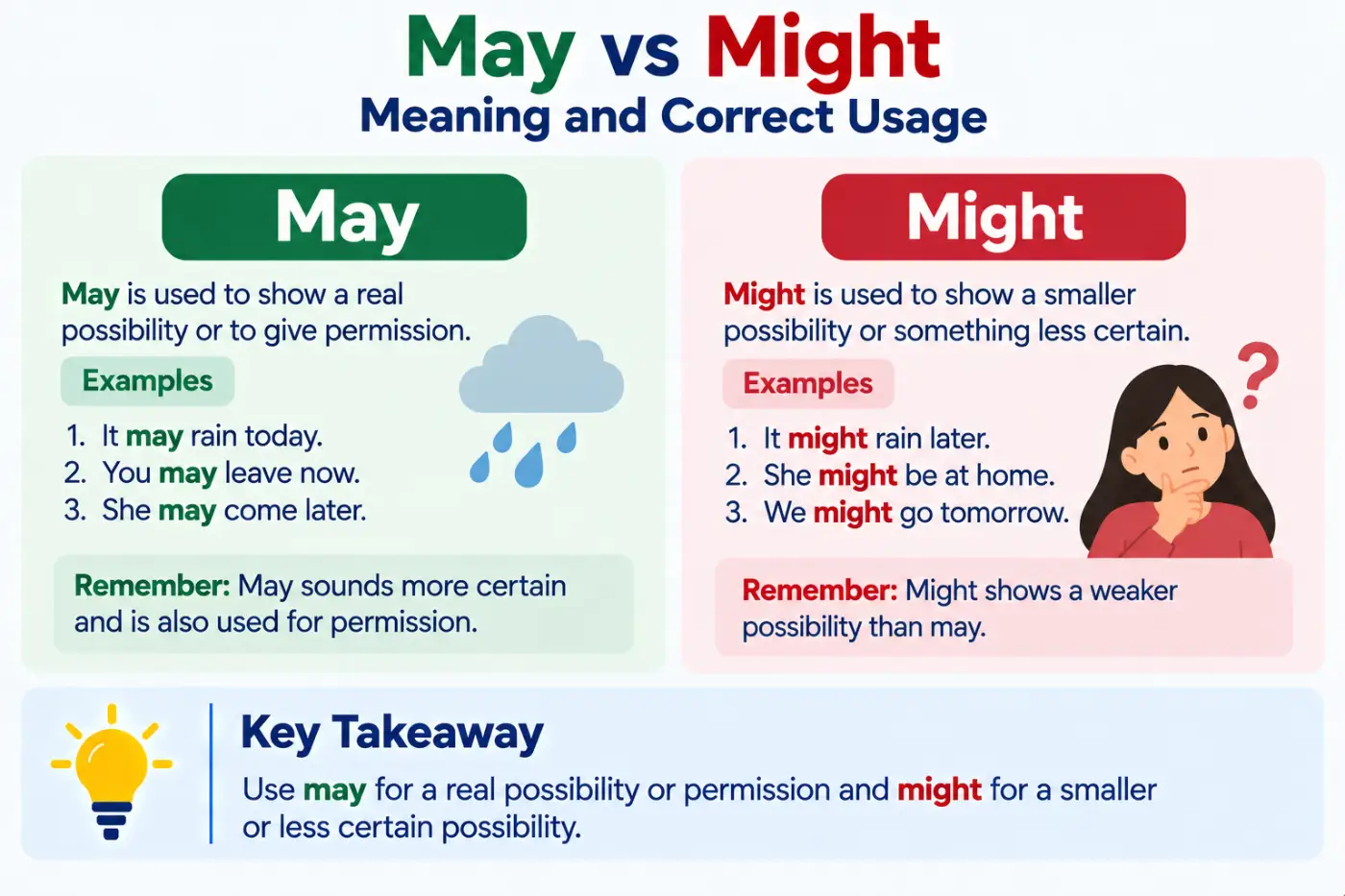
May vs might can be confusing because both modal verbs often appear in sentences about possibility. In many everyday situations, you can use either one without creating a serious grammatical error. The difference usually comes from certainty, context, time, and the speaker’s intended tone. May has several jobs in English. It can describe possibility, give … Read more