May vs Might Meaning and Correct Usage

May vs Might Meaning and Correct Usage
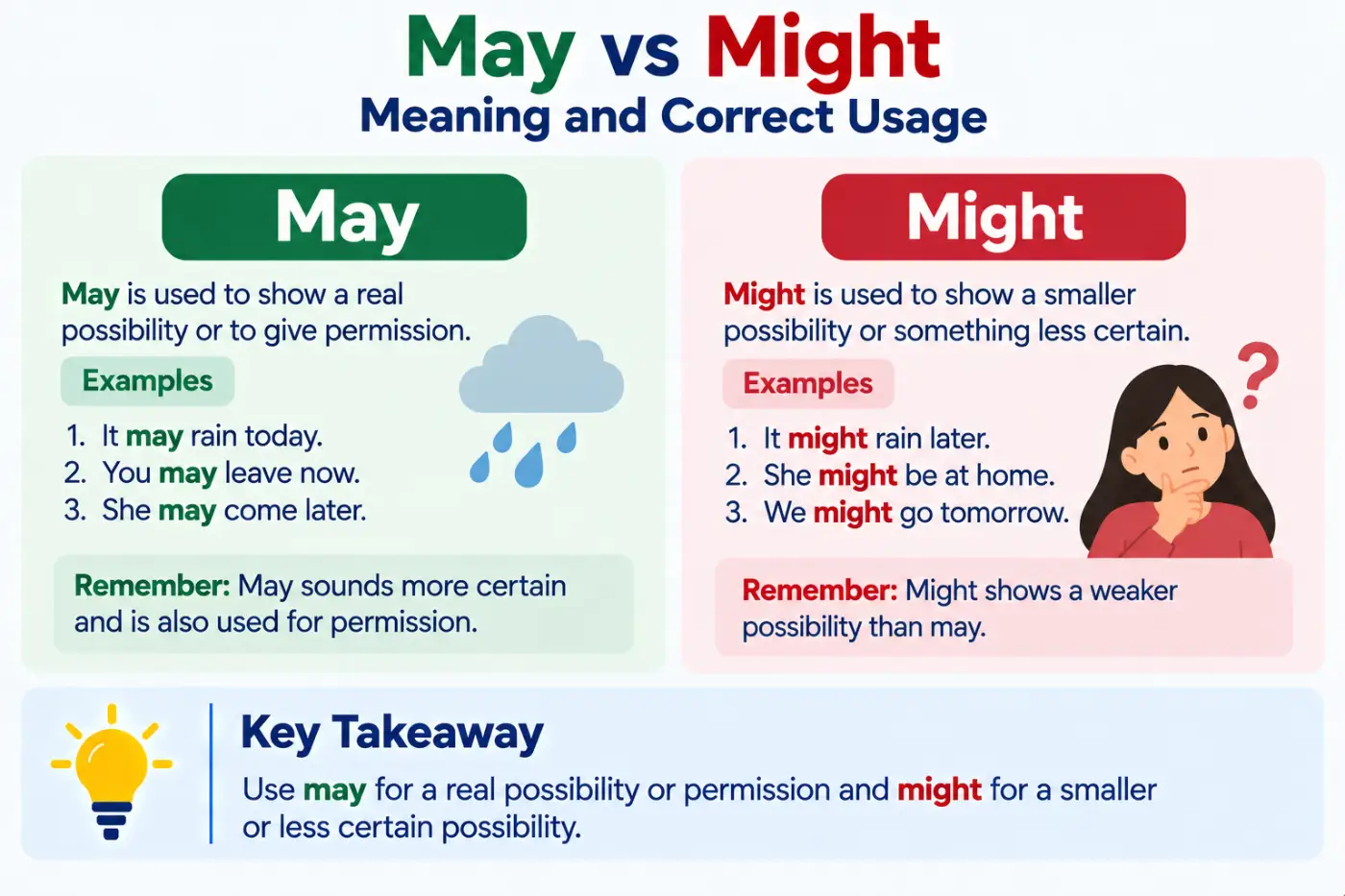
May vs might can be confusing because both modal verbs often appear in sentences about possibility. In many everyday situations, you can use either one without creating a serious grammatical error. The difference usually comes from certainty, context, time, and the speaker’s intended tone. May has several jobs in English. It can describe possibility, give … Read more
Constant vs Consistent: Meaning and Usage

Constant vs Consistent: Meaning and Usage

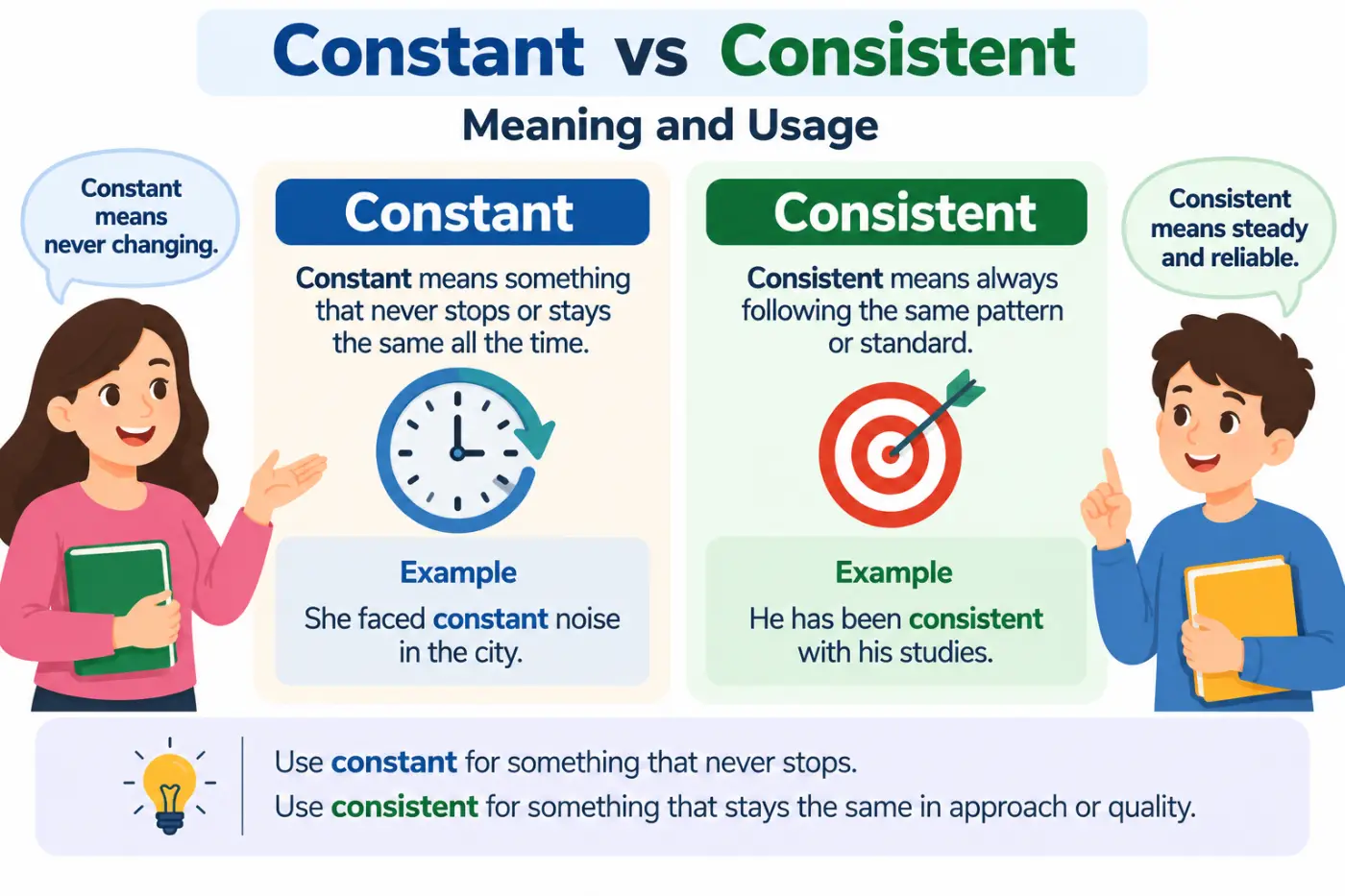
Short Answer Constant describes something that continues over time or stays the same. Consistent describes something that remains reliable or agrees with a pattern standard or expectation. A constant problem keeps happening while consistent work produces dependable results. The two words overlap because both can suggest stability but they emphasize different qualities. Table Of Contents … Read more

Afterward vs Afterwards: Which One Is Correct

Key Takeaways

Afterward vs afterwards often confuses writers because the two words have exactly the same basic meaning. Both mean something happens later or after another event. The main difference is regional preference rather than grammar. In American English afterward is usually the more common choice while British English often favors afterwards. The extra s can make … Read more