
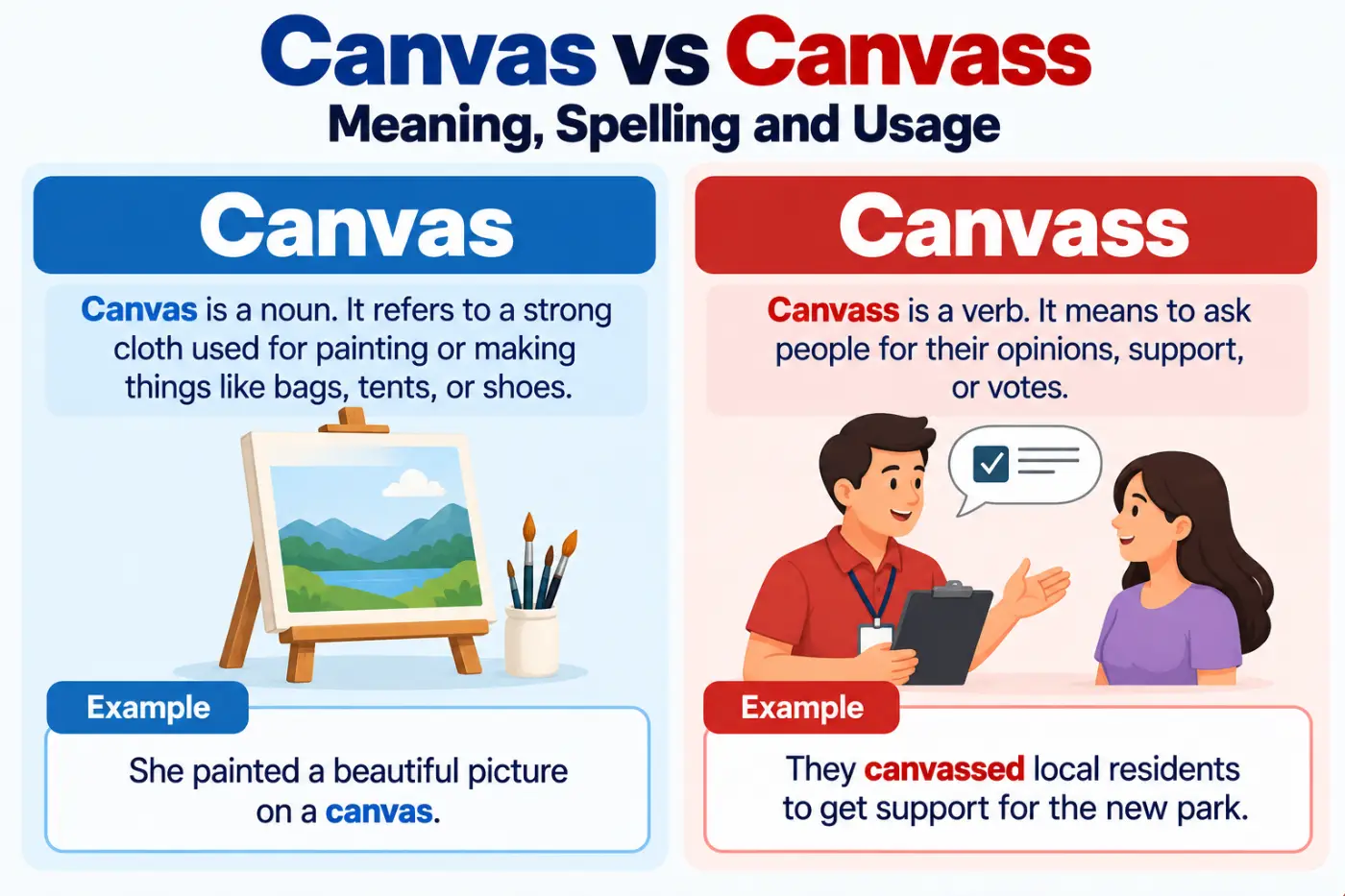
The confusion between canvas vs canvass is easy to understand. The two words look almost identical, but they have completely different meanings and grammatical roles. If you are talking about a strong fabric used for paintings or tents, the correct word is canvas. If you mean asking people for opinions, votes, or support, the correct word is canvass.
The spelling difference comes down to one extra letter, but that small difference changes the word completely. Canvas is usually a noun that names a type of strong cloth or a surface used by an artist. Canvass can be a verb or a noun connected with gathering opinions, votes, or support.
In this guide, you will learn the meanings of both words, their origins, pronunciation, grammar rules, common mistakes, and natural examples. You will also see how native English speakers use each word in everyday conversation, professional writing, academic work, and news reporting. By the end, you should be able to choose the right spelling without having to stop and think twice.
Quick Definition
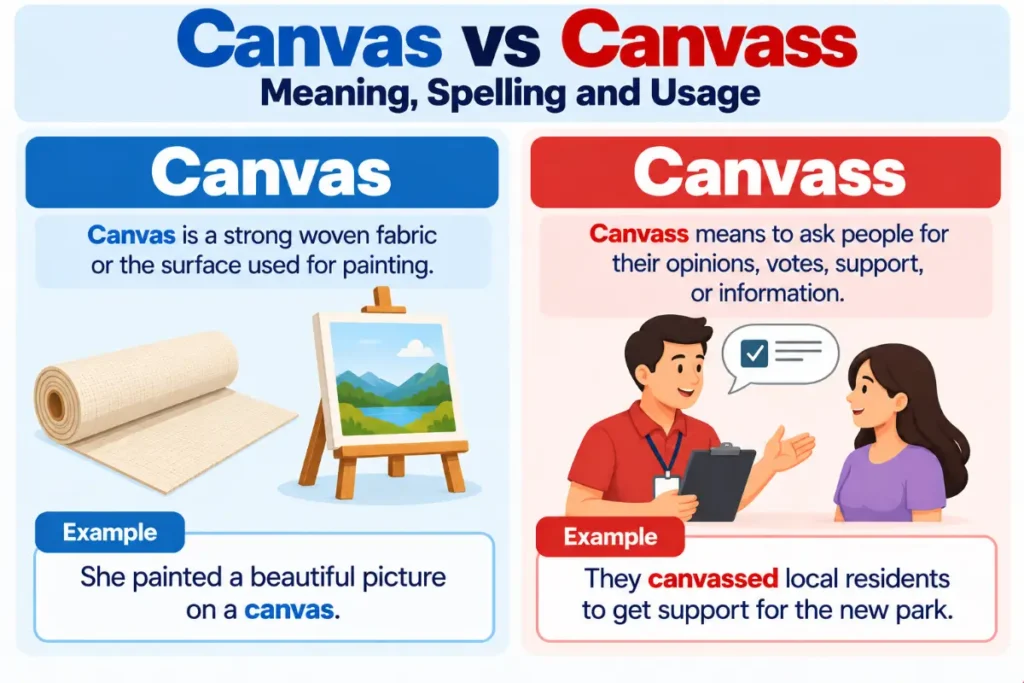
Canvas is a strong woven fabric or the surface used for painting. Canvass means to ask people for their opinions, votes, support, or information. Canvas usually refers to material or an artistic surface, while canvass relates to collecting responses or support from people.
Quick Answer
Use canvas when you mean strong fabric or an artist’s painting surface. For example, The artist painted a landscape on a canvas.
Use canvass when you mean asking people for opinions, votes, support, or information. For example, Volunteers canvassed the neighborhood before the election.
Comparison Table
| Correct Form | Meaning | Part of Speech | Origin | Usage Frequency | Formality | Common Contexts | Example |
|---|---|---|---|---|---|---|---|
| Canvas | Strong cloth or a surface for painting | Noun | From Old French and Latin roots | Very common | Neutral | Art, clothing, tents, bags, design | She painted the scene on a large canvas. |
| Canvass | To ask for opinions, votes, or support | Verb | Related to the idea of examining or discussing an area | Common | Neutral to formal | Elections, surveys, campaigns, research | Volunteers canvassed the neighborhood. |
Meaning and Definition
Meaning of Canvas
Canvas is a strong and durable fabric traditionally made from hemp or linen and now often made from cotton or synthetic fibers. People use it for many practical and creative purposes. Artists commonly stretch canvas over a frame and use it as a surface for painting.
The word can also describe the material used to make bags, shoes, tents, sails, and other durable products. In art, you may hear phrases such as a blank canvas, stretched canvas, or painted canvas.
The word has also developed a figurative sense. Writers sometimes describe a landscape, city, or situation as a canvas because it provides a surface or setting on which something develops. For example, A quiet mountain valley became a canvas for the morning light.
Canvas does not mean asking people for their opinions or votes. That meaning belongs to the other spelling.
Meaning of Canvass
Canvass means to ask people for their opinions, votes, support, or information. It commonly appears in political campaigns. Candidates and volunteers may visit homes and speak with residents to understand their views or encourage them to vote.
For example, Campaign workers canvassed the district before election day.
The word can also describe a broader effort to collect information. A company might canvass customers to learn what they think about a new product. Researchers might canvass residents to gather local opinions.
Canvass can also function as a noun. In election contexts, it may refer to an official examination or counting of votes. For example, officials completed the canvass of the election results.
The key idea is people and information. If someone is gathering opinions, votes, or support, canvass is the form you want.
Key Differences Explained
- Spelling. Canvas has one s at the end. Canvass has two s letters at the end. That extra s matters because it creates a different word.
- Grammar role. Canvas is most commonly a noun. Canvass can work as a verb and can also function as a noun in certain contexts.
- Meaning. Canvas refers mainly to fabric or an artistic surface. Canvass refers to asking people for information, opinions, votes, or support.
- Tone. Both words have a neutral tone. Canvass often appears in political or professional contexts, while canvas appears frequently in art, fashion, design, and everyday descriptions of fabric.
- Context. A painter uses canvas. A political volunteer canvasses voters. A designer may choose a canvas bag. A campaign worker may canvass a neighborhood.
Which Spelling Is Correct?
Both spellings are correct English words, but they are not interchangeable. The right choice depends entirely on what you mean.
If you are describing fabric or a surface for painting, use canvas. If you are describing the act of asking people for opinions, votes, support, or information, use canvass.
This distinction agrees with standard dictionary treatment. Merriam Webster and Cambridge Dictionary recognize canvas as a noun connected with strong cloth and painting surfaces. They define canvass in connection with soliciting votes, opinions, information, or support.
From a language perspective, the two words belong to different lexical families even though their spelling looks similar. English contains many pairs that differ by a single letter but carry unrelated meanings. That is why context matters more than visual similarity.
A useful editor rule is simple. Think about the object or action before you choose the spelling. If you can touch it or paint on it, think canvas. If you are asking people questions or seeking their support, think canvass.
Sentence Examples
Here are natural examples showing how native speakers use canvas.
- The artist covered the canvas with bright colors.
- She bought a large canvas for her next painting.
- The museum displayed the original canvas in a glass case.
- He carried his tools in a durable canvas bag.
- The painter chose a clean canvas before starting the portrait.
- The tent uses thick canvas that can withstand heavy rain.
- Her final painting looked impressive against the white canvas.
- The designer created a canvas backpack for everyday use.
- Sunlight turned the sky into a beautiful canvas of orange and gold.
- The young artist stared at the blank canvas for several minutes.
Now compare those examples with canvass.
- Volunteers canvassed the neighborhood before the election.
- The campaign team plans to canvass local voters this weekend.
- Researchers canvassed residents about the proposed development.
- Workers canvassed customers to learn what they wanted from the new service.
- The organization canvassed the community for feedback.
These examples make the distinction clear. Canvas describes a thing or material. Canvass describes an activity involving people and information.
Common Mistakes and Misspellings
The most common problem is adding or removing the extra s. Because the two forms look almost the same, writers sometimes choose the spelling from memory instead of considering the meaning.
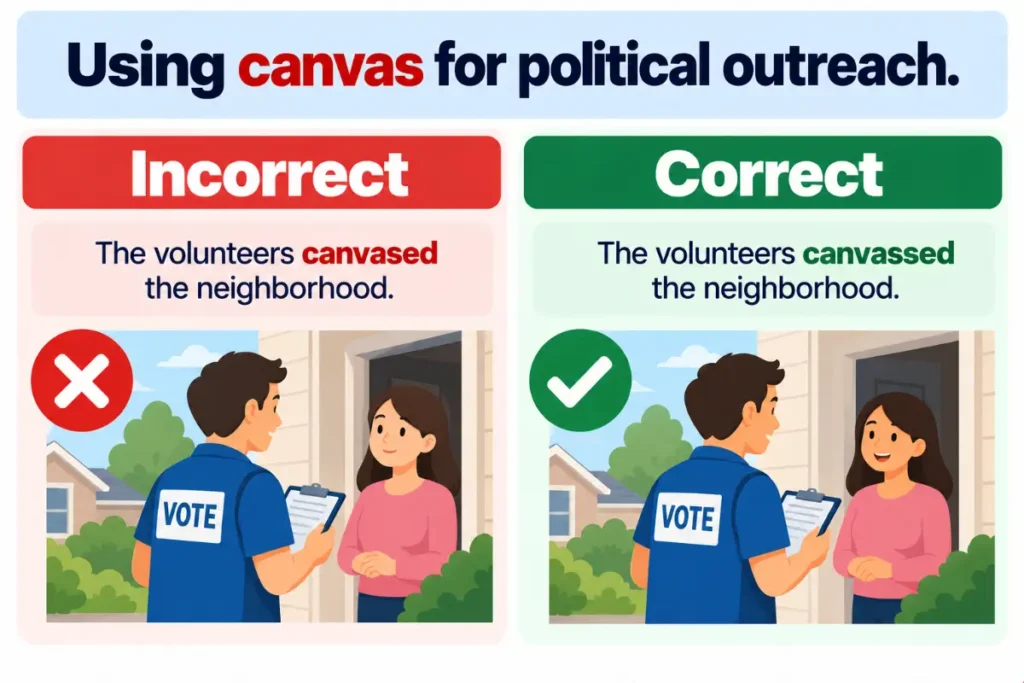
- Using canvas for political outreach.
Incorrect: The volunteers canvased the neighborhood.
Correct: The volunteers canvassed the neighborhood.
- Using canvass for painting material.
Incorrect: The artist painted on a canvass.
Correct: The artist painted on a canvas.
- Writing canvasing instead of canvassing.
When you use the verb canvass, the final consonant is doubled before adding the ending in forms such as canvassing.
- Writing canvas when discussing public opinion.
A sentence about gathering opinions usually needs canvass. For example, The researchers canvassed local residents.
- Assuming the words are spelling variants.
They are not regional spelling variants. They are separate words with separate meanings.
Why do people type final forms incorrectly? English spelling contains many visually similar words. Readers often process familiar letter patterns quickly instead of analyzing each word letter by letter. This creates a type of orthographic confusion. Search engines and spell checkers can sometimes help, but context remains the best guide.
NLP systems also distinguish words through context. A sentence containing words such as painting, artist, fabric, or tent strongly points toward canvas. Words such as voters, campaign, survey, opinions, or support point toward canvass.
Pronunciation Guide
Canvas is commonly pronounced /ˈkæn.vəs/. You can think of it as CAN vuhs.
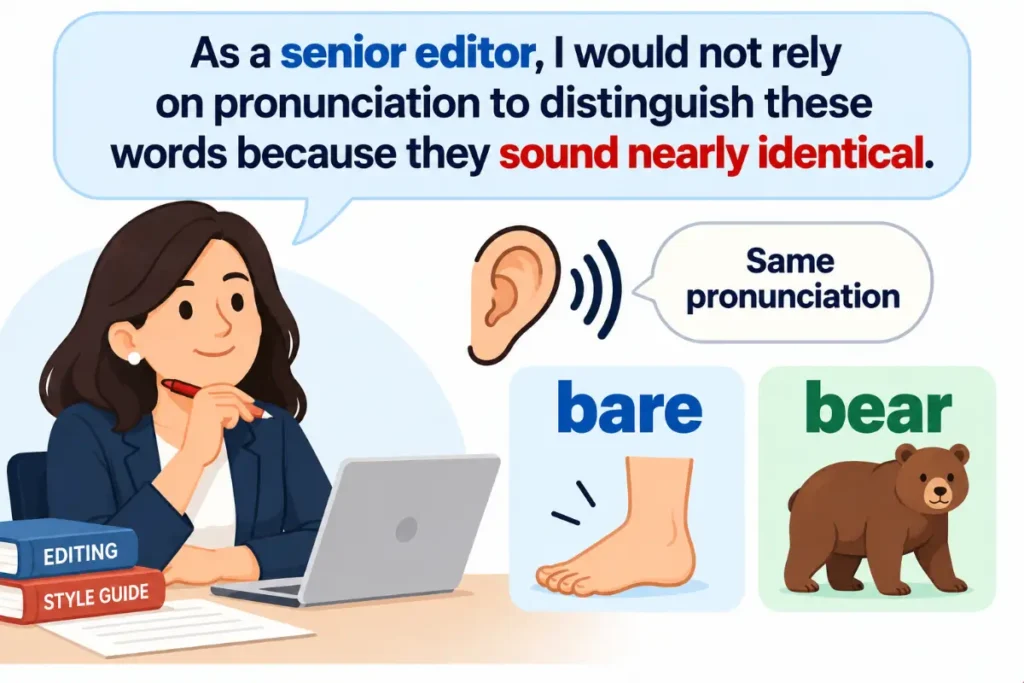
Canvass is commonly pronounced /ˈkæn.vəs/. It sounds almost the same as canvas.
That similar pronunciation explains much of the confusion. When you hear the words aloud, the extra s in canvass usually does not give you a clear clue. You have to use the surrounding context.
For example, if someone says, The artist bought a new canvas, the meaning is clear from the word artist. If someone says, The volunteers canvassed the neighborhood, the words volunteers and neighborhood point toward political or community outreach.
Because the pronunciation is so close, proofreading by ear will not always catch the mistake. Proofreaders should check the meaning as well as the sound.
Etymology and Word Origin
Canvas has a long history connected with fabric. The English word came through Old French from Latin cannapaceus, which was associated with hemp or material made from hemp. Over time, the word became associated with the strong woven cloth used for practical purposes.
Artists later made extensive use of the material because it provided a durable and flexible surface for painting. Today, canvas remains one of the most familiar painting surfaces in Western art.
Canvass has a different history. Its development is connected with the idea of examining or discussing something in detail. English speakers eventually used the word for going from place to place and asking people for information or support.
The political meaning became especially established because campaign workers often visit voters directly. The connection between canvass and election activity remains strong today.
The two words therefore look related to modern readers, but their histories do not make them interchangeable. Their similar spelling is a feature of modern English rather than evidence that they share the same meaning.
Regional Usage in the United States
In American English, canvas and canvass follow the same basic distinction found in standard English. Canvas refers to fabric or an artistic surface. Canvass refers to gathering opinions, votes, or information.
Political reporting in the United States frequently uses canvass when discussing campaign activity or election procedures. Art stores, designers, and everyday speakers commonly use canvas when discussing fabric and painting.
Regional Usage in the United Kingdom
British English also maintains the distinction between the two forms. A painter works on canvas, while a political campaign may canvass voters.
British newspapers and broadcasters use canvass in political reporting and community discussions. There is no standard British spelling that replaces canvas with canvass for painting material.
Regional Usage in Australia
Australian English follows the same distinction. Canvas commonly describes fabric and painting surfaces. Canvass describes the process of asking people for opinions, information, votes, or support.
The difference remains clear in professional and everyday writing.
Regional Usage in Canada
Canadian English also uses both words with their standard meanings. Canvas appears in art and descriptions of durable fabric. Canvass appears in political campaigns, surveys, and community outreach.
You should not treat one spelling as a Canadian, American, British, or Australian alternative to the other. The difference comes from meaning rather than region.
Grammar Rules and Part of Speech
Canvas usually functions as a noun. It names a material or a surface.
For example, The artist prepared the canvas.
It can also appear as a modifier before another noun. For example, She carried a canvas bag.
Canvass can function as a verb.
For example, The volunteers canvassed the neighborhood.
The verb can take an object.
For example, The organization canvassed residents for feedback.
Canvass can also function as a noun in election contexts.
For example, The official canvass confirmed the final results.
When using canvass as a verb, pay attention to its spelling in different forms. The present form is canvass. The third person singular is canvasses. The present participle is canvassing. The past form is canvassed.
Canvas does not take these verb forms when you mean the fabric. You would say canvas as a noun.
Punctuation does not change the spelling. A sentence can start with either word if the meaning supports it. For example, Canvas can absorb paint well. Likewise, Canvass local residents before making a final decision.
Real Life Usage Examples
Daily Talk
I bought a canvas bag for the grocery store.
She needs a fresh canvas for her art class.
These examples use canvas because they describe a physical material or painting surface.
The campaign volunteers canvassed our street yesterday.
The group canvassed residents about the new park.
These examples use canvass because people are gathering information or support.
The design team selected a natural canvas material for the new bags.
Please review the canvas samples before the final design meeting.
The campaign team will canvass voters across the district this week.
We plan to canvass customers for feedback after the launch.
Academic Writing
The researcher used a survey to study public attitudes and then canvassed participants for additional comments.
The study discusses how artists historically used canvas as a durable painting surface.
Academic writers should choose the form based on the intended meaning. A formal setting does not change the spelling rule.
News Writing
Campaign volunteers canvassed voters across several neighborhoods before election day.
Officials completed the canvass after reviewing the submitted ballots.
The museum recently acquired a nineteenth century painting on canvas.
News writing often uses both words in the same article because political stories and art stories can involve very different contexts.
Literature
The poet described the evening sky as a living canvas filled with changing colors.
The campaign workers moved from house to house as they canvassed the town.
Literary writing can use canvas literally or figuratively. Canvass remains connected to the action of seeking information or support.
Related and Confused Terms
Several words overlap with the meaning of canvass but do not always work in the same sentence.
- At last. This phrase usually means something happens after a long wait. For example, The train arrived at last.
- Eventually. This means something happens after some time or after a series of events. For example, She eventually found the missing document.
- Ultimately. This often refers to the final result or conclusion. For example, The decision ultimately benefited the community.
- At the end. This points to the final part of a period, event, place, or process. For example, At the end of the meeting, everyone agreed.
- Conclusively. This means in a way that settles an issue or proves something clearly. For example, The evidence conclusively supported the claim.
- In the end. This often introduces the final outcome of a situation. For example, In the end, they chose the simpler option.
- Lastly. This introduces the final point in a sequence. For example, Lastly, check the document for spelling errors.
- Finally. This can mean after a long wait, at the last stage, or as the final point in a sequence. It has a wide range of uses and often depends heavily on context.
These terms can overlap in meaning, but they are not direct replacements for canvass. Canvass describes an action involving people, opinions, information, votes, or support.
Expert Editor Insight
As a senior editor, I would not rely on pronunciation to distinguish these words because they sound nearly identical. I would look at the surrounding nouns and verbs first. Words such as artist, painting, fabric, bag, tent, and brush point toward canvas. Words such as voters, residents, opinions, campaign, survey, and support point toward canvass. Spell checkers can catch some errors, but context based proofreading remains stronger because both forms are legitimate English words.
Conclusion
The difference between canvas vs canvass becomes simple once you focus on meaning instead of appearance. Canvas refers to strong fabric or the surface an artist paints on. Canvass refers to asking people for opinions, votes, information, or support. Both spellings are correct, but they belong in different contexts.
Remember the extra s in canvass by connecting it with an action involving several people. A campaign worker may canvass voters. An artist paints on canvas. That small spelling clue can save you from a very common error.
One practical editing habit makes the distinction even easier. Before choosing the word, ask yourself what the sentence describes. If it involves fabric or painting, choose canvas. If it involves gathering responses or support, choose canvass. Once you connect each spelling with its meaning, the confusion usually disappears.
FAQs
What is the difference between canvas and canvass?
Canvas usually refers to a strong fabric used for paintings, bags, tents, and other items. Canvass is mainly a verb that means to ask people for their opinions, votes, support, or information.
Is canvas a noun or a verb?
Canvas is mainly a noun. It refers to a strong cloth or the surface used by an artist for painting. It can also describe a piece of artwork painted on canvas.
What does canvass mean as a verb?
Canvass means to ask people for their opinions, votes, support, or responses. For example, a political candidate may canvass a neighborhood before an election.
Can canvas and canvass be used interchangeably?
No. Canvas and canvass have different meanings and should not be used interchangeably. Canvas relates to fabric or an artistic surface, while canvass means to seek opinions, votes, or support.
Is canvass ever used as a noun?
Yes. Canvass can also be a noun, especially when it refers to an organized effort to ask people for their opinions, votes, or support. For example, “The campaign conducted a neighborhood canvass.”
What is an example of canvas in a sentence?
“She painted a beautiful landscape on a large canvas.”
What is an example of canvass in a sentence?
“The volunteers will canvass the neighborhood for voter support.”
How do you remember the difference between canvas and canvass?
A simple way to remember the difference is to connect canvas with art and canvass with asking. You paint on a canvas, while you canvass people to gather opinions, votes, or support.
Is canvas related to painting?
Yes. Canvas is a common surface for paintings. Artists often stretch canvas over a wooden frame before applying paint.
Does canvass mean to ask people for opinions or votes?
Yes. Canvass means to approach people and ask for their opinions, votes, support, or information. It commonly appears in political campaigns and surveys.

Confusing Words, Spelling & Word Choice
Claire Whitmore is a U.S.-based English editor who writes about commonly confused words, spelling differences, and word choice. Her work helps readers understand subtle distinctions between similar-looking words through simple definitions, practical examples, and modern usage guidance in both American and British English.