
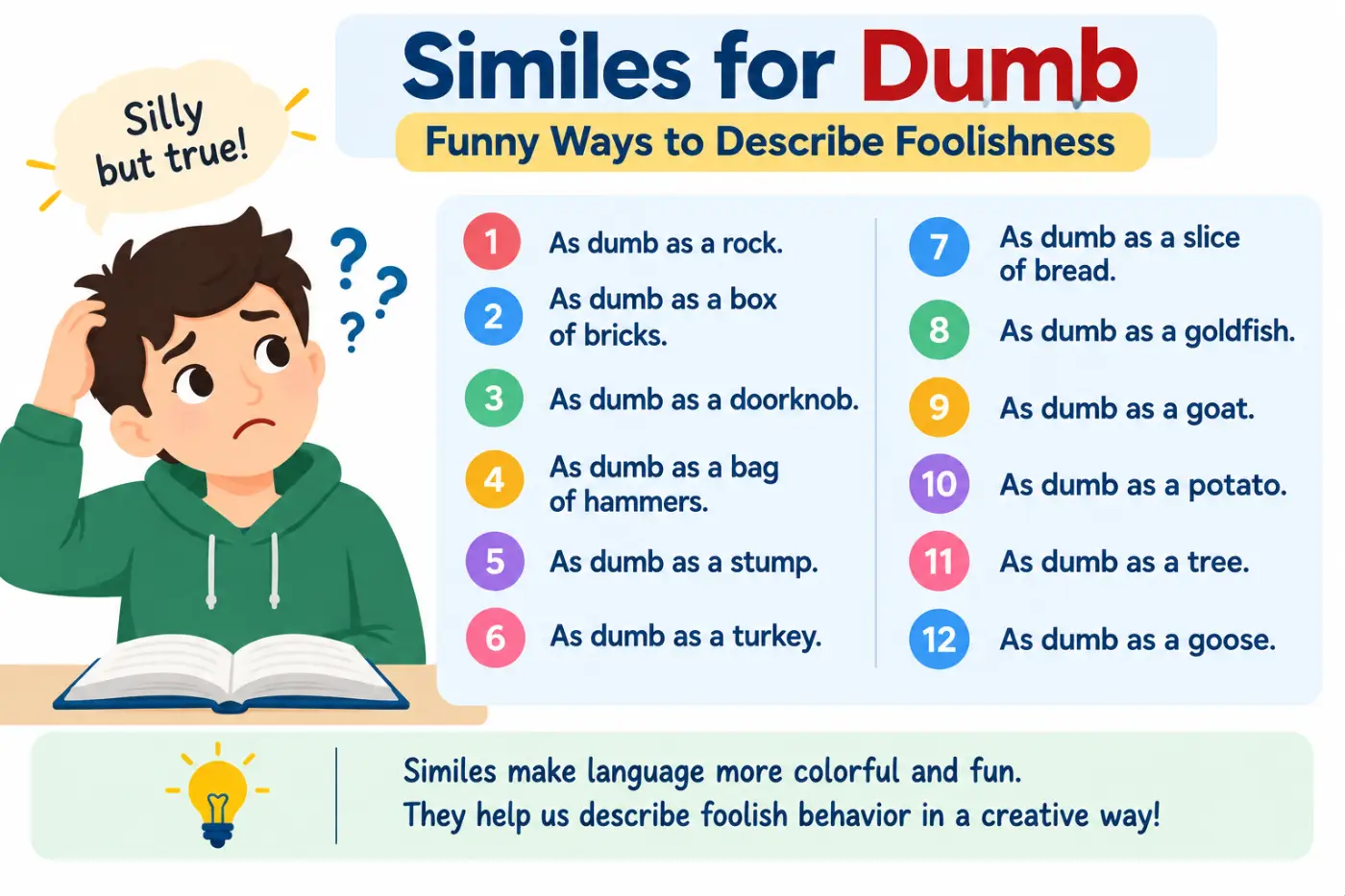
similes for dumb can make ordinary descriptions much more vivid. Instead of simply calling someone foolish you can compare their behavior to something everyone recognizes. A character might be as confused as a squirrel in a maze or as useful as a screen door on a submarine. The comparison creates an image that a plain adjective can’t produce.
The word dumb can also mean different things depending on context. It may describe poor judgment lack of understanding a silly mistake or behavior that seems completely unreasonable. Because of that range the strongest comparison depends on what you actually want to communicate. A playful expression can tease a friend while a sharper one can make a fictional character sound ridiculous.
This collection gives you more than a long list of random phrases. The examples are organized by meaning and tone so you can choose a comparison that fits your sentence. You’ll find gentle expressions funny insults character descriptions school friendly options writing ideas and sharper comparisons. Each example also includes a short explanation so you can understand the image behind it and use it naturally.
Short Answer
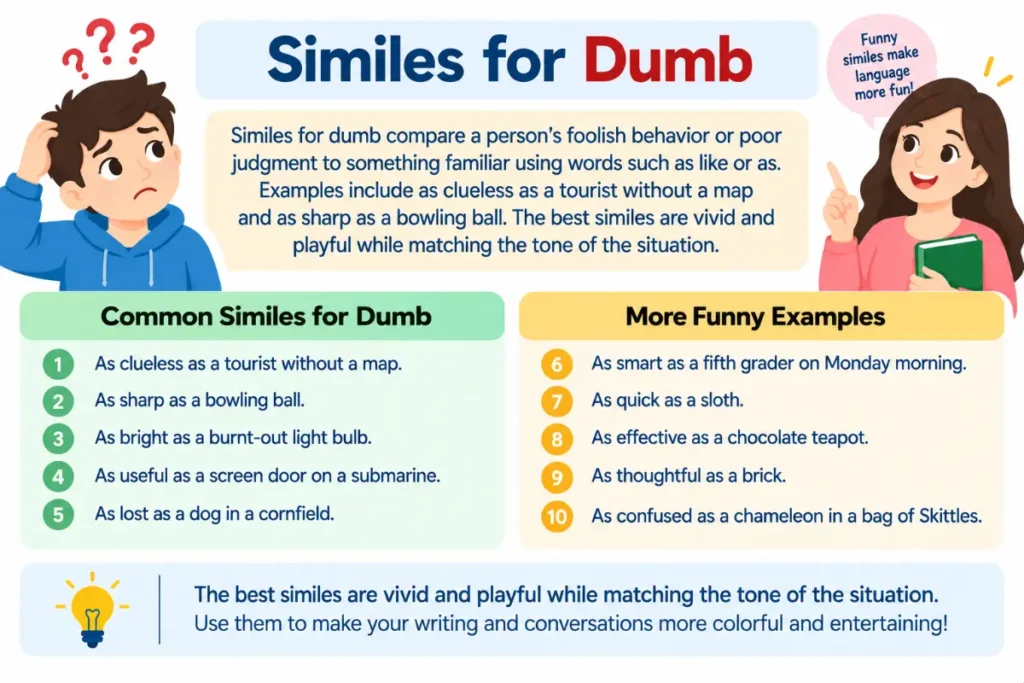
Similes for dumb compare a person’s foolish behavior or poor judgment to something familiar using words such as like or as. Examples include as clueless as a tourist without a map and as sharp as a bowling ball. The best similes are vivid and playful while matching the tone of the situation.
Table Of Contents
- What A Simile For Dumb Means
- The Best Similes For Dumb
- Funny Similes For Foolish Behavior
- Gentle Similes For Someone Acting Silly
- Similes For Confusion
- Similes For Poor Judgment
- Similes For Slow Understanding
- Similes For A Lack Of Common Sense
- Similes For Characters In Stories
- Similes For School And Creative Writing
- Similes For Dumb Mistakes
- Stronger And More Sarcastic Comparisons
- Similes For Dumb That Use Animals
- Similes That Use Objects
- Similes That Use Everyday Situations
- How To Choose The Right Comparison
- Common Mistakes
- Memory Tips
- Related Expressions
- Expert Editor Insight
- FAQs
- Key Takeaways
- Conclusion
What A Simile For Dumb Means
A simile is a figure of speech that compares two different things using a clear comparison word. The most common signals are like and as.
For example:
He was as confused as a squirrel in a maze.
The person isn’t literally a squirrel. The comparison highlights confusion by connecting the person’s behavior to an animal that can’t find its way through the maze.
A comparison about foolishness works in the same way. It doesn’t simply state that someone lacks good judgment. Instead it creates a picture of what that foolishness looks like.
The key is exaggeration. Good figurative language often stretches reality for comic or dramatic effect. That exaggeration helps the reader understand the writer’s attitude.
The Best Similes For Dumb
Here are some of the most flexible comparisons in the collection.
- As sharp as a bowling ball. This jokingly suggests that someone isn’t mentally sharp.
- As clueless as a tourist without a map. This describes someone who has no idea what is happening.
- As bright as a burnt out light bulb. The image suggests a lack of quick thinking.
- As wise as a broken calculator. This creates a playful picture of something unable to provide useful answers.
- As clever as a brick. The short comparison gives a blunt comic impression.
- As smart as a spoon. The humor comes from comparing intelligence with an ordinary object that has no ability to think.
- As logical as a fish riding a bicycle. This suggests reasoning that makes no sense.
- As useful as a chocolate teapot. The comparison describes something that cannot perform its intended job.
- As prepared as a penguin in the desert. This suggests terrible preparation for the situation.
- As observant as a sleeping bat. This describes someone who misses obvious details.
These work well because readers don’t need much explanation. The picture does most of the work.
Funny Similes For Foolish Behavior
Humor often makes a criticism easier to hear. A silly comparison can communicate that someone made a ridiculous choice without sounding overly harsh.
- As confused as a GPS with no signal. This fits someone who has completely lost direction.
- As organized as a tornado in a filing cabinet. The image suggests total disorder.
- As careful as a bull in a china shop. This classic comparison describes someone who handles things without care.
- As graceful as a refrigerator falling downstairs. The exaggeration makes clumsy behavior funny.
- As focused as a cat watching a ceiling fan. This suggests attention that goes nowhere useful.
- As useful as an umbrella underwater. The object is completely wrong for the situation.
- As reliable as a chocolate clock. The comparison suggests something cannot do the job expected of it.
- As practical as wearing ski boots to a swimming lesson. This describes a choice that doesn’t fit the situation.
- As sensible as bringing a spoon to a sword fight. The humor comes from being completely unprepared.
- As brilliant as a candle in a hurricane. This suggests an attempt at intelligence that produces little result.
Gentle Similes For Someone Acting Silly
Not every comparison needs to sound insulting. If you’re writing dialogue for friends children or lighthearted characters a softer comparison can work better.
- As silly as a puppy chasing its own tail. This suggests harmless foolishness.
- As mixed up as socks after laundry day. It describes confusion without attacking someone’s intelligence.
- As puzzled as a cat seeing a mirror. This focuses on surprise and uncertainty.
- As goofy as a penguin wearing roller skates. The image is playful rather than cruel.
- As lost as a balloon in a thunderstorm. This suggests uncertainty.
- As confused as a bee in a kitchen. The comparison creates a funny picture of frantic movement.
- As awkward as a duck in tap shoes. This works well for a character who can’t handle a situation smoothly.
- As surprised as a dog hearing its own bark on a recording. The comparison gives the scene a light comic tone.
- As puzzled as a child looking at a complicated clock. This focuses on confusion rather than intelligence.
- As scattered as popcorn at a movie theater. This suggests thoughts or actions that lack order.
Similes For Confusion
Sometimes dumb behavior isn’t really about intelligence. Someone may simply be confused. In that case a comparison about being lost or bewildered is more accurate.
- As confused as a compass near a magnet. The image suggests direction that keeps changing.
- As lost as a tourist in a maze. This is useful for someone who doesn’t know what to do next.
- As puzzled as a cat in a mirror shop. The unusual setting creates a vivid comic image.
- As bewildered as a deer under bright headlights. This describes someone who freezes under pressure.
- As mixed up as headphones in a pocket. The comparison suggests tangled thoughts.
- As uncertain as a coin standing on its edge. This conveys hesitation.
- As confused as a chef reading a map upside down. The image shows someone trying to solve a problem with the wrong perspective.
- As lost as a sock without its pair. This is simple and friendly.
- As puzzled as a dog trying to understand a magic trick. The humor comes from the impossible task.
- As directionless as a kite without wind. This describes someone who has no clear course.
Similes For Poor Judgment
Poor judgment is different from simple confusion. Someone can understand the situation perfectly and still make an awful decision.
- As sensible as a snowman buying sunscreen. The choice doesn’t fit the circumstances.
- As wise as a raccoon guarding a trash can. The comparison makes poor judgment sound amusing.
- As thoughtful as a hammer solving a puzzle. This suggests a person is using the wrong approach.
- As strategic as a duck playing chess with bread crumbs. The image suggests a hopeless plan.
- As careful as someone juggling knives with oven mitts. This describes reckless judgment.
- As reasonable as a rooster demanding bedtime at noon. The situation sounds absurd.
- As practical as a raincoat made of tissue paper. The idea looks useful but fails immediately.
- As cautious as a moth flying into a flame. This suggests someone ignoring an obvious danger.
- As thoughtful as a bull choosing where to sit in a glass room. The comparison highlights poor awareness.
- As strategic as a squirrel hiding its food in a bird feeder. The plan defeats its own purpose.
Similes For Slow Understanding
A person may understand something eventually but take far longer than expected. Comparisons in this category should describe slow realization rather than general foolishness.
- As quick as a snail carrying a backpack. This humorously describes very slow thinking.
- As fast to understand as cold syrup. The comparison suggests delayed comprehension.
- As quick as a computer with one percent battery. This suggests painfully slow progress.
- As responsive as a frozen touchscreen. The image fits someone who takes a long time to react.
- As fast as a turtle taking a lunch break. This adds a playful layer of exaggeration.
- As quick as molasses in winter. The comparison is useful for slow action or thought.
- As speedy as a parked bicycle. The humor comes from something that cannot move at all.
- As fast to catch on as a sleepy owl. This suggests delayed understanding.
- As quick as a snail at a red light. The image reinforces extreme slowness.
- As responsive as a statue. This is short and useful in dialogue.
Similes For A Lack Of Common Sense
Common sense involves practical judgment. Someone may know many facts and still make choices that seem obviously foolish.
- As practical as a screen door on a submarine. The object cannot serve its purpose in that environment.
- As useful as a map with no roads. The comparison describes something that appears helpful but isn’t.
- As sensible as a fork at a soup party. The tool doesn’t fit the job.
- As practical as a bicycle without wheels. The basic function is missing.
- As useful as a flashlight at noon. The object has little value in the situation.
- As sensible as a refrigerator in an ice rink. The choice adds nothing useful.
- As practical as a paper umbrella in a storm. The comparison suggests poor preparation.
- As logical as putting shoes on a fish. The action has no practical reason.
- As useful as a silent alarm. The comparison suggests a tool that defeats its own purpose.
- As sensible as bringing a ladder to a swimming pool. The object doesn’t solve the actual problem.
Similes For Characters In Stories
Writers can use figurative comparisons to reveal personality without explaining it directly. A character who is as sharp as a bowling ball feels different from one who is as lost as a tourist in a maze.
- He was as clueless as a rookie detective at a magic show. This creates a character who misses every clue.
- She was as sharp as a marshmallow. The exaggerated softness becomes a comic way to describe poor thinking.
- He was as practical as a rooster running a bakery. The image suggests an unsuitable decision maker.
- She looked as puzzled as a cat inside a mirror room. This works for a character facing something strange.
- He was as prepared as a swimmer wearing winter boots. The comparison reveals poor planning.
- She was as logical as a penguin giving driving lessons. The image creates an intentionally absurd character.
- He was as observant as a sleeping owl. This works when a character misses an obvious clue.
- She was as organized as papers in a windstorm. The comparison reveals disorder.
- He was as cautious as a moth near a porch light. This suggests reckless curiosity.
- She was as quick as a snail at a family reunion. This can describe slow reactions in a humorous story.
Similes For School And Creative Writing
Students often need figurative language that sounds expressive without becoming cruel. Teachers may also want examples that clearly demonstrate how similes work.
- The boy was as confused as a puppy in a library. The comparison makes confusion easy to picture.
- His idea was as useful as a broken pencil. This describes an idea that doesn’t help.
- Her plan was as practical as a raincoat made of paper. The comparison highlights poor planning.
- The student looked as puzzled as a rabbit reading a map. The image creates gentle humor.
- His reasoning was as crooked as a roller coaster. This suggests an argument that doesn’t follow a clear path.
- The answer was as obvious as the sun on a clear morning. This can describe someone missing something easy to see.
- His plan was as sensible as bringing snow to a freezer. The comparison shows unnecessary effort.
- The character was as clueless as a tourist without a map. This gives students a clear example of a comparison.
- Her explanation was as clear as muddy water. The contrast makes the meaning easy to understand.
- His decision was as wise as a squirrel hiding nuts in a puddle. The image suggests poor judgment.
Similes For Dumb Mistakes
A dumb mistake doesn’t necessarily mean the person is unintelligent. Sometimes the mistake itself is foolish. That distinction matters in respectful writing.
- The mistake was as avoidable as stepping into a puddle while wearing sandals. The problem should have been easy to prevent.
- His error was as obvious as a neon sign in a dark room. The mistake was easy to spot.
- The plan failed like a paper boat in a bathtub full of waves. The comparison emphasizes weakness.
- The decision was as sensible as locking yourself out on purpose. The action defeats its own goal.
- The error was as preventable as forgetting an umbrella during a thunderstorm. The problem could have been anticipated.
- The idea fell apart like a sandcastle under a hose. This describes a fragile plan.
- The mistake was as clear as writing the answer on the wrong page. The error is simple and avoidable.
- The plan was as stable as jelly on a skateboard. The comparison shows that failure was likely.
- The choice was as useful as turning off the lights to find your keys. The action makes the task harder.
- The strategy collapsed like a house of cards in a fan. The comparison describes something unable to withstand pressure.
Stronger And More Sarcastic Comparisons
Sarcasm can be funny but it can also sound harsh. These expressions work best in fictional dialogue playful banter or situations where the tone is clearly understood.
- As sharp as a bowling ball. This is a classic comic insult about intelligence.
- As bright as a burnt out bulb. The comparison suggests very little mental spark.
- As clever as a brick. The bluntness creates the humor.
- As useful as a chocolate teapot. The comparison attacks usefulness rather than intelligence directly.
- As wise as a broken clock with no hands. The image suggests complete uselessness.
- As logical as a fish wearing hiking boots. The absurd image makes the criticism obvious.
- As intelligent as a potato with stage fright. This is deliberately exaggerated.
- As strategic as a squirrel announcing where it hid every nut. The character’s own behavior defeats the plan.
- As observant as a statue in sunglasses. The image suggests someone who notices nothing.
- As prepared as a snowman at a beach barbecue. The comparison highlights terrible preparation.
Similes For Dumb That Use Animals
Animals provide endless possibilities for playful comparisons because readers already have strong mental pictures of them.
- As confused as a chicken in a library. The animal has no idea what the setting requires.
- As lost as a puppy in a cornfield. The image suggests uncertainty.
- As logical as a duck in a chess tournament. The comparison creates absurdity.
- As observant as a sleeping cat. This describes someone who misses details.
- As careful as a bull in a glass shop. The image suggests reckless behavior.
- As prepared as a fish for a desert hike. The person isn’t ready for the environment.
- As wise as a squirrel chasing its own shadow. The action has no useful outcome.
- As focused as a puppy surrounded by tennis balls. This suggests attention jumping everywhere.
- As organized as ants at a picnic after someone drops the basket. The comparison creates a picture of chaotic activity.
- As sensible as a goat eating the map. The action removes the very thing needed for direction.
Similes That Use Objects
Objects work especially well because they let you create comparisons without directly insulting a person’s intelligence.
- As sharp as a pillow. The contrast creates immediate humor.
- As useful as a broken compass. This suggests someone who cannot provide direction.
- As bright as an unplugged lamp. The image suggests no mental spark.
- As logical as a square wheel. The comparison describes something fundamentally impractical.
- As useful as a key without a lock. The object has no relevant purpose.
- As sensible as a refrigerator with no door. The comparison shows a basic flaw.
- As clever as a calculator with dead batteries. The tool has potential but cannot perform.
- As organized as a junk drawer after an earthquake. This describes complete disorder.
- As practical as a glass hammer. The tool looks like one thing but cannot do the job.
- As useful as a map printed entirely in invisible ink. The problem is obvious once you picture it.
Similes That Use Everyday Situations
Everyday scenes can make figurative language feel more natural. Readers understand the comparison without needing a dictionary.
- As confused as someone reading a menu upside down. The situation immediately suggests uncertainty.
- As prepared as someone arriving at a snowstorm in flip flops. The comparison shows poor preparation.
- As organized as a bedroom after a pillow fight. The image suggests disorder.
- As focused as someone trying to read during a fireworks show. Too many distractions compete for attention.
- As sensible as buying an umbrella after the rain stops. The decision comes too late.
- As useful as bringing a teaspoon to dig a swimming pool. The tool is far too limited for the task.
- As alert as someone falling asleep during a loud concert. The comparison emphasizes low attention.
- As logical as taking a bicycle to cross an ocean. The plan doesn’t match the challenge.
- As careful as someone carrying soup in a paper bag. The comparison suggests poor judgment.
- As ready as someone who forgot the exam was today. The situation communicates complete unpreparedness.
How To Choose The Right Comparison
Not every comparison about foolishness works in every situation. The strongest choice depends on the exact idea you want to express.
If the person is confused use a comparison about being lost. If the person makes reckless choices use one about poor judgment.
Tone matters too.
A school essay should usually favor creative but respectful language. A comedy script can take the exaggeration much further. A novel may use a comparison that reveals the narrator’s personality. A casual conversation may call for something short and memorable.
Think of a simile as a camera. It doesn’t just tell the reader what happened. It chooses what the reader should picture.
Common Mistakes
Using A Comparison That Doesn’t Match The Meaning
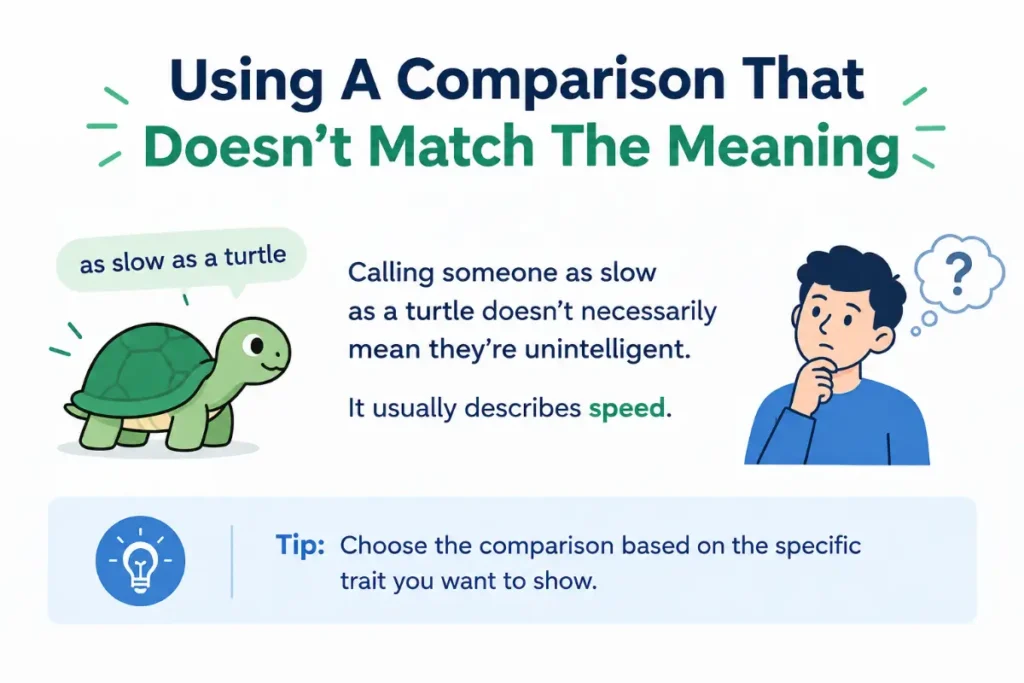
Calling someone as slow as a turtle doesn’t necessarily mean they’re unintelligent. It usually describes speed. Choose the comparison based on the specific trait you want to show.
Making Every Comparison Insulting
Strong language isn’t always better writing. A gentle comparison can create more humor because the reader sees the joke without feeling that the writer is trying too hard.
Explaining The Joke Too Much
A good comparison usually carries its own meaning. If the image is clear you don’t need several sentences explaining why it is funny.
Repeating The Same Image
Using the same animal or object again and again makes figurative language feel predictable. Variety keeps the writing fresh.
Confusing Similes With Metaphors
A simile normally uses a direct comparison marker such as like or as. A metaphor states that one thing is another thing. The two devices are related but grammatically different.
Memory Tips
A simple way to create your own comparisons is to identify the exact behavior first.
If the person is confused think of something lost.
If the person behaves foolishly think of an object or situation that clearly doesn’t fit.
Then connect the two ideas with like or as.
For example suppose you want to describe someone who makes a terrible plan. Think of an object that is clearly unsuitable. A paper umbrella in a storm gives you a vivid image. Turn that thought into a sentence and you have a fresh comparison.
This method is more useful than memorizing hundreds of expressions. Once you understand the pattern you can create original figurative language whenever you need it.
Related Expressions
Several expressions can communicate foolishness without being direct similes.
Silly. This is softer and often works well for harmless behavior.
Foolish. This focuses on poor judgment.
Clueless. This suggests a lack of understanding or awareness.
Unwise. This focuses on a bad decision.
Absurd. This describes something unreasonable or ridiculous.
Ridiculous. This suggests that something deserves laughter or disbelief.
Nonsensical. This describes reasoning or ideas that don’t make sense.
Goofy. This is informal and often friendly.
These words can be combined with figurative language to create more precise descriptions. Instead of repeatedly calling a character dumb you can show the character’s behavior and let the reader draw the conclusion.
Why Similes Work So Well
Human readers understand concrete images quickly. Saying someone has poor judgment is clear but abstract. Comparing their decision to bringing a paper umbrella into a storm creates a scene that the reader can picture immediately.
That is the strength of figurative language.
A strong comparison also gives writing personality. Two writers can describe the same foolish decision but create very different effects. One may sound playful. Another may sound sarcastic. A third may make the character seem lovable rather than uninformed.
The comparison therefore carries emotion as well as meaning.
For writers this matters because characterization often works better through behavior than labels. Instead of telling readers that a character lacks common sense you can show the character making a choice that is as practical as using a spoon to cut a tree.
The reader understands the personality without needing a direct explanation.
More Original Similes For Extra Variety
Here are additional comparisons you can use when you want something less familiar.
- As clever as a toaster trying to write poetry. The image creates impossible ambition.
- As sensible as a squirrel using a snowbank as a filing cabinet. The action has no practical value.
- As focused as a butterfly in a room full of mirrors. The comparison suggests constant distraction.
- As prepared as a sailor with a paper boat. The tools don’t match the challenge.
- As logical as a rooster wearing a wristwatch to tell the weather. The object doesn’t solve the problem.
- As useful as a ladder with no bottom step. Something essential is missing.
- As organized as cereal spilled across a kitchen floor. The image creates immediate disorder.
- As observant as someone searching for glasses while wearing them. The comparison highlights an obvious oversight.
- As strategic as hiding a secret by shouting it through a megaphone. The action destroys its own purpose.
- As practical as carrying a bathtub to take a shower. The solution is far more complicated than necessary.
- As thoughtful as a vending machine choosing someone’s lunch. The object cannot understand personal needs.
- As careful as a puppy carrying a bowl of soup. The image suggests an accident waiting to happen.
- As prepared as a camper who forgot the tent. The missing essential makes the problem clear.
- As wise as a fish asking a bicycle for swimming lessons. The comparison creates deliberate absurdity.
- As clear as a foggy window in a thunderstorm. This works for explanations that remain confusing.
Expert Editor Insight
An experienced editor would avoid using dumb as a catch all description because it can flatten an interesting idea into one vague label. Strong writing identifies the exact weakness instead. If the person misses information use clueless or unaware language. If the behavior is simply silly use playful imagery. This approach produces more precise prose and gives readers a clearer picture of the character or situation.
Key Takeaways
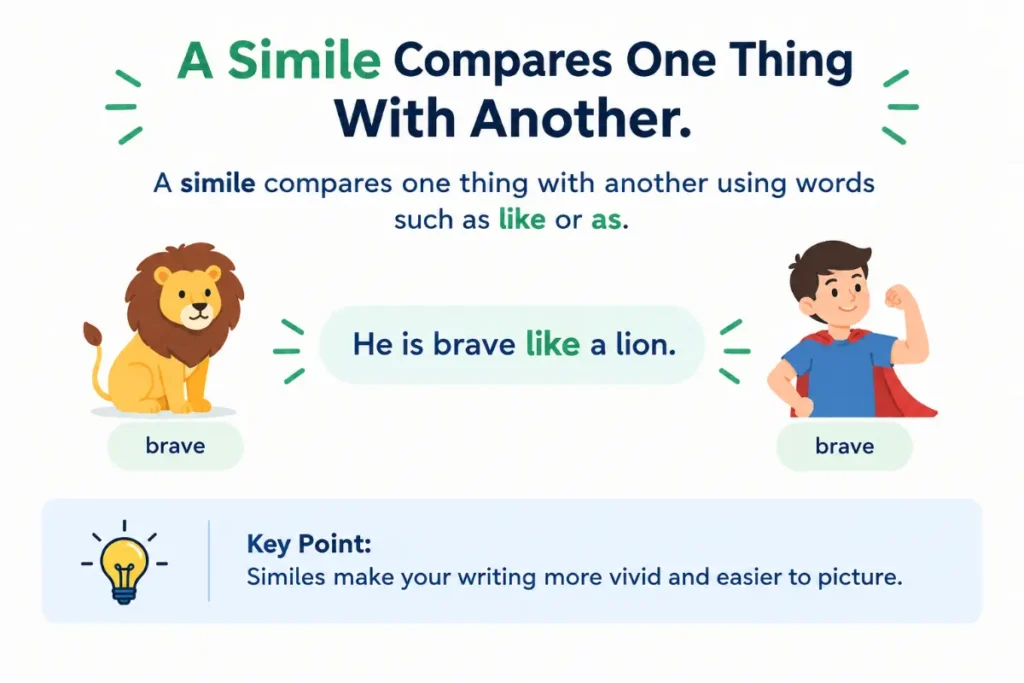
- A simile compares one thing with another using words such as like or as.
- Comparisons about foolishness work best when they describe a specific trait rather than using a vague insult.
- Confusion poor judgment slowness carelessness and silliness each call for different imagery.
- Everyday objects animals and familiar situations provide excellent material for original comparisons.
- Strong figurative language creates a picture instead of simply giving the reader a label.
- Tone matters. A playful comparison may work well among friends but sound inappropriate in professional writing.
- Avoid repeating the same image. Variety makes your writing more natural.
- The easiest way to create a new comparison is to identify the trait first and then find a vivid image that represents it.
Conclusion
similes for dumb can turn a plain description of foolish behavior into something vivid memorable and often funny. Instead of simply telling readers that someone lacks common sense you can show the idea through a comparison such as as sharp as a bowling ball or as practical as a paper umbrella in a storm. The image gives the reader something concrete to picture.
The best choice depends on the meaning you want. Use comparisons about confusion for someone who feels lost. Choose poor judgment imagery for reckless decisions. Pick gentle expressions for friendly humor and stronger comparisons for clearly sarcastic dialogue. Context and tone should always guide your choice.
When creating your own simile start with the exact trait you want to describe. Then find an object animal or situation that represents it clearly. Connect the two with like or as and keep the image simple. A precise comparison will usually say more than a long explanation.
FAQs
What are similes for dumb?
Similes for dumb are creative comparisons that describe foolishness poor judgment confusion or silly behavior. They usually use like or as to connect the person or behavior with something familiar. An example is as sharp as a bowling ball. The comparison works because readers understand that a bowling ball isn’t known for being mentally sharp.
What is a good simile for someone who is dumb?
A good choice depends on the exact behavior. As sharp as a bowling ball works as a playful description of poor intelligence. As clueless as a tourist without a map works better for someone who doesn’t understand what’s happening. For poor judgment as sensible as a paper umbrella in a storm creates a clearer image.
How can I make my own funny similes?
Start with the trait you want to describe. Decide if you’re talking about confusion slowness poor judgment carelessness or general silliness. Then think of an object animal or everyday situation that strongly represents that trait. Connect the two ideas with like or as. The best original comparisons usually come from specific images rather than random word combinations.
Are similes for dumb appropriate in formal writing?
They can be appropriate in creative writing but direct insults usually don’t belong in formal professional writing. If you’re writing an essay report or workplace document choose precise language instead. Explain the person’s lack of understanding poor judgment or flawed reasoning directly. Figurative language can still work in literary or rhetorical writing when the tone supports it.
What is the difference between a simile and a metaphor?
A simile makes an explicit comparison using words such as like or as. A metaphor makes a direct comparison without those markers. As sharp as a bowling ball is a simile. Calling someone a bowling ball would be a metaphor if the intended meaning were that the person is not mentally sharp. Both devices create imagery but they use different structures.
Can similes describe foolish behavior without insulting someone?
Yes. You can focus on the action rather than the person’s intelligence. A comparison such as as practical as bringing an umbrella underwater describes a poor choice without directly labeling anyone. Gentle comparisons can work especially well in children’s writing friendly dialogue comedy and stories where the goal is humor rather than cruelty.
What makes a simile funny?
Unexpected contrast often creates the humor. The comparison works best when the two things are clearly different but share one useful trait. Comparing poor preparation to a penguin in the desert creates a funny picture because the setting and animal don’t belong together. Exaggeration also helps as long as the image remains easy for the reader to understand.
Can I use these expressions in a story?
Yes. Similes can make character descriptions dialogue narration and action scenes more vivid. Choose expressions that match the narrator and character. A serious narrator may use restrained comparisons while a comic character may use wild exaggeration. Avoid putting several unrelated comparisons into one paragraph because the imagery can compete for attention.
Are all comparisons about dumb people offensive?
No. The effect depends on context tone relationship and wording. Some expressions are clearly insulting while others describe a silly moment or poor decision in a playful way. If you’re writing for children school audiences or professional readers choose gentler comparisons. In fiction you have more freedom but the comparison should still fit the speaker and scene.
What are some alternatives to saying someone is dumb?
Useful alternatives include foolish clueless silly unwise confused careless impractical unreasonable ridiculous and nonsensical. The best word depends on the behavior. Calling someone clueless suggests a lack of awareness. Calling a decision foolish focuses on judgment. Precise words usually create stronger writing than repeating one general insult.

Idioms, Expressions & Figurative Language
Mason Ellsworth is an American language writer with a passion for English expressions, figurative language, and everyday communication. He explains idioms, similes, popular phrases, and commonly misunderstood expressions in a straightforward, engaging style that helps readers improve both their writing and spoken English.