
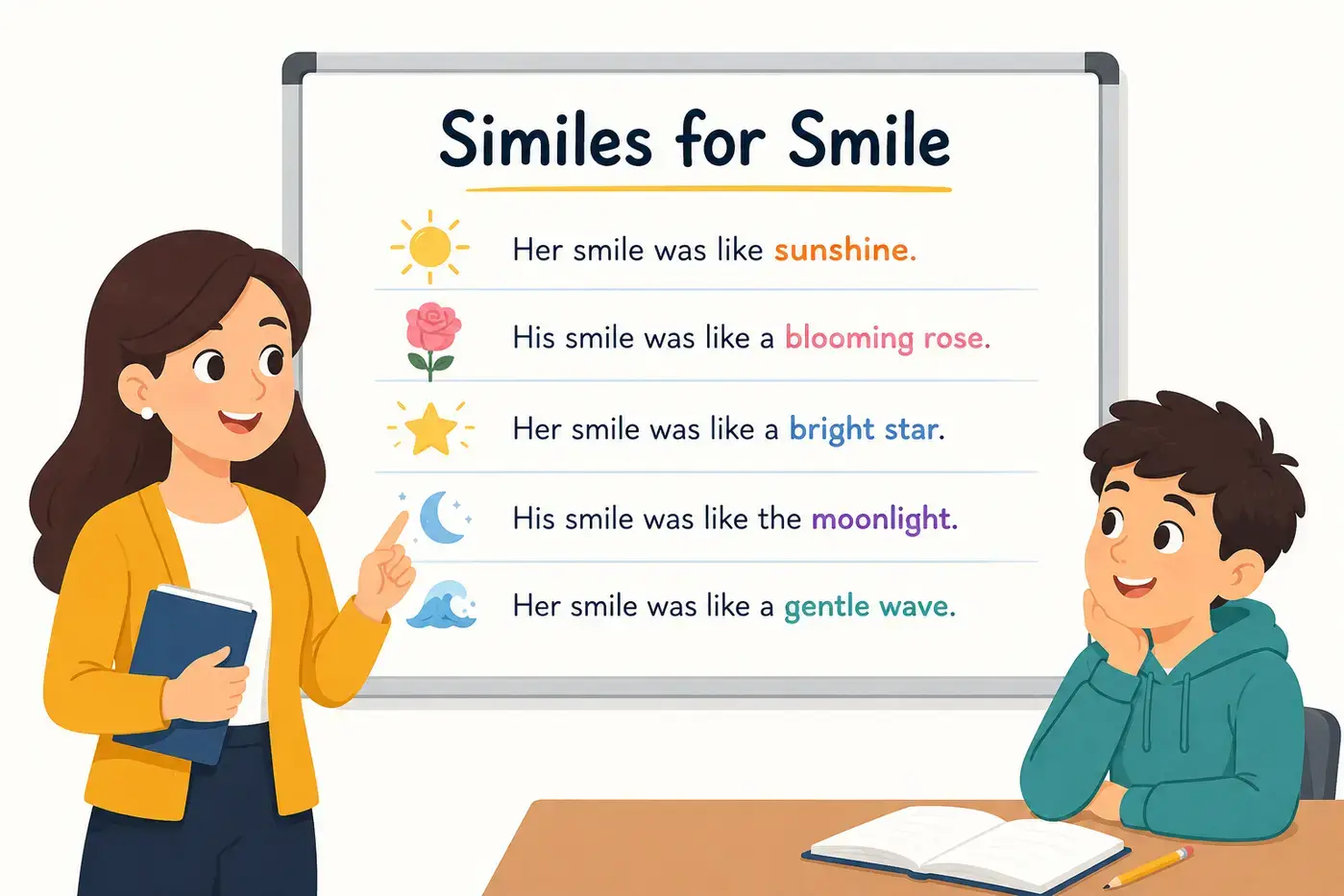
Similes for Smile help you describe a smile in a creative and colorful way. Instead of simply saying someone smiled, you can compare that smile to something familiar, making your writing more vivid and memorable. These comparisons appear in stories, poems, speeches, and everyday conversations.
A good simile paints a picture in the reader’s mind. It helps people imagine the warmth, brightness, kindness, or happiness behind a smile. Even simple comparisons can make a sentence more interesting and emotional.
This guide explains this phrase in very simple English. You will learn what they mean, why people use them, how to choose the right one, and see plenty of easy examples you can use in school, creative writing, or daily conversation.
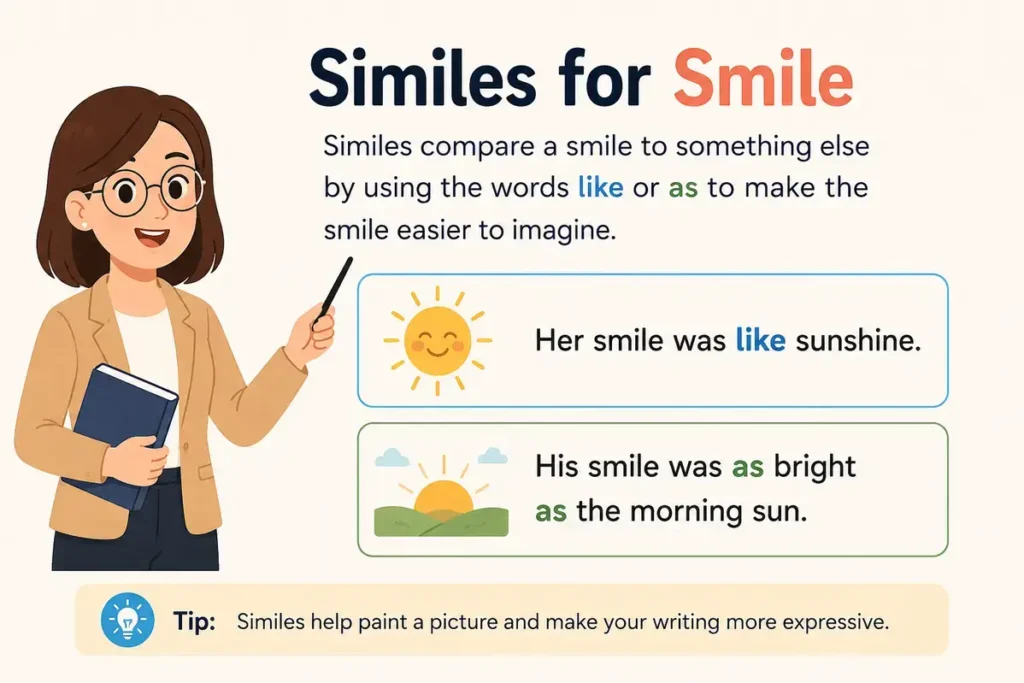
Simple Answer in One Look
Similes for Smile compare a smile to something else by using the words like or as to make the smile easier to imagine.
Example:
- Her smile was like sunshine.
- His smile was as bright as the morning sun.
What This Means in Simple English
A simile is a comparison. It helps readers picture something more clearly. When talking about a smile, a simile compares the smile to something people already know.
For example:
- A flower is beautiful.
- Sunshine feels warm.
- A rainbow is colorful.
If you compare a smile to one of these things, people can quickly understand how that smile looks or feels.
Instead of saying:
She had a nice smile.
You can say:
She had a smile like sunshine.
The second sentence creates a stronger picture. That is why writers enjoy using similes.
Why Writers Use Similes
People use similes because they:
- Make writing more interesting.
- Help readers imagine scenes.
- Show emotions clearly.
- Add beauty to stories and poems.
- Make descriptions easier to remember.
A simple smile can mean many different things.
It may be:
- Happy
- Kind
- Friendly
- Shy
- Proud
- Loving
- Gentle
- Confident
Different similes help describe each feeling.
Why People Mix These Words
Many learners confuse similes with other figures of speech. The biggest confusion is between a simile and a metaphor. Here is an easy way to remember them.
Simile
A simile uses like or as.
Example:
- Her smile was like a rainbow.
Metaphor
A metaphor says something is something else.
Example:
- Her smile was a rainbow.
Both create pictures.
Only the simile uses like or as.
Another Common Mistake
Some people think any nice description is a simile.
It is not.
Example:
- She smiled happily.
This is only a description.
It is not a comparison.
Now look at this:
- She smiled like the first sunshine after rain.
This is a simile because it compares two things.
Clear Difference Explained Simply
Here is a simple comparison.
| Description | Simile | Not a Simile |
|---|---|---|
| Uses like or as | ✔ Yes | ✘ No |
| Compares two things | ✔ Yes | Sometimes |
| Creates a picture | ✔ Yes | Not always |
| Makes writing colorful | ✔ Yes | Sometimes |
Examples:
Simple sentence:
- She smiled.
Better sentence:
- She smiled like a child opening a gift.
Simple sentence:
- He looked happy.
Better sentence:
- His smile was as bright as the sun.
The comparison helps readers see the moment.
Which Form Should You Use?
If you want your writing to sound interesting, use a simile. Choose something your readers already understand.
Good choices include:
- sunshine
- stars
- flowers
- rainbows
- diamonds
- candles
- the moon
- spring morning
Avoid strange comparisons that confuse readers.
Instead of writing:
- Her smile was like a broken spoon.
Choose something that matches the feeling.
To Show Happiness
- Her smile was like sunshine.
For kindness:
- His smile was as warm as a cozy blanket.
Beauty Similes
- Her smile was like a blooming rose.
Always think about the feeling you want readers to imagine.
Easy Real Life Sentences You Can Use
Here are simple examples anyone can understand.
- Her smile was like warm sunshine.
- His smile was as bright as the stars.
- My grandmother’s smile was like a soft hug.
- The baby’s smile was as sweet as candy.
- Her smile was like the first flower of spring.
- His smile was as warm as fresh cookies.
- The little girl smiled like an angel.
- Her smile was like a rainbow after the rain.
Each sentence creates a clear picture without using difficult words.
Where This Expression Comes From Simple History
People have compared smiles to beautiful things for thousands of years. Long before modern books, storytellers used comparisons to help listeners imagine scenes.
Ancient poets compared smiles to:
- flowers
- sunlight
- stars
- the moon
- gold
- precious jewels
As English grew, writers continued using these comparisons. Today, authors, teachers, songwriters, and speakers still use similes because they make writing feel alive. Even children learn simple similes in elementary school. That is why this phrase remain one of the easiest and most popular writing tools.
As your vocabulary grows, you can choose similes that match different emotions and situations. In the next section, you’ll discover dozens of beautiful phrases, learn when to use each one, explore common themes, avoid mistakes, and find creative examples that make your writing stand out.
Similes for Smile in Culture and Stories
People all over the world smile. A smile can show happiness, kindness, hope, or love. That is why many cultures use beautiful similes for smile in stories, songs, and everyday speech. A smile is often seen as a sign of friendship. It can make someone feel welcome without saying a single word. Writers use similes to make that feeling easy to imagine.
For example, someone may write:
“Her smile was like the morning sun.”
This tells readers that her smile felt warm, bright, and comforting. Many children’s books use simple smile comparisons because young readers understand pictures in their minds better than long explanations.
In stories, heroes often smile before helping others. Grandparents smile when they see family. Friends smile after sharing good news. These moments help readers connect with the characters. Because smiles are understood almost everywhere, similes for smile work well across different cultures and types of writing.
Similes for Smile in the Bible and Mythology
The Bible does not often use the exact phrase “similes for smile,” but it talks about joyful faces, cheerful hearts, kindness, and gladness.
For example, a joyful face often represents hope, peace, and love. A happy expression can encourage others during difficult times. Many Bible stories describe people showing joy after receiving good news. Their happy faces remind readers that kindness and faith can bring comfort.
In Greek mythology, the gods and goddesses are sometimes described with bright and welcoming expressions. Their smiles often show wisdom, victory, beauty, or peace. These stories teach that a smile can mean much more than happiness. It can also represent trust, courage, forgiveness, and hope.
Similes for Smile Symbolism Explained in Simple Words
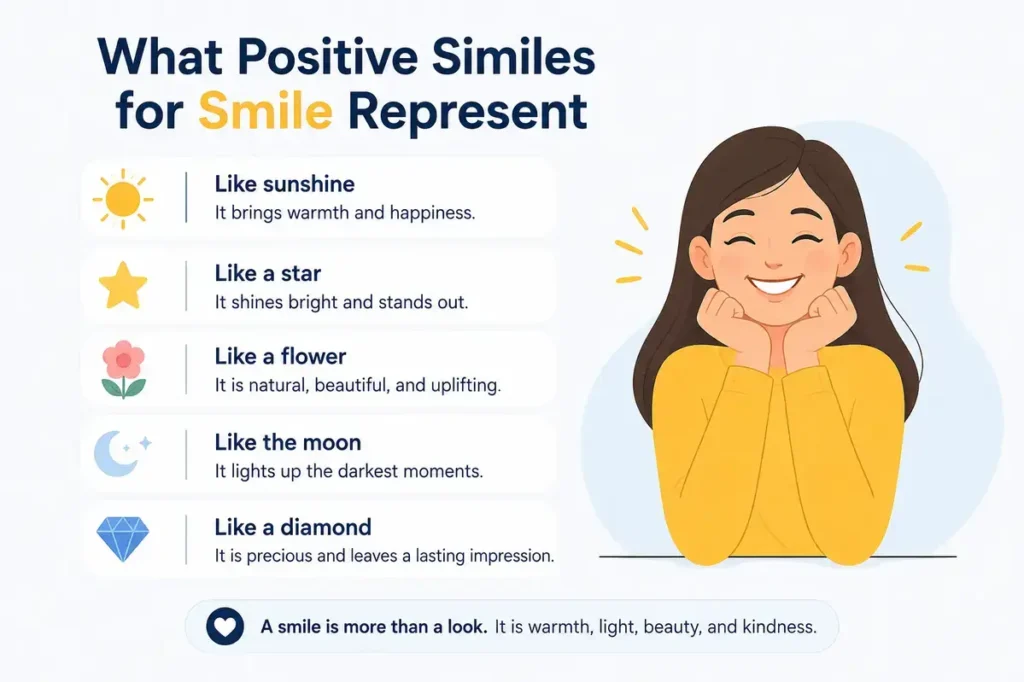
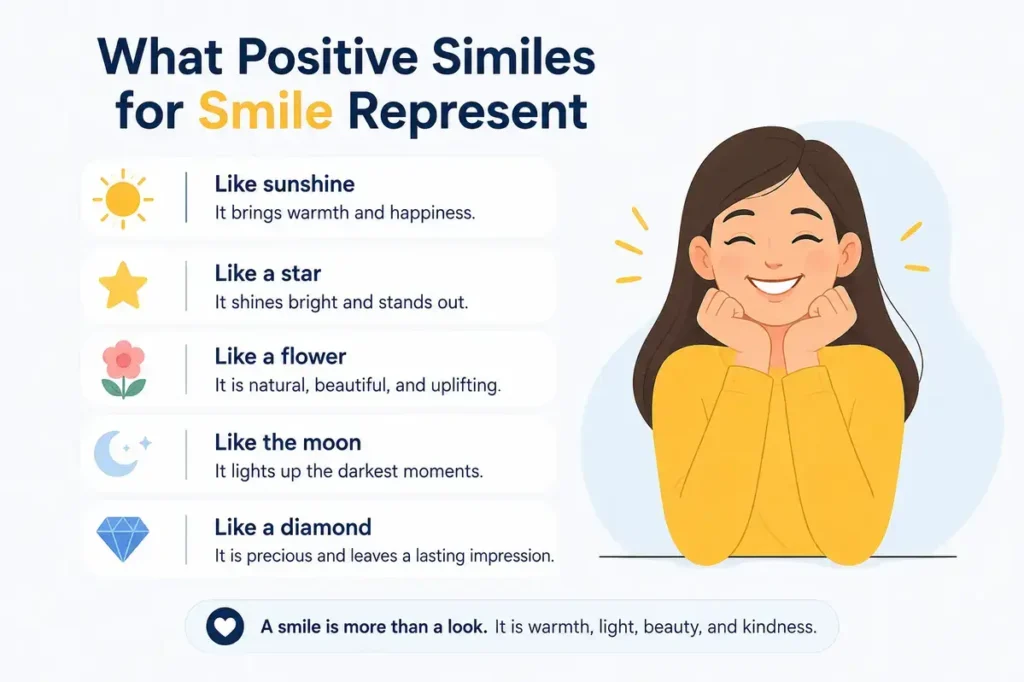
What Positive Similes for Smile Represent
Positive similes for smile usually describe:
- Happiness.
- Kindness.
- Love.
- Hope.
- Peace.
- Confidence.
- Friendship.
- Warmth.
Examples include:
Her smile was like sunshine.
His smile was like a rainbow after rain.
Their smiles were like fresh flowers in spring.
These comparisons help readers imagine joyful feelings quickly.
What Gentle or Quiet Similes for Smile Represent
Not every smile is big and cheerful. Some smiles are soft and calm.
Simple similes for smile can also show:
- Shyness.
- Quiet confidence.
- Patience.
- Understanding.
- Comfort.
- Peacefulness.
Examples include:
Her smile was like a calm lake.
His smile was like soft candlelight.
The child’s smile was like a gentle breeze.
These similes create peaceful images instead of exciting ones.
Related Words You Should Know
Learning related words helps you build stronger sentences and write more naturally.
Grin
A wide smile that often shows excitement or fun.
Example:
He wore a big grin after winning the game.
Beam
A very happy smile that lights up someone’s face.
Example:
She beamed with pride.
Smirk
A small smile that may show pride or sarcasm.
Example:
He gave a small smirk.
Smile
A pleasant expression made by lifting the corners of the mouth.
Example:
Her smile made everyone feel welcome.
Cheerful
Feeling or showing happiness.
Example:
The teacher had a cheerful smile.
Joyful
Full of joy and happiness.
Example:
The children looked joyful after the trip.
Bright
Looking full of energy or happiness.
Example:
He greeted everyone with a bright smile.
Warm
Showing kindness and friendliness.
Example:
She welcomed us with a warm smile.
How People Actually Use Similes for Smile in Daily English
People naturally use this phrase when telling stories, writing birthday cards, describing family members, or creating poems.
Here are everyday examples.
- Her smile was like sunshine after a rainy day.
- His smile was like a warm blanket on a cold morning.
- The baby’s smile was like a little star.
- Grandpa’s smile was like an old friend.
- My teacher’s smile was like fresh flowers.
- Her smile was like a rainbow after the storm.
- His smile was like hot chocolate on a winter day.
- The little girl’s smile was like sparkling water.
- Your smile is like music to my heart.
- His smile was like a light in the darkness.
These examples sound natural and are easy for children and adults to understand.
Common Mistakes When Using Similes for Smile
Many writers make small mistakes when creating similes.
Using Very Confusing Comparisons
Poor example:
Her smile was like complicated mathematics.
Better example:
Her smile was like bright sunshine.
Readers understand simple pictures more easily.
Mixing Too Many Ideas
Poor example:
His smile was like sunshine, diamonds, fireworks, rivers, mountains, and music.
Better example:
His smile was like sunshine.
One strong comparison creates a clearer image.
Choosing Something That Does Not Match
Poor example:
Her smile was like a broken chair.
Unless you want to describe sadness or humor, this comparison does not fit.
Choose images that match the feeling you want to describe.
Repeating the Same Simile Too Often
If every character has a smile like sunshine, readers may become bored.
Try different images.
Examples include:
Her smile was like spring.
His smile was like moonlight.
Their smile was like fresh snow.
Forgetting the Feeling
A good simile does more than compare two things.
It also creates an emotion.
Ask yourself:
How should the reader feel after reading this sentence?
12 Similes for Smile with Examples 2026
Use these similes to make your English sound more natural and expressive.
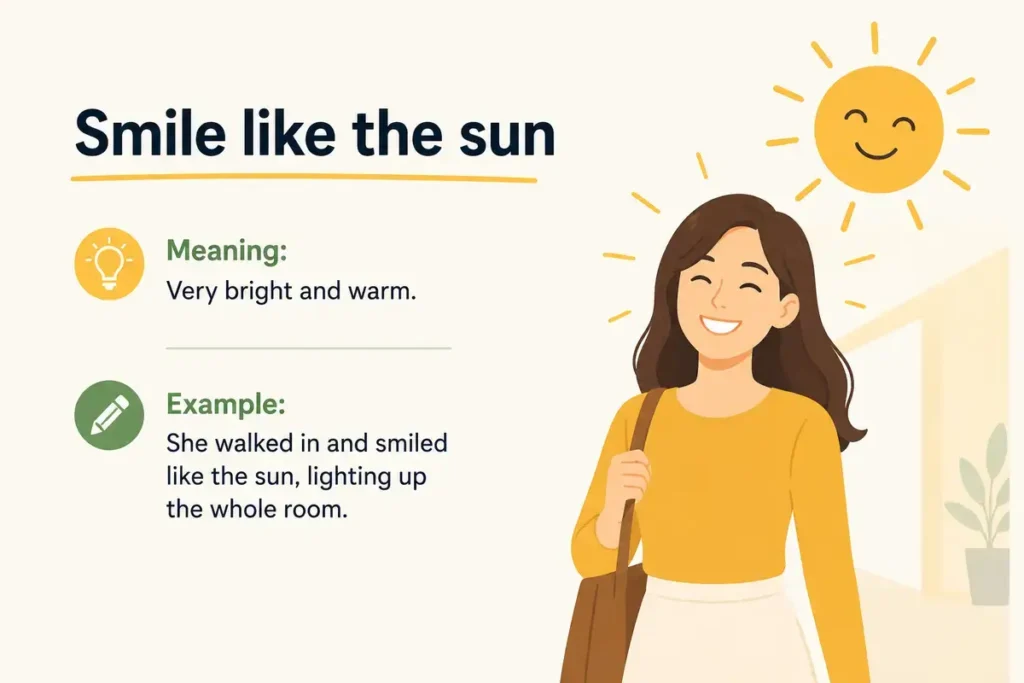
- Smile like the sun
Meaning: Very bright and warm
Example: She walked in and smiled like the sun, lighting up the whole room. - Smile as wide as the ocean
Meaning: A huge, full smile
Example: When he saw his dog, he smiled as wide as the ocean. - Smile like a child on Christmas morning
Meaning: Pure, innocent, and excited
Example: She opened the gift and smiled like a child on Christmas morning. - Smile as sweet as honey
Meaning: Very kind and gentle
Example: The teacher greeted us with a smile as sweet as honey. - Smile like a Cheshire cat
Meaning: A big, mysterious grin
Example: He knew the answer and smiled like a Cheshire cat. - Smile as bright as a diamond
Meaning: Shiny and beautiful
Example: Her smile was as bright as a diamond in the photos. - Smile like you just won the lottery
Meaning: Extremely happy and surprised
Example: He walked out of the interview smiling like he just won the lottery. - Smile as soft as a feather
Meaning: Gentle and calm
Example: She gave him a smile as soft as a feather. - Smile like the moon on a clear night
Meaning: Calm and peaceful
Example: Even in trouble, she smiled like the moon on a clear night. - Smile as warm as a cup of coffee
Meaning: Comforting and friendly
Example: His smile was as warm as a cup of coffee on a cold day. - Smile like fireworks on the 4th of July
Meaning: Exciting and full of energy
Example: The team smiled like fireworks on the 4th of July after winning. - Smile as innocent as a newborn baby
Meaning: Pure and honest
Example: She lied, but smiled as innocent as a newborn babyet.
Final Teacher Explanation
Think of similes as little picture makers. Instead of simply saying someone smiled, you help readers imagine the smile.
For example, compare these two sentences.
She smiled.
She smiled like the morning sun.
The second sentence creates a much stronger picture. That is why good writers enjoy using this phrase. You do not need difficult words. Simple comparisons are usually the most powerful.
Choose things people already know, such as sunshine, flowers, rainbows, stars, candles, butterflies, or gentle waves. Your writing will become more colorful, more interesting, and easier to remember.
Final Answer
Similes for smile are comparisons that help readers picture a smile more clearly by using the word “like” or “as.”
The best similes are simple, natural, and easy to imagine. They make stories, poems, speeches, and everyday writing more interesting while helping readers feel the emotion behind the smile.
Frequently Asked Questions
What are similes for smile?
This phrase compare a smile to something else by using the words “like” or “as” to create a clear picture.
Why do writers use similes for smile?
They make descriptions more colorful, emotional, and easier for readers to imagine.
What is an easy example of a simile for smile?
“Her smile was like sunshine.”
Can I use similes for smile in school writing?
Yes. They are commonly used in stories, essays, poems, and creative writing assignments.
Are similes for smile good for children?
Yes. Simple comparisons help children understand feelings and improve descriptive writing.
What is the difference between a simile and a metaphor?
A simile uses “like” or “as.” A metaphor says one thing is another without using those words.
Can I make my own similes for smile?
Yes. You can compare a smile with anything that clearly shows warmth, happiness, beauty, or kindness.
Which similes for smile are most popular?
Some of the most popular examples are:
- Like sunshine.
- Like a rainbow.
- Like a bright star.
- Like fresh flowers.
- Like the morning sun.
Conclusion
A smile is one of the easiest human expressions to recognize, but describing it well takes creativity. Similes for smile help writers turn an ordinary sentence into one that readers can see and feel. A simple comparison can make a character seem kinder, happier, gentler, or more memorable.
The best similes use familiar images like sunshine, flowers, stars, rainbows, and calm water. These comparisons are easy to understand and create strong mental pictures for readers of every age.
As you practice writing, try creating your own phrase. Keep them simple, match the feeling you want to share, and choose comparisons that sound natural. With a little practice, your writing will become brighter, more expressive, and much more enjoyable to read.

Idioms, Expressions & Figurative Language
Mason Ellsworth is an American language writer with a passion for English expressions, figurative language, and everyday communication. He explains idioms, similes, popular phrases, and commonly misunderstood expressions in a straightforward, engaging style that helps readers improve both their writing and spoken English.