
Similes for Problems help writers explain challenges in a way readers can immediately picture. Instead of describing a problem as merely difficult or complicated, a good simile paints a clear mental image that makes the situation easier to understand.
People use similes in conversations, stories, speeches, essays, journalism, business writing, and creative writing. A well-chosen comparison adds emotion, strengthens descriptions, and helps readers connect with the message.
This guide brings together more than 120 original similes grouped into useful categories. Each one includes a brief explanation and an example sentence so you can confidently use it in your own writing.
Short Answer
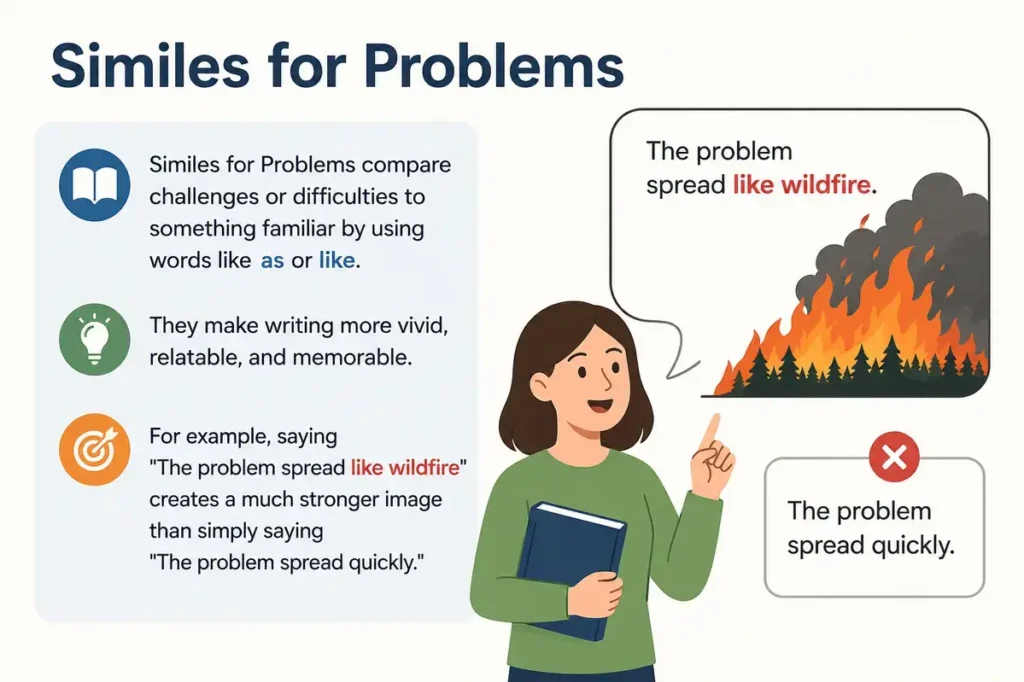
Similes for Problems compare challenges or difficulties to something familiar by using words like as or like. They make writing more vivid, relatable, and memorable. For example, saying “The problem spread like wildfire” creates a much stronger image than simply saying “The problem spread quickly.”
Table of Contents
- What Are Similes for Problems
- Why Use Similes for Problems
- How Similes Improve Writing
- Simile Versus Metaphor
- Comparison Table
- Similes for Difficult Problems
- Similes for Growing Problems
- Similes for Unexpected Problems
- Similes for Everyday Problems
- Similes for Emotional Problems
- Similes for Business Problems
- Similes for School Problems
- Similes for Relationship Problems
- Similes for Solving Problems
- Common Mistakes
- Writing Tips
- Memory Tricks
- Related Expressions
- Frequently Asked Questions
- Key Takeaways
- Conclusion
What Are Similes for Problems
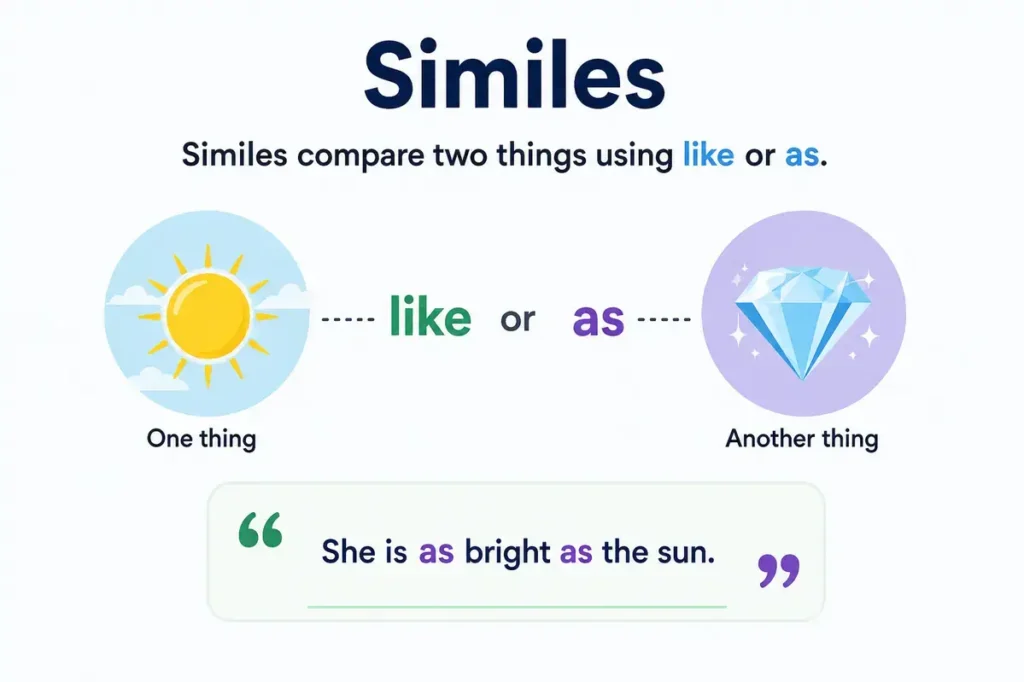
A simile compares one thing with another using the words like or as. When describing problems, similes help readers imagine the size, difficulty, speed, or emotional impact of a challenge.
For example: The issue spread like spilled ink. Instead of simply saying the issue spread, this comparison helps readers picture how quickly and widely it expanded.
Why Use Similes for Problems
Strong similes make writing more interesting and memorable.
They can help you:
- Explain difficult ideas more clearly.
- Create vivid mental images.
- Add emotion to your writing.
- Improve storytelling.
- Make speeches more engaging.
- Strengthen essays.
- Capture readers’ attention.
- Make descriptions easier to remember.
How Similes Improve Writing
A plain sentence tells readers what happened.
A simile shows readers what it felt like.
Compare these examples.
Plain sentence: The problem became worse.
With a simile: The problem grew like cracks across old glass.
The second sentence creates a much stronger image.
Simile Versus Metaphor
Although both compare two things, they work differently.
| Feature | Simile | Metaphor |
|---|---|---|
| Uses like or as | Yes | No |
| Direct comparison | Yes | No |
| Example | The problem spread like smoke. | The problem was a storm. |
| Easier for beginners | Yes | Sometimes |
Comparison Table
| Situation | Better Simile Style |
|---|---|
| Growing challenge | Like a rolling snowball |
| Hidden issue | Like an iceberg |
| Confusing situation | Like a tangled fishing net |
| Sudden difficulty | Like lightning from a clear sky |
| Endless trouble | Like running on a treadmill |
| Heavy responsibility | Like carrying a mountain |
| Small issue becoming larger | Like a tiny spark becoming a wildfire |
| Complicated decision | Like solving a thousand piece puzzle |
Similes for Difficult Problems
Below are the first group of original Similes for Problems.
1. Like climbing a mountain without a trail
Meaning: Extremely difficult.
Example: Finding the missing document was like climbing a mountain without a trail.
Explanation: The comparison emphasizes uncertainty and effort.
2. Like untangling a basket of fishing lines
Meaning: Complicated.
Example: Fixing the accounting mistake felt like untangling a basket of fishing lines.
Explanation: Every solution creates another challenge.
3. Like carrying a backpack full of bricks
Meaning: Emotionally or mentally exhausting.
Example: Managing several deadlines was like carrying a backpack full of bricks.
Explanation: The simile highlights constant pressure.
4. Like pushing a truck uphill
Meaning: Requires enormous effort.
Example:
Convincing everyone to agree was like pushing a truck uphill.
Explanation:
Progress comes slowly.
5. Like walking through deep mud
Meaning: Slow and difficult.
Example:
The approval process moved like walking through deep mud.
Explanation:
Every step requires extra effort.
6. Like solving a puzzle with missing pieces
Meaning: Incomplete information.
Example:
The investigation felt like solving a puzzle with missing pieces.
Explanation:
Important clues are unavailable.
7. Like rowing against a strong current
Meaning: Constant resistance.
Example:
Starting the new business was like rowing against a strong current.
Explanation:
Success requires persistence.
8. Like lifting an elephant
Meaning: Almost impossible.
Example:
Meeting the unrealistic deadline was like lifting an elephant.
Explanation:
The task seems overwhelming.
9. Like chasing smoke
Meaning: Impossible to catch.
Example:
Finding the source of the rumor was like chasing smoke.
Explanation:
The goal keeps slipping away.
10. Like climbing stairs with heavy chains
Meaning: Progress feels painfully slow.
Example:
Recovering from the financial loss was like climbing stairs with heavy chains.
Explanation:
Every step demands extra energy.
11. Like crossing a desert without water
Meaning: A long and exhausting struggle.
Example:
Searching for a solution felt like crossing a desert without water.
Explanation:
The journey seems endless.
12. Like opening a locked door without a key
Meaning: No obvious solution.
Example:
Fixing the software bug was like opening a locked door without a key.
Explanation:
The answer is not immediately available.
13. Like climbing a ladder with broken steps
Meaning: Progress is uncertain.
Example:
Building trust again was like climbing a ladder with broken steps.
Explanation:
Every step carries risk.
14. Like balancing on a tightrope in the wind
Meaning: One mistake could cause failure.
Example:
Negotiating the contract was like balancing on a tightrope in the wind.
Explanation:
Careful decisions matter.
15. Like digging through solid rock with a spoon
Meaning: Extremely difficult.
Example:
Changing his opinion was like digging through solid rock with a spoon.
Explanation:
The effort far exceeds the available tools.
16. Like steering a ship through a storm
Meaning: Facing many dangers.
Example:
Leading the company through the crisis was like steering a ship through a storm.
Explanation:
Every decision affects survival.
17. Like trying to catch the wind
Meaning: Nearly impossible.
Example:
Predicting every customer complaint was like trying to catch the wind.
Explanation:
The goal cannot be fully controlled.
18. Like walking across broken glass
Meaning: Painful and risky.
Example:
Discussing the family disagreement was like walking across broken glass.
Explanation:
Every word could make things worse.
19. Like carrying water in a paper bag
Meaning: Certain to fail.
Example:
Ignoring the warning signs was like carrying water in a paper bag.
Explanation:
The approach simply cannot succeed.
20. Like threading a needle in the dark
Meaning: Very difficult with limited information.
Example:
Making the final decision was like threading a needle in the dark.
Explanation:
Accuracy is extremely hard.
Similes for Growing Problems
21. Like a snowball rolling downhill
Meaning: A small problem becomes much larger.
Example:
The misunderstanding grew like a snowball rolling downhill.
Explanation:
Small issues often become major ones if ignored.
22. Like cracks spreading across a windshield
Meaning: Problems gradually expand.
Example:
The conflict spread like cracks across a windshield.
Explanation:
Damage increases over time.
23. Like weeds taking over a garden
Meaning: Problems multiply quickly.
Example:
Unfinished tasks grew like weeds taking over a garden.
Explanation:
Neglect allows problems to spread.
24. Like spilled ink across paper
Meaning: A problem spreads rapidly.
Example:
The rumor spread like spilled ink across paper.
Explanation:
The issue becomes difficult to contain.
25. Like dominoes falling one after another
Meaning: One problem causes another.
Example:
The delays came like dominoes falling one after another.
Explanation:
Each setback triggers the next.
26. Like roots breaking through concrete
Meaning: A hidden issue becomes impossible to ignore.
Example:
Customer complaints grew like roots breaking through concrete.
Explanation:
Pressure eventually forces attention.
27. Like floodwater after heavy rain
Meaning: Problems arrive all at once.
Example:
Unexpected expenses came like floodwater after heavy rain.
Explanation:
Challenges overwhelm existing resources.
28. Like smoke filling a room
Meaning: Trouble gradually affects everything.
Example:
Stress spread like smoke filling a room.
Explanation:
The impact reaches every area.
29. Like vines climbing a wall
Meaning: Problems slowly take over.
Example:
Technical issues spread like vines climbing a wall.
Explanation:
Growth is steady and difficult to stop.
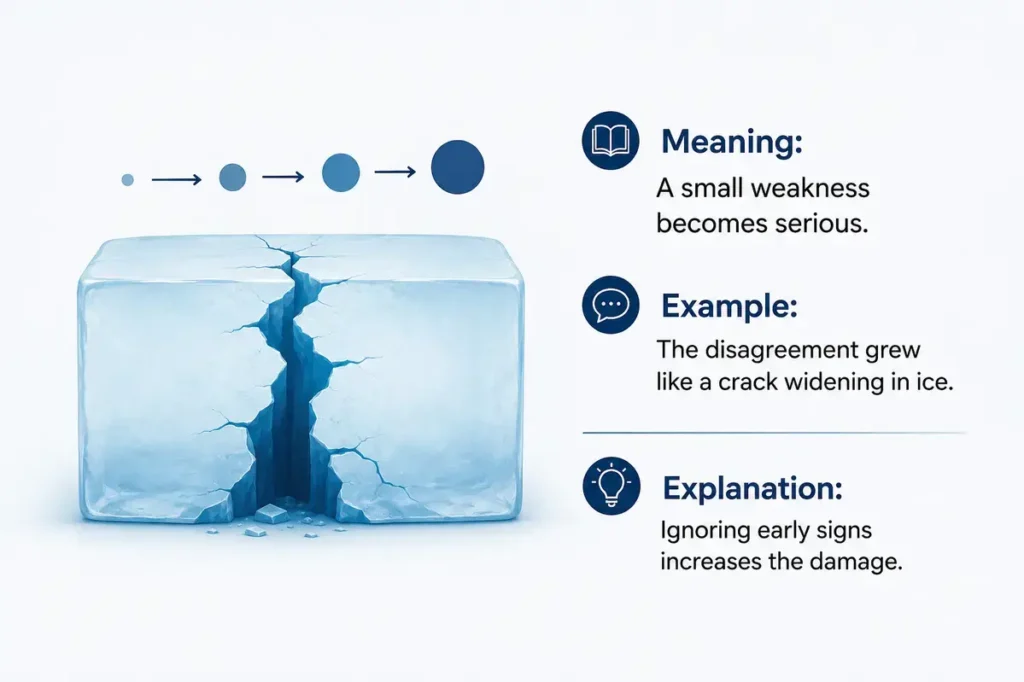
30. Like a crack widening in ice
Meaning: A small weakness becomes serious.
Example:
The disagreement grew like a crack widening in ice.
Explanation:
Ignoring early signs increases the damage.
31. Like a tiny spark becoming a wildfire
Meaning: A small problem grows into a major crisis.
Example:
A minor misunderstanding spread like a tiny spark becoming a wildfire.
Explanation:
Small issues can become much bigger when ignored.
32. Like rust eating through metal
Meaning: A problem slowly causes damage over time.
Example:
Distrust spread like rust eating through metal.
Explanation:
The damage develops gradually but can become severe.
33. Like a dripping faucet filling a bucket
Meaning: Small problems add up over time.
Example:
Daily interruptions piled up like a dripping faucet filling a bucket.
Explanation:
Tiny issues become significant through repetition.
34. Like branches reaching across the sky
Meaning: A problem expands in many directions.
Example:
The project delays spread like branches reaching across the sky.
Explanation:
One issue creates multiple connected challenges.
35. Like a shadow growing at sunset
Meaning: A problem appears to become larger over time.
Example:
His worries grew like a shadow growing at sunset.
Explanation:
The situation feels increasingly overwhelming.
36. Like waves crashing one after another
Meaning: Problems arrive continuously.
Example:
Customer complaints came like waves crashing one after another.
Explanation:
There is little time to recover between difficulties.
37. Like a tree growing through a wall
Meaning: A problem becomes impossible to ignore.
Example:
The building damage spread like a tree growing through a wall.
Explanation:
The issue grows stronger until action becomes necessary.
38. Like clouds covering the sky
Meaning: Problems gradually affect everything.
Example:
Uncertainty spread like clouds covering the sky.
Explanation:
The entire situation becomes darker and more difficult.
39. Like vines wrapping around a fence
Meaning: Problems slowly surround every area.
Example:
Unexpected costs spread like vines wrapping around a fence.
Explanation:
The challenge keeps expanding until it affects everything.
40. Like an avalanche gathering speed
Meaning: A problem quickly becomes uncontrollable.
Example:
The public criticism grew like an avalanche gathering speed.
Explanation:
Momentum makes the problem much harder to stop.
Similes for Unexpected Problems
41. Like lightning from a clear sky
Meaning: Completely unexpected.
Example:
The bad news arrived like lightning from a clear sky.
Explanation:
No warning came before the problem appeared.
42. Like a trapdoor opening beneath your feet
Meaning: A sudden setback.
Example:
Losing the contract felt like a trapdoor opening beneath your feet.
Explanation:
The situation changes instantly.
43. Like a balloon bursting without warning
Meaning: An unexpected failure.
Example:
Their plans ended like a balloon bursting without warning.
Explanation:
Everything changes in a single moment.
44. Like an alarm ringing in the middle of the night
Meaning: Sudden and alarming.
Example:
The emergency call came like an alarm ringing in the middle of the night.
Explanation:
The problem demands immediate attention.
45. Like a branch snapping under your weight
Meaning: A surprise failure.
Example:
The old system collapsed like a branch snapping under your weight.
Explanation:
Something trusted suddenly gives way.
46. Like ice breaking beneath your feet
Meaning: Unexpected danger.
Example:
The investment failed like ice breaking beneath your feet.
Explanation:
The safe situation suddenly becomes risky.
47. Like opening the wrong door
Meaning: An unforeseen consequence.
Example:
Accepting the offer felt like opening the wrong door.
Explanation:
The decision leads to unexpected trouble.
48. Like a power outage during a presentation
Meaning: A badly timed interruption.
Example:
The internet failed like a power outage during a presentation.
Explanation:
The timing makes the problem worse.
49. Like stepping into a hidden puddle
Meaning: A small but unexpected inconvenience.
Example:
The software error appeared like stepping into a hidden puddle.
Explanation:
The problem catches you off guard.
50. Like a bird flying into a window
Meaning: A sudden and surprising obstacle.
Example:
The schedule changed like a bird flying into a window.
Explanation:
The interruption happens instantly.
Similes for Emotional Problems
51. Like carrying the world on your shoulders
Meaning: Feeling overwhelmed.
Example:
She felt like carrying the world on her shoulders after the announcement.
Explanation:
The burden feels enormous.
52. Like a knot tightening inside your chest
Meaning: Growing anxiety.
Example:
The uncertainty felt like a knot tightening inside his chest.
Explanation:
Stress becomes stronger over time.
53. Like standing alone in a storm
Meaning: Feeling isolated during hardship.
Example:
After the disagreement, she felt like standing alone in a storm.
Explanation:
The simile expresses loneliness and vulnerability.
54. Like walking with invisible weights
Meaning: Emotional exhaustion.
Example:
Grief felt like walking with invisible weights.
Explanation:
The burden cannot be seen but is deeply felt.
55. Like living beneath dark clouds
Meaning: Persistent worry.
Example:
Financial stress felt like living beneath dark clouds.
Explanation:
The problem overshadows daily life.
56. Like a candle flickering in the wind
Meaning: Feeling emotionally fragile.
Example:
Her confidence was like a candle flickering in the wind.
Explanation:
The situation could change at any moment.
57. Like carrying an anchor everywhere
Meaning: Constant emotional burden.
Example:
Regret felt like carrying an anchor everywhere.
Explanation:
The weight slows every step.
58. Like trying to breathe underwater
Meaning: Feeling overwhelmed beyond your ability.
Example:
Balancing work and family felt like trying to breathe underwater.
Explanation:
The challenge seems impossible.
59. Like a bird trapped inside a cage
Meaning: Feeling powerless.
Example:
He felt like a bird trapped inside a cage.
Explanation:
The simile emphasizes frustration and restriction.
60. Like drifting without a compass
Meaning: Feeling lost.
Example:
After losing her job, she felt like drifting without a compass.
Explanation:
There is no clear direction.
Similes for School Problems
61. Like reading a book with missing pages
Meaning: Missing important information.
Example:
Preparing for the exam felt like reading a book with missing pages.
Explanation:
Learning becomes much harder.
62. Like solving a maze blindfolded
Meaning: Extremely confusing.
Example:
The assignment felt like solving a maze blindfolded.
Explanation:
There is no obvious path.
63. Like juggling glass balls
Meaning: Managing many responsibilities.
Example:
Balancing classes and work was like juggling glass balls.
Explanation:
Every task requires careful attention.
64. Like writing with a broken pencil
Meaning: Working with poor resources.
Example:
Completing the project felt like writing with a broken pencil.
Explanation:
Success becomes more difficult.
65. Like racing without knowing the finish line
Meaning: Unclear expectations.
Example:
The semester felt like racing without knowing the finish line.
Explanation:
Students need direction to succeed.
66. Like carrying every textbook at once
Meaning: Too much responsibility.
Example:
Exam week felt like carrying every textbook at once.
Explanation:
The workload becomes overwhelming.
67. Like climbing a staircase that never ends
Meaning: Constant academic pressure.
Example:
Homework felt like climbing a staircase that never ends.
Explanation:
The work seems endless.
68. Like searching for a needle in a library
Meaning: Finding information is very difficult.
Example:
Locating the correct reference was like searching for a needle in a library.
Explanation:
The amount of information makes the task challenging.
69. Like building a bridge with toothpicks
Meaning: Limited resources.
Example:
Finishing the science project felt like building a bridge with toothpicks.
Explanation:
The available tools are not enough.
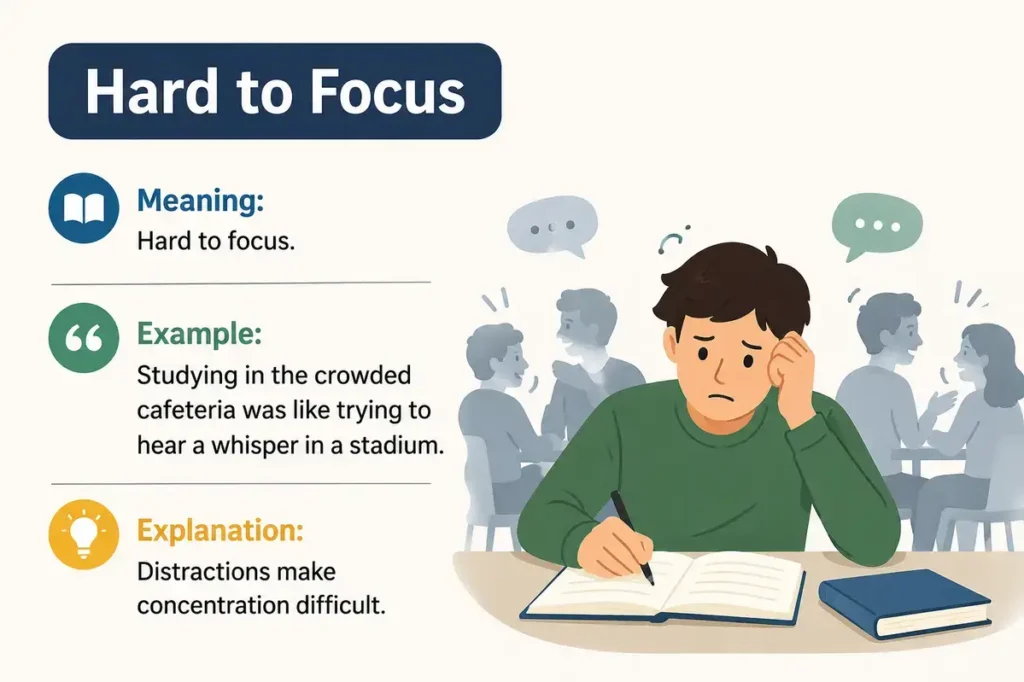
70. Like trying to hear a whisper in a stadium
Meaning: Hard to focus.
Example:
Studying in the crowded cafeteria was like trying to hear a whisper in a stadium.
Explanation:
Distractions make concentration difficult.
71. Like a boat drifting without an anchor
Meaning: A problem leaves you without stability.
Example:
The company felt like a boat drifting without an anchor after losing its leader.
Explanation:
The comparison emphasizes uncertainty and a lack of direction.
72. Like trying to hold water in your hands
Meaning: A solution cannot be maintained.
Example:
Their temporary fix was like trying to hold water in your hands.
Explanation:
The solution quickly slips away.
73. Like a maze with moving walls
Meaning: The problem constantly changes.
Example:
Negotiating the agreement was like a maze with moving walls.
Explanation:
Every solution creates a new challenge.
74. Like a clock with missing gears
Meaning: Something essential is missing.
Example:
The plan was like a clock with missing gears.
Explanation:
Without key parts, the entire system fails.
75. Like a kite flying against the wind
Meaning: Progress faces constant resistance.
Example:
Launching the project was like a kite flying against the wind.
Explanation:
Success requires steady effort.
76. Like trying to fill a bucket with holes
Meaning: Every effort is wasted.
Example:
Ignoring employee concerns was like trying to fill a bucket with holes.
Explanation:
The problem continues because the root cause remains.
77. Like walking through a foggy forest
Meaning: The path forward is unclear.
Example:
Choosing the best investment felt like walking through a foggy forest.
Explanation:
Limited visibility creates uncertainty.
78. Like climbing a hill of loose sand
Meaning: Progress disappears quickly.
Example:
Recovering lost customers was like climbing a hill of loose sand.
Explanation:
Each step forward slides backward.
79. Like trying to catch raindrops
Meaning: The goal cannot easily be achieved.
Example:
Stopping every rumor was like trying to catch raindrops.
Explanation:
Some situations cannot be completely controlled.
80. Like building a house during an earthquake
Meaning: Working in unstable conditions.
Example:
Expanding the business during the crisis was like building a house during an earthquake.
Explanation:
The environment itself creates additional challenges.
Similes for Relationship Problems
81. Like two magnets pushing apart
Meaning: Two people cannot easily agree.
Example:
Their conversations became like two magnets pushing apart.
Explanation:
The comparison highlights growing emotional distance.
82. Like a bridge with broken ropes
Meaning: Trust has weakened.
Example:
Their friendship became like a bridge with broken ropes.
Explanation:
The relationship can no longer fully support both people.
83. Like speaking different languages
Meaning: People fail to understand each other.
Example:
The discussion felt like speaking different languages.
Explanation:
Communication breaks down.
84. Like a cracked mirror
Meaning: Trust is damaged.
Example:
Their partnership became like a cracked mirror.
Explanation:
Repairs are possible, but the damage remains visible.
85. Like rowing in opposite directions
Meaning: People have conflicting goals.
Example:
Managing the project became like rowing in opposite directions.
Explanation:
Progress is impossible without teamwork.
86. Like a rope pulled from both ends
Meaning: Constant tension.
Example:
Their marriage felt like a rope pulled from both ends.
Explanation:
Pressure continues from both sides.
87. Like a song played out of tune
Meaning: The relationship has lost harmony.
Example:
Their teamwork sounded like a song played out of tune.
Explanation:
The comparison emphasizes conflict.
88. Like building on cracked foundations
Meaning: The relationship begins with weaknesses.
Example:
The partnership was like building on cracked foundations.
Explanation:
Without trust, future success is uncertain.
89. Like trying to light wet wood
Meaning: Progress is difficult despite repeated effort.
Example:
Repairing their friendship was like trying to light wet wood.
Explanation:
Success takes patience and persistence.
90. Like an echo that never fades
Meaning: Old problems continue to return.
Example:
Past arguments lingered like an echo that never fades.
Explanation:
Unresolved issues continue to affect the present.
Similes for Solving Problems
91. Like finding the final piece of a puzzle
Meaning: The solution completes everything.
Example:
Her suggestion was like finding the final piece of a puzzle.
Explanation:
The answer suddenly makes sense.
92. Like sunlight breaking through clouds
Meaning: Hope appears after difficulty.
Example:
The good news arrived like sunlight breaking through clouds.
Explanation:
The situation immediately feels brighter.
93. Like opening a window in a stuffy room
Meaning: A fresh solution brings relief.
Example:
The new strategy was like opening a window in a stuffy room.
Explanation:
Fresh ideas improve the situation.
94. Like untying a tight knot
Meaning: A difficult issue is finally resolved.
Example:
The meeting felt like untying a tight knot.
Explanation:
The tension disappears.
95. Like clearing fallen trees from a road
Meaning: Removing obstacles.
Example:
The software update was like clearing fallen trees from a road.
Explanation:
Progress becomes possible again.
96. Like repairing a leaking roof before the rain
Meaning: Solving a problem at the right time.
Example:
Updating the safety rules was like repairing a leaking roof before the rain.
Explanation:
Preparation prevents larger problems.
97. Like planting seeds after a wildfire
Meaning: Beginning recovery.
Example:
The rebuilding effort was like planting seeds after a wildfire.
Explanation:
Hope follows destruction.
98. Like polishing a cloudy window
Meaning: Bringing clarity.
Example:
The explanation was like polishing a cloudy window.
Explanation:
Everything becomes easier to understand.
99. Like turning on a lighthouse
Meaning: Guidance appears.
Example:
Her advice was like turning on a lighthouse.
Explanation:
The right direction becomes visible.
100. Like rebuilding a bridge one board at a time
Meaning: Recovery takes patience.
Example:
Restoring trust was like rebuilding a bridge one board at a time.
Explanation:
Lasting solutions often require steady effort.
Tip: These additional similes can be adapted to creative writing, speeches, essays, business communication, or storytelling by matching them to the specific challenge you are describing.
Common Mistakes
- Do not confuse similes with metaphors. Similes use like or as, while metaphors make a direct comparison.
- Avoid overusing similes. Too many comparisons in one paragraph can distract readers.
- Choose comparisons your audience will understand. Familiar images are usually more effective.
- Keep the tone consistent. A humorous simile may not fit a serious report or formal essay.
- Avoid mixed comparisons. Combining unrelated images in one sentence can confuse readers.
Professional Writing Tips
- Match the simile to the size of the problem.
- Prefer fresh, specific comparisons over overused ones.
- Use sensory details to make the comparison vivid.
- Read the sentence aloud to check that it sounds natural.
- Place the simile where it adds clarity instead of interrupting the flow.
Memory Tips
- A simile always uses like or as.
- Picture the comparison in your mind before writing it.
- Ask yourself if the image makes the problem easier to imagine.
- Replace weak words like hard or difficult with a vivid comparison when appropriate.
Related Expressions
- Between a rock and a hard place.
- A thorn in someone’s side.
- An uphill battle.
- Hit a brick wall.
- In deep water.
- Back to the drawing board.
- Open a can of worms.
- Bite off more than you can chew.
- On thin ice.
- Weather the storm.
Key Takeaways
- Similes compare two things using like or as.
- Strong similes make problems easier to understand and remember.
- Different situations call for different kinds of comparisons.
- Fresh and original similes are usually more effective than overused ones.
- The best similes match the tone, audience, and purpose of your writing.
- Use similes sparingly to maximize their impact.
- Visual comparisons help readers connect with ideas more quickly.
- Practice creating your own similes by observing everyday experiences.
Conclusion
Similes for Problems are a powerful way to turn ordinary descriptions into memorable writing. Instead of simply saying that something is difficult, you can compare it to a familiar image that instantly communicates the challenge, emotion, or complexity of the situation.
The 120 examples in this guide cover a wide range of situations, including personal struggles, workplace challenges, school assignments, relationships, unexpected setbacks, and successful solutions. By choosing comparisons that fit the context, you can make your writing more vivid, engaging, and easier for readers to understand.
As you continue writing, focus on using similes naturally. A thoughtful comparison can strengthen an essay, improve a speech, enrich a story, or make everyday communication more expressive. With practice, you’ll develop a collection of memorable similes that add clarity, creativity, and lasting impact to your writing.
FAQS
What are similes for problems?
Similes for problems are comparisons that use like or as to describe challenges in a vivid and memorable way. They help readers picture the difficulty instead of simply being told about it.
Why should I use similes for problems?
They make writing more engaging, improve clarity, create stronger mental images, and help readers connect emotionally with your message.
What is the difference between a simile and a metaphor?
A simile uses like or as to compare two things. A metaphor says one thing is another without using those words.
Can similes be used in formal writing?
Yes. Well-chosen similes can improve speeches, presentations, articles, and essays, as long as they fit the tone and audience.
Are similes useful for students?
Absolutely. Similes make descriptive writing stronger and help students develop more expressive language.
How do I create my own simile?
Think about the problem you want to describe, then compare it to something familiar that shares the same quality, using like or as.
Should every paragraph include a simile?
No. Similes are most effective when used selectively. Too many comparisons can reduce their impact.
What are the best similes for difficult problems?
Some effective choices include:
- Like climbing a mountain without a trail.
- Like pushing a truck uphill.
- Like solving a puzzle with missing pieces.
- Like walking through deep mud.
- Like steering a ship through a storm.

Idioms, Expressions & Figurative Language
Mason Ellsworth is an American language writer with a passion for English expressions, figurative language, and everyday communication. He explains idioms, similes, popular phrases, and commonly misunderstood expressions in a straightforward, engaging style that helps readers improve both their writing and spoken English.