
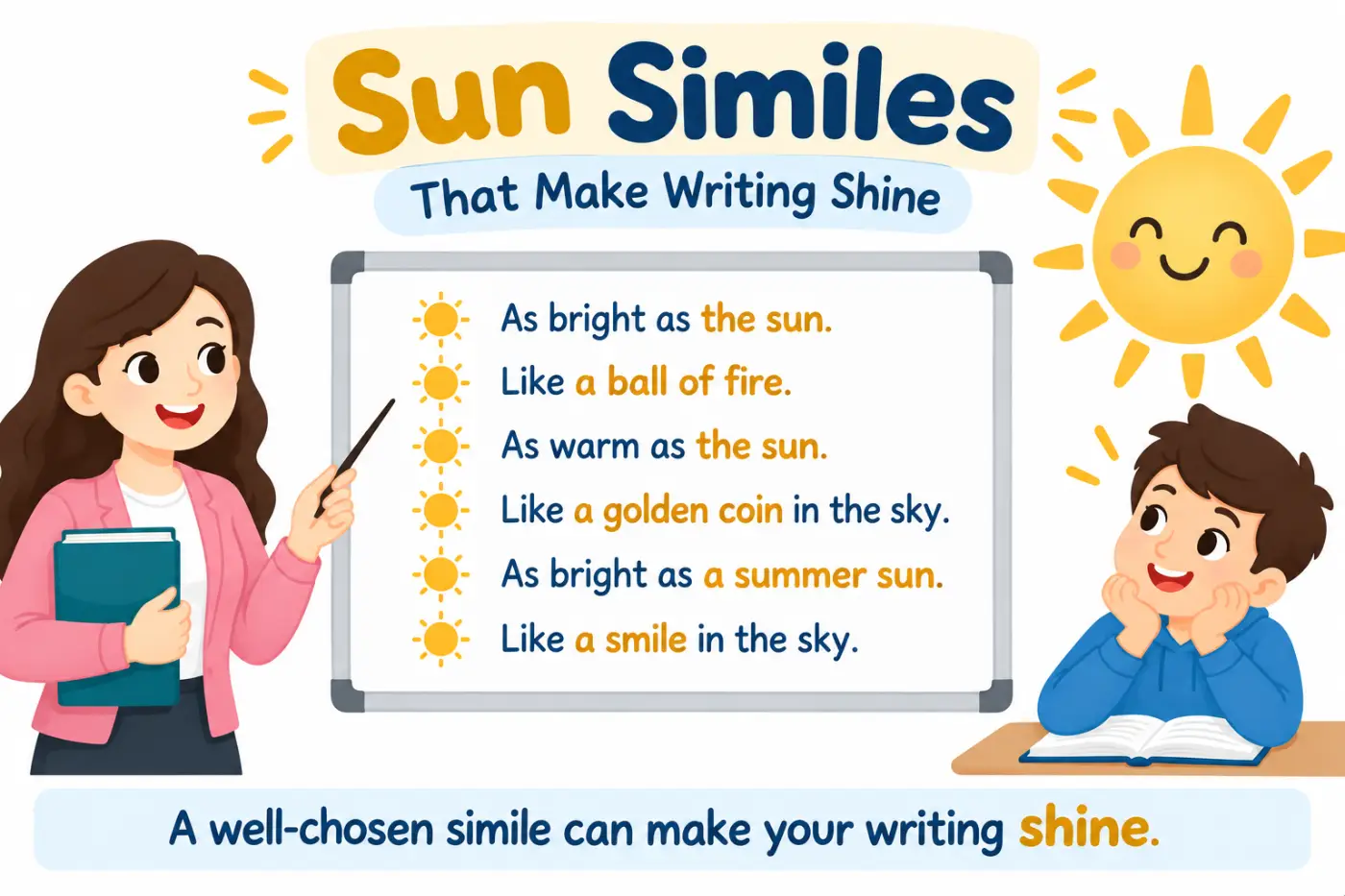
Finding the right comparison for the sun can make an ordinary sentence feel alive. Sun similes help you describe sunlight warmth color brightness and movement by comparing the sun to something familiar. Instead of simply saying the sun was bright you can say it was like a golden lantern hanging above the earth.
The best comparisons don’t just decorate a sentence. They create a picture in the reader’s mind and give the scene a mood. A sunrise compared to a burning ember feels very different from one compared to a golden coin or a warm blanket. That small choice can change the entire feeling of a paragraph.
This collection gives you natural comparisons for different situations including sunrise sunset summer mornings bright afternoons cloudy days and poetic scenes. You’ll also learn how similes work why certain comparisons feel stronger than others and how to create your own without making your writing sound forced.
Quick Definition
A sun simile compares the sun or its light to something else using words such as like or as. It helps readers picture brightness warmth color size or movement. For example the sun was like a golden ball above the horizon creates a clearer mental image than simply saying the sun was bright.
Quick Answer
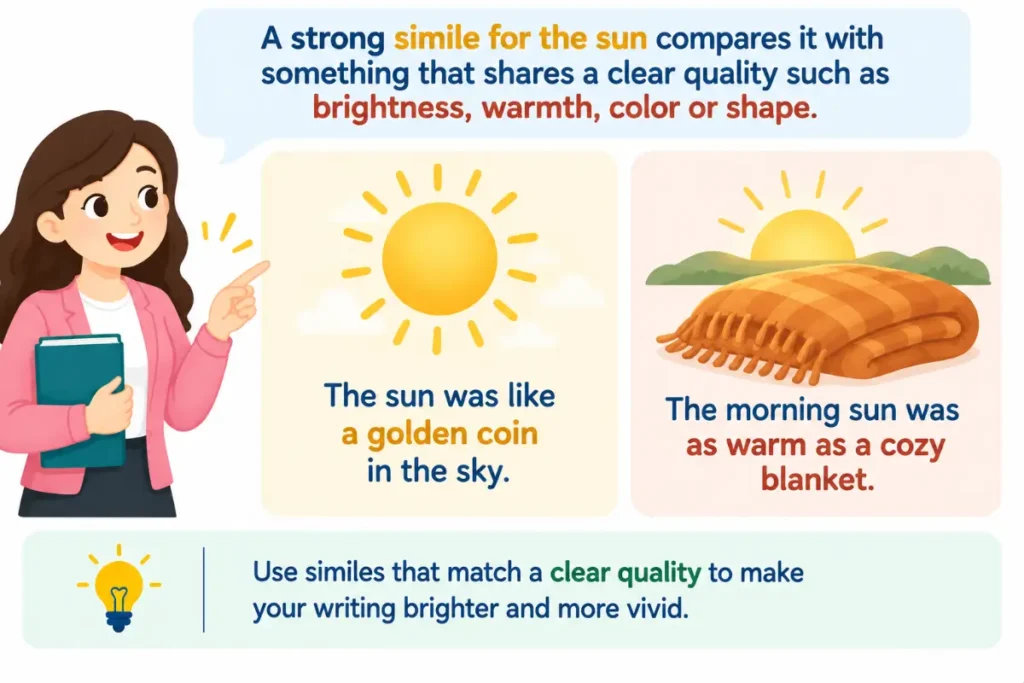
A strong simile for the sun compares it with something that shares a clear quality such as brightness warmth color or shape. Examples include the sun was like a golden coin in the sky and the morning sun was as warm as a cozy blanket.
The best comparison depends on the mood you want. A golden lantern creates a gentle image while a blazing fire creates something hotter and more powerful.
What Makes A Good Sun Comparison
A good simile does more than place two unrelated things beside each other. The comparison should have a clear connection that readers can understand almost instantly.
For example consider this sentence.
The sun was like a golden coin.
The reader can picture something round bright and golden. The comparison is simple but effective because the two objects share several visible qualities.
Now consider a less useful comparison.
The sun was like a purple shoe.
There may be a creative reason for the comparison but without context the reader has little idea what quality connects the two things. A good simile gives the reader a bridge between the familiar and the unfamiliar.
Several qualities work especially well when describing the sun.
- Brightness. Compare it to a lamp a diamond a spotlight or a glowing star.
- Warmth. Compare it to a fire a blanket a warm cup or a heated stone.
- Color. Compare it to gold honey amber orange paint or a glowing ember.
- Shape. Compare it to a ball coin wheel or orange.
- Power. Compare it to a furnace fire or powerful lamp.
- Movement. Compare it to a traveler climbing a staircase or a slow moving wheel.
- Beauty. Compare it to a jewel lantern painting or glowing pearl.
- Mood. Compare it to a smile a friendly lamp or a sleepy ember.
The strongest choices usually match the scene. A peaceful sunrise needs a different comparison from a scorching summer afternoon.
The Best Sun Similes For General Writing
These comparisons work in many types of writing. You can adapt them for stories school assignments poems descriptions and creative exercises.
- The sun was like a golden ball floating above the hills.
- The sun shone like a giant lantern in the morning sky.
- The sunlight was as warm as a soft blanket.
- The sun glowed like a golden coin above the rooftops.
- The afternoon sun burned like a furnace overhead.
- The sun was like a bright jewel set in a blue sky.
- The golden sun hung like a glowing orange in the distance.
- The sunlight spilled across the fields like melted gold.
- The sun rose like a bright fire behind the mountains.
- The morning sun was as gentle as a warm smile.
These examples show an important point. You don’t need complicated vocabulary to create an effective image. Simple objects often produce the clearest comparisons because readers already understand them.
Golden Sun Similes
Gold is one of the most natural comparisons for sunlight. The color of a low morning or evening sun often has a rich golden quality. Gold also suggests beauty warmth and value.
- The sun was like a golden coin in the sky.
- The sunrise looked like melted gold spreading across the horizon.
- The sunlight shimmered like liquid gold on the river.
- The sun glowed like a golden lantern above the quiet town.
- The evening light was as golden as honey.
- The sun hung over the fields like a giant piece of gold.
- Golden rays stretched across the valley like ribbons of light.
- The morning sun looked like a golden pearl above the trees.
These comparisons work especially well in descriptive writing because they combine color with emotion. Gold can make a scene feel peaceful luxurious warm or magical.
Still you don’t want every sunrise to become melted gold. Once a comparison becomes predictable it loses some of its power. Mix familiar images with your own observations.
Similes For A Bright Sun
Sometimes you want to show intense brightness rather than warmth or beauty. In that case choose an object that readers associate with strong light.
- The sun shone like a giant spotlight.
- The sky glowed like a giant lamp had been switched on.
- The sun was as bright as a diamond.
- The sunlight flashed like a polished mirror.
- The sun blazed like a fireball above the city.
- The morning sky lit up like a room filled with lamps.
- The sun burned like a brilliant torch in the blue sky.
- The light spread across the street like a flood of white gold.
These comparisons can make your description feel energetic. Words such as blazed flashed and burned also add movement and intensity.
Be careful with the word diamond. Diamonds are associated with sparkle rather than broad sunlight so this comparison works best when you want to emphasize brilliance.
Similes For A Warm Sun
When the main feeling is comfort warmth or pleasant weather use comparisons that create a physical sense of coziness.
- The sun felt like a warm blanket on my shoulders.
- The sunlight was as comforting as a cup of hot tea.
- The morning sun touched my face like a gentle hand.
- The sunshine wrapped around us like a warm blanket.
- The sun was as warm as a crackling fire.
- Sunlight rested on the porch like a soft golden quilt.
- The afternoon warmth felt like standing beside a fireplace.
- The sun hugged the garden like a warm embrace.
These comparisons work beautifully in personal writing and storytelling. They make sunlight feel almost physical.
Notice that personification can sometimes appear alongside a simile. In The sun hugged the garden like a warm embrace the sun receives a human action while the phrase like a warm embrace provides the comparison.
Similes For A Hot Sun
A hot summer sun needs stronger language. A gentle blanket doesn’t fit a scene where pavement is burning and people are searching for shade.
- The summer sun burned like a furnace.
- The sun felt as hot as an open oven.
- The afternoon sun blazed like a giant fire.
- The sunlight beat down like flames from above.
- The sun hung overhead like a blazing ball of fire.
- The heat felt like standing beside a roaring furnace.
- The pavement shimmered under the sun like a heated metal plate.
- The midday sun was as fierce as a roaring fire.
These comparisons immediately make the temperature feel uncomfortable. They’re useful in travel writing adventure stories and descriptions of harsh summer weather.
The key is intensity. If the scene is merely warm don’t reach for furnace or flames. Strong language should match the actual feeling of the scene.
Similes For Sunrise
Sunrise gives writers a rich set of visual details. The sky changes color gradually and the light often moves across the landscape.
- The sun rose like a glowing ember behind the hills.
- The sunrise spread across the sky like paint on a canvas.
- The morning sun appeared like a golden ball above the horizon.
- The sky brightened like a curtain opening onto a stage.
- The sun climbed like a golden traveler emerging from the horizon.
- The first rays stretched across the fields like ribbons.
- The sunrise glowed like a fire slowly coming to life.
- The sun appeared as gently as a candle being lit.
- The eastern sky burned like a strip of orange fire.
- The morning light spread like honey across the rooftops.
Sunrise comparisons often work best when they show change. The sun doesn’t simply appear. It rises. Light spreads. Colors shift. Shadows retreat.
That movement gives you plenty of material for a vivid description.
Similes For Sunset
Sunset has a different emotional quality. It can feel peaceful romantic dramatic lonely or nostalgic depending on the surrounding scene.
- The setting sun looked like a glowing orange sinking into the sea.
- The sunset spread across the sky like spilled paint.
- The evening sun glowed like a fading ember.
- The horizon burned like a line of golden fire.
- The sun sank like a red coin beneath the hills.
- The evening sky looked like an artist’s canvas covered in orange and pink.
- The last sunlight stretched across the lake like a golden ribbon.
- The sun disappeared like a fire slowly fading into darkness.
- The sunset hung over the ocean like a glowing lantern.
- The final rays shimmered like threads of gold.
Sunset similes can create a sense of ending without saying the scene is ending. That’s one reason they work so well in stories.
For example a character leaving home might watch the sun sink like a fading ember. The comparison quietly supports the emotional moment.
Funny Sun Similes
Not every description needs to sound poetic. Humor can make comparisons memorable and give your writing personality.
- The sun was like a giant light bulb someone forgot to switch off.
- The afternoon sun felt like a hair dryer pointed at the whole neighborhood.
- The sun was as bright as a flashlight in your eyes.
- The summer heat felt like sitting inside a parked car with the windows closed.
- The sun hovered overhead like an impatient spotlight.
- The heat was like an oven that had no off button.
- The sun looked like a giant orange stuck in the sky.
- The sunlight hit my face like someone had opened a curtain at full speed.
Funny comparisons work especially well in informal writing social posts personal stories and children’s writing. They don’t need to sound grand. They just need to make the reader smile.
Similes For Children
Children often benefit from comparisons involving familiar objects. A good classroom simile should be easy to picture and easy to understand.
- The sun was like a big yellow ball in the sky.
- The sun looked like a giant orange.
- The sunlight was like a warm blanket.
- The sun shone like a bright flashlight.
- The morning sun was like a golden lamp.
- The sunset looked like orange paint across the sky.
- The sun was as bright as a shiny coin.
- The sunlight felt like warm hands on my face.
- The sun looked like a glowing fireball.
- The morning sky opened like a colorful curtain.
These examples are simple enough for elementary school writing while still teaching an important idea. A simile creates a picture by connecting one thing to another using a comparison word.
Similes For Poems
Poetry gives you more freedom. You can make comparisons that focus on emotion as much as physical appearance.
- The sun was like a golden heart beating above the world.
- The morning light moved like quiet music across the hills.
- The sun rose like hope after a long night.
- Golden rays fell like gentle rain upon the fields.
- The setting sun was like an old memory fading into evening.
- The sun glowed like a promise above the distant sea.
- Morning arrived like a candle slowly brightening a dark room.
- The last light drifted like a dream across the water.
A poetic simile doesn’t have to describe the sun literally. It can connect the sun to an emotion or idea.
That’s where creative writing gets interesting. The comparison becomes part of the meaning rather than simple decoration.
Similes For Stories
Story writing benefits from comparisons that fit the character’s experience.
Imagine a child waking before sunrise.
The first light entered the bedroom like a shy visitor.
Now imagine the same sunrise from the viewpoint of a soldier after a difficult night.
The sun rose like a small fire behind the distant hills.
The physical event is similar but the emotional meaning changes.
Here are more story friendly examples.
- The sun hung above the road like a watchful eye.
- Morning light spread across the village like a quiet invitation.
- The sun appeared like a golden shield above the mountains.
- The afternoon heat pressed down like a heavy blanket.
- The setting sun looked like a dying ember beyond the trees.
- The sunlight slipped through the branches like thin golden fingers.
- The sun followed them like a bright companion on their journey.
- The first rays touched the old house like a gentle greeting.
The strongest storytelling comparisons often reveal something about the scene or character. A watchful eye can create tension. A gentle greeting can create warmth. A dying ember can suggest sadness.
Similes For Essays And School Assignments
School writing usually benefits from clear images rather than overly dramatic language. Your comparison should support the main idea instead of distracting from it.
For a descriptive essay you could write:
The morning sun rose like a golden ball above the quiet hills.
For an essay about summer:
The midday sun felt like a furnace hanging above the city.
For a nature paragraph:
Sunlight moved across the lake like a sheet of gold.
For a personal narrative:
The warm sunlight felt like a comforting blanket after the cold morning.
A common mistake in student writing is trying too hard to sound poetic. You don’t need five unusual comparisons in one paragraph. One strong image can do more work than a collection of weak ones.
Similes For Morning Light
Morning light usually feels softer than midday light. Comparisons involving gentle objects can capture that difference.
- Morning sunlight spread like honey across the kitchen floor.
- The first rays appeared like golden threads through the curtains.
- The sunrise was like a warm lamp slowly being turned on.
- Light touched the trees like a soft brush.
- The morning sun rested over the hills like a golden crown.
- Sunlight entered the room like a quiet guest.
- The first light moved across the grass like a gentle wave.
- The sky brightened like a window opening onto a new day.
These comparisons work because they reflect gradual change. Morning light usually arrives in stages rather than appearing at full strength instantly.
Similes For Afternoon Sun
Afternoon descriptions can go in two directions. The sun may feel pleasant during a cool day or intense during summer.
For pleasant weather:
- The afternoon sun was like a warm lamp over the garden.
- Sunlight rested on the porch like a golden blanket.
- The sun glowed like a polished coin above the trees.
For intense heat:
- The afternoon sun burned like a furnace.
- The sunlight struck the pavement like waves of fire.
- The sun hung overhead like a giant torch.
The context determines which comparison feels right. Good descriptive writing doesn’t simply use beautiful words. It chooses words that fit the physical experience.
Similes For Cloudy Weather
The sun can still be part of a scene when clouds cover most of it. In that situation you can compare its light to something struggling to appear.
- The sun peeked through the clouds like a child looking through a doorway.
- A thin ray of sunlight appeared like a silver thread.
- The sun hid behind the clouds like a shy guest.
- Light slipped through the clouds like water through a crack.
- The sun appeared like a pale lamp behind a curtain.
- The golden light broke through the clouds like a small window opening in the sky.
These comparisons create movement and tension. Instead of saying the sun was partly hidden you show the reader what that looks like.
Simile Versus Metaphor
A simile and a metaphor both create comparisons but they use different structures.
A simile usually uses words such as like or as.
The sun was like a golden coin.
A metaphor makes the comparison directly.
The sun was a golden coin in the sky.
The two sentences create similar images but the second one states the comparison more directly.
This distinction matters in creative writing because the choice affects tone. A simile can feel softer and more observational. A metaphor can feel stronger and more immediate.
You can also combine figurative language carefully.
The sun was like a golden lantern and its light spilled across the fields.
The first part creates a simile. The second part gives the sunlight a flowing physical quality.
The goal isn’t to label every sentence with a literary term. The goal is to create a clear image that supports the writing.
How To Create Your Own Comparisons
You don’t have to memorize a huge collection of phrases. Once you understand the process you can create original comparisons whenever you need them.
Start by deciding what quality you want to describe.
- Choose the quality. Is the sun bright warm red soft powerful distant or comforting?
- Think of familiar objects. For warmth consider a blanket fire tea or a fireplace.
- Choose the strongest connection. Pick an object that shares the quality clearly.
- Add like or as. This turns the comparison into a recognizable simile.
- Read the sentence aloud. If it sounds forced try a simpler comparison.
Suppose you want to describe a very bright sun. You might think of a flashlight. Then you could write:
The sun was like a giant flashlight in the sky.
If you want something more poetic you might choose a jewel.
The sun shone like a giant jewel above the horizon.
Both work. The better choice depends on the tone of your writing.
Common Problems With Sun Similes
Using Too Many Comparisons
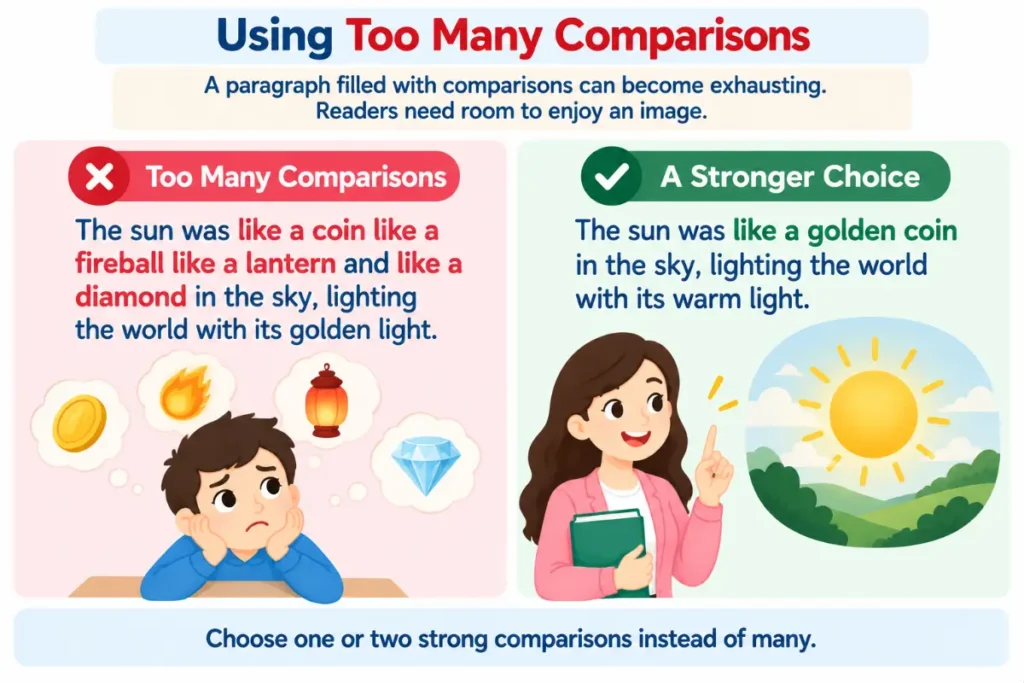
A paragraph filled with comparisons can become exhausting. Readers need room to enjoy an image.
Instead of writing that the sun was like a coin like a fireball like a lantern and like a diamond in the same paragraph choose one or two strong images.
Choosing An Unclear Comparison
A comparison should give readers something concrete to picture. If the connection is too abstract the sentence may become confusing.
Mixing Conflicting Images
Avoid combining images that fight each other.
The sun was like an icy fire.
This can work in poetry if the contradiction is intentional but it may confuse readers in ordinary descriptive writing.
Using Cliches Too Often
Golden sun and ball of fire are familiar comparisons. They’re not wrong but they may feel predictable if every description uses them.
Try changing the image based on your scene.
The sunlight spilled across the table like honey.
That feels more specific than simply saying the sun was golden.
Ignoring The Mood
A peaceful scene doesn’t need an aggressive comparison. A frightening scene may need something more intense.
Think about the emotion first. Then choose the image.
Related Figurative Language
Several literary devices can help you describe sunlight.
- Metaphor. This makes a direct comparison such as the sun was a golden coin.
- Personification. This gives the sun human qualities such as the sun smiled over the village.
- Imagery. This uses sensory language to help readers see feel or experience the scene.
- Alliteration. Repeated beginning sounds can add rhythm such as soft sunlight slowly spread.
- Hyperbole. This exaggerates for effect such as the sun was hot enough to melt the whole world.
- Onomatopoeia. This imitates sound and is less directly connected to sunlight but can support a larger scene.
- Symbolism. The sun can represent hope life renewal freedom or warmth depending on the story.
- Descriptive language. Specific details about color heat direction and movement make comparisons more convincing.
These devices can work together. A writer might use a simile to describe the sunlight and personification to give the scene emotional character.
Why Comparisons Make Descriptions Stronger
Readers don’t experience writing as a dictionary of facts. They build mental pictures from the details you provide.
Compare these two sentences.
The sun was bright.
The sun hung above the town like a giant lantern.
The first sentence gives information. The second gives information and an image.
That image makes the scene easier to remember.
Expert Editor Insight
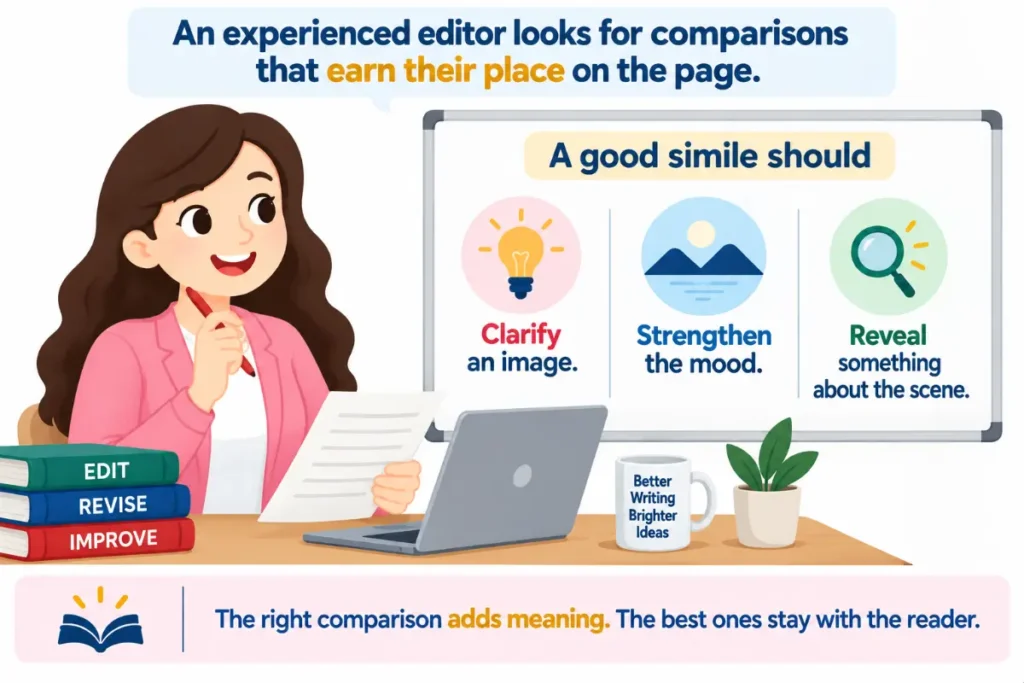
An experienced editor looks for comparisons that earn their place on the page. A good simile should clarify an image strengthen the mood or reveal something about the scene. If removing the comparison makes the sentence stronger the comparison probably wasn’t doing enough work. The best descriptions often use familiar objects in fresh combinations rather than reaching for complicated vocabulary. Read your sentence aloud and ask one simple question: can the reader picture this immediately? If the answer is yes you’re probably on the right track.
Conclusion
Sun similes can turn a plain description into an image readers can almost see and feel. The right comparison can make the sun seem warm like a blanket bright like a spotlight golden like honey or fierce like a furnace. The strongest choice depends on the scene and the emotion you want to create.
Good figurative writing doesn’t depend on complicated vocabulary. A familiar object with a clear connection can create a powerful image. Think about brightness warmth color movement and mood before choosing your comparison.
The best practical tip is to read your sentence aloud after writing it. If the comparison feels natural and gives the reader a clear picture keep it. If it sounds forced choose a simpler image. One fresh and well chosen comparison can make an entire paragraph shine.
FAQs
What is a good simile for the sun?
A good choice is the sun was like a golden lantern in the sky. It creates a clear image and works well in stories essays and descriptive writing. Other useful comparisons include a golden coin a glowing ember a bright jewel a warm blanket and a giant fire. Choose the image based on the mood and quality you want to emphasize.
What is a simile for a bright sun?
You could write the sun was like a giant spotlight. This comparison clearly communicates intense brightness because a spotlight produces strong focused light. Other options include the sun was as bright as a diamond or the sun shone like a brilliant torch. For school writing a simple familiar comparison is often stronger than an elaborate one.
What is a simile for a hot sun?
A common comparison is the summer sun burned like a furnace. It works because a furnace suggests intense heat. You could also say the sun was as hot as an open oven or the afternoon sun blazed like a giant fire. Use stronger comparisons when the scene actually feels extremely hot so the language matches the experience.
What is a simile for a beautiful sunset?
A beautiful sunset can be compared to spilled paint on a canvas. For example you could write the sunset spread across the sky like an artist’s paint. Other choices include a glowing lantern a golden ribbon or a fading ember. The best image depends on the colors and emotions in your scene.
What is a simile for sunlight?
Sunlight can be compared to many warm or bright things. You could say sunlight spilled across the room like honey or sunlight spread over the fields like a golden blanket. These comparisons make light feel visible and almost physical. Choose an image that matches the scene instead of using the same comparison every time.
How do you write a simile about the sun?
Start by choosing one quality you want to show. You might focus on brightness warmth color shape or movement. Then think of a familiar object with the same quality. Connect the two using like or as. For example if you want to show warmth you might write the sunlight was as warm as a soft blanket.
Can a sun simile be funny?
Yes. A humorous comparison can make a description more memorable. You might write the sun was like a giant light bulb someone forgot to switch off. Another playful option is the summer heat felt like sitting inside a parked car with the windows closed. Funny comparisons work especially well in personal writing informal stories and children’s writing.
What is the difference between a simile and a metaphor?
A simile usually makes a comparison with like or as. For example the sun was like a golden coin. A metaphor makes the comparison directly by saying the sun was a golden coin. Both devices create imagery but a metaphor usually sounds more direct while a simile can make the comparison feel more conversational or descriptive.

Idioms, Expressions & Figurative Language
Mason Ellsworth is an American language writer with a passion for English expressions, figurative language, and everyday communication. He explains idioms, similes, popular phrases, and commonly misunderstood expressions in a straightforward, engaging style that helps readers improve both their writing and spoken English.