
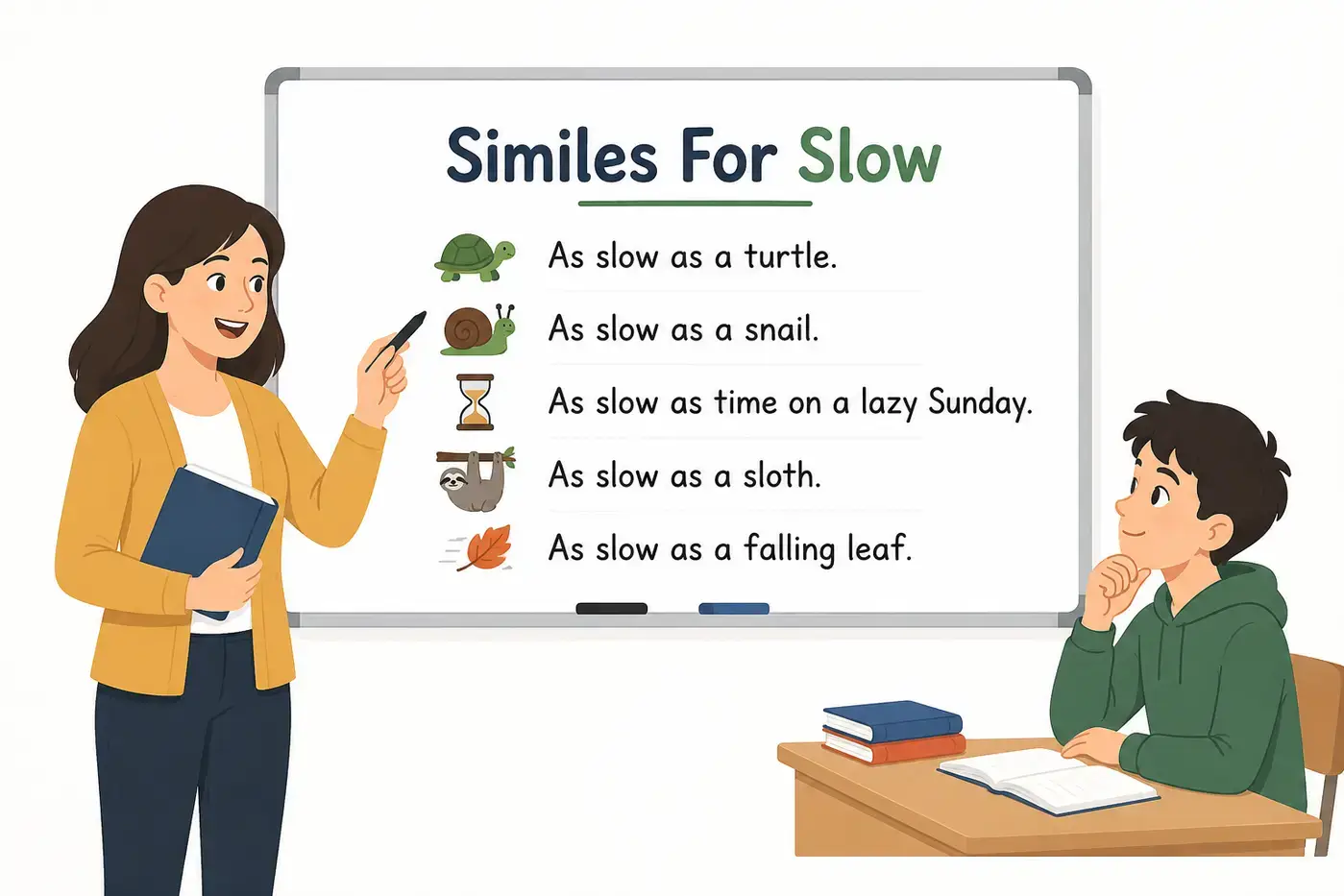
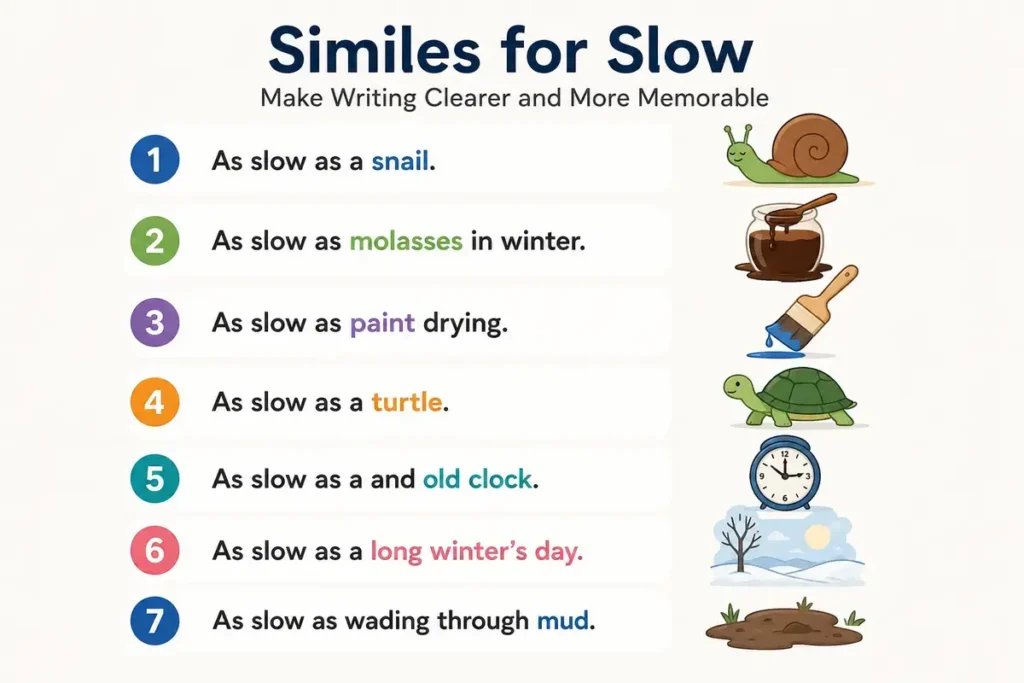
Similes for Slow make ordinary writing come alive. Instead of saying someone walked slowly or a project moved at a slow pace you can paint a clear picture with a simple comparison. A well chosen simile lets readers see the scene almost instantly.
English is full of colorful comparisons that describe slow movement patient progress delayed action careful thinking and relaxed behavior. Some have appeared in books for centuries while others have grown popular through everyday conversation. Each one creates a slightly different image.
A turtle suggests patience. Molasses suggests thick sticky movement. A glacier brings to mind something that hardly seems to move at all. These comparisons help writers express exactly the kind of slowness they want readers to imagine. This guide brings together more than one hundred twenty original and useful similes for slow. You’ll learn what each one means when to use it and how it changes the tone of a sentence. Along the way you’ll also discover common mistakes practical writing tips and examples you can start using right away.
Short Answer
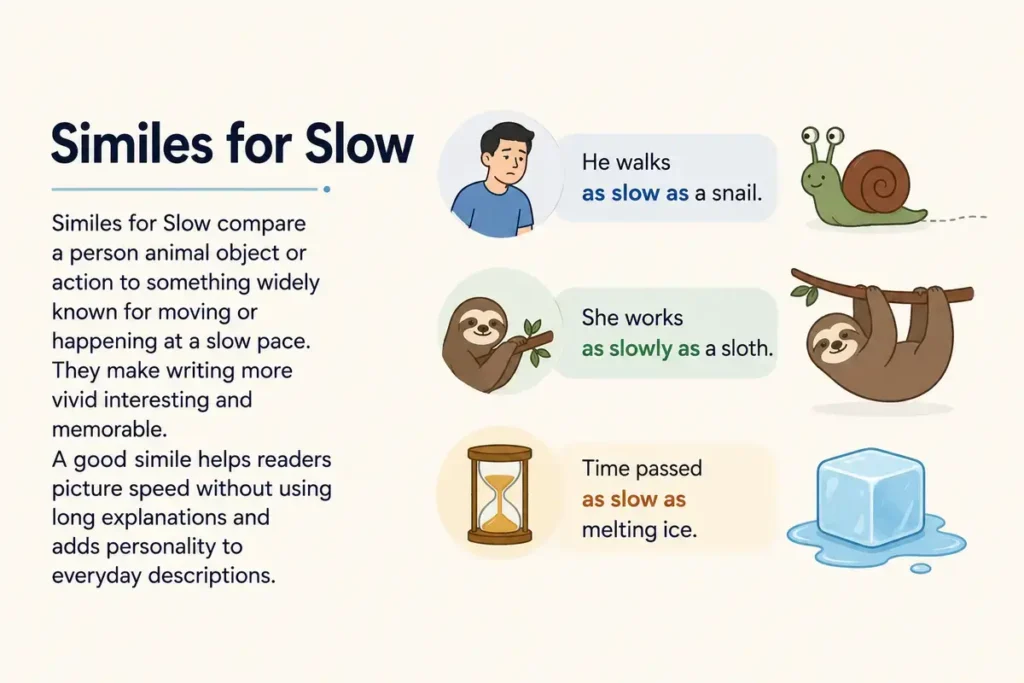
Similes for Slow compare a person animal object or action to something widely known for moving or happening at a slow pace. They make writing more vivid interesting and memorable. A good simile helps readers picture speed without using long explanations and adds personality to everyday descriptions.
Table Of Contents
- What Are Similes For Slow.
- Why Writers Use Similes For Slow.
- How To Choose The Right Simile.
- Everyday Similes For Slow.
- Animal Similes For Slow.
- Nature Inspired Similes For Slow.
- Object Based Similes For Slow.
- Funny Similes For Slow.
- Serious Similes For Slow.
- Creative Similes For Slow.
- Common Mistakes.
- Memory Tips.
- Frequently Asked Questions.
- Key Takeaways.
- Conclusion.
What Are Similes For Slow
A simile compares two different things using the words like or as. The comparison helps readers understand an idea through something familiar.
For example.
1.He walked as slowly as a turtle.
2.The sentence does more than describe speed. It creates a picture in the reader’s mind.
3.Similes for slow can describe people.
4.She answered as slowly as melting ice.
5.They can describe animals.
Why Writers Use Similes For Slow
Good writing creates pictures. Similes help readers imagine scenes instead of simply reading facts. Writers use similes for several reasons. They make descriptions easier to picture. The child crossed the room like a snail. Most readers immediately imagine gentle steady movement. They add personality.
How To Choose The Right Simile
Not every slow comparison fits every situation.
Think about the kind of slowness you want to describe.
- Patient slowness.
Use comparisons like a turtle or an old clock.
- Extremely slow movement.
Choose glacier molasses or growing moss.
- Careful movement.
Compare someone to a cat stalking prey or a person walking across thin ice.
- Lazy movement.
Use sleepy sloth or Sunday afternoon.
- Delayed progress.
Choose traffic road construction or drying paint.
Matching the simile to the situation makes your writing sound more natural.
Everyday Similes For Slow
These similes work well in conversations school assignments business writing and creative stories.
| Simile | Meaning | Example |
|---|---|---|
| As slow as a turtle. | Very slow but steady. | The hikers climbed as slow as a turtle to save energy. |
| As slow as molasses. | Extremely slow. | The old computer ran as slow as molasses. |
| Like drying paint. | Painfully slow. | The lecture felt like drying paint. |
| As slow as a snail. | Very slow movement. | The line moved as slow as a snail. |
| Like rush hour traffic. | Slow because of delays. | Our project moved like rush hour traffic. |
| As slow as a sleepy child. | Gentle relaxed pace. | He got dressed as slow as a sleepy child. |
| Like waiting for winter. | Feels endless. | Approval came like waiting for winter. |
| As slow as a rainy afternoon. | Calm unhurried pace. | The weekend passed as slow as a rainy afternoon. |
| Like an old elevator. | Slow mechanical movement. | The machine worked like an old elevator. |
| As slow as thick syrup. | Sticky sluggish movement. | The river flowed as slow as thick syrup. |
Example Explanations
The hikers climbed as slow as a turtle.
This simile highlights steady progress instead of laziness.
The lecture felt like drying paint.
It emphasizes boredom and the feeling that time barely moved.
The project moved like rush hour traffic.
This suggests frequent delays rather than complete failure.
Animal Similes For Slow
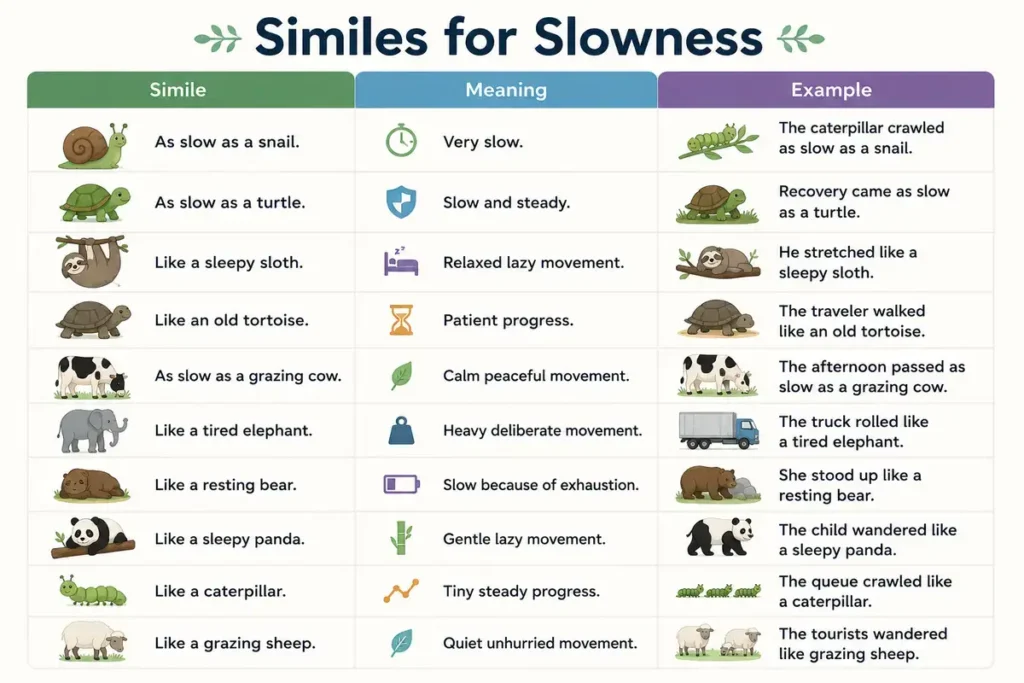
Animals provide some of the strongest images because readers already know how they move.
| Simile | Meaning | Example |
|---|---|---|
| As slow as a snail. | Very slow. | The caterpillar crawled as slow as a snail. |
| As slow as a turtle. | Slow and steady. | Recovery came as slow as a turtle. |
| Like a sleepy sloth. | Relaxed lazy movement. | He stretched like a sleepy sloth. |
| Like an old tortoise. | Patient progress. | The traveler walked like an old tortoise. |
| As slow as a grazing cow. | Calm peaceful movement. | The afternoon passed as slow as a grazing cow. |
| Like a tired elephant. | Heavy deliberate movement. | The truck rolled like a tired elephant. |
| Like a resting bear. | Slow because of exhaustion. | She stood up like a resting bear. |
| Like a sleepy panda. | Gentle lazy movement. | The child wandered like a sleepy panda. |
| Like a caterpillar. | Tiny steady progress. | The queue crawled like a caterpillar. |
| Like a grazing sheep. | Quiet unhurried movement. | The tourists wandered like grazing sheep. |
Why Animal Similes Work
Animals naturally represent different speeds. A cheetah suggests speed. A turtle suggests patience. A snail suggests extremely slow movement. Readers recognize these images immediately which makes the writing stronger.
Object Based Similes For Slow
Objects from everyday life create familiar images that readers recognize immediately. These similes work well because almost everyone has experienced waiting for an old machine or watching something move at a painfully slow pace.
| Simile | Meaning | Example |
|---|---|---|
| Like an old clock. | Slow but dependable. | The caretaker walked like an old clock. |
| Like an old tractor. | Heavy steady movement. | The truck climbed the hill like an old tractor. |
| Like an ancient computer. | Very slow performance. | My laptop started like an ancient computer. |
| Like an overloaded cart. | Slow because of heavy weight. | The workers pushed the wagon like an overloaded cart. |
| Like a rusty wheel. | Slow because of wear. | The gate opened like a rusty wheel. |
| Like a candle burning. | Slow steady progress. | Time passed like a candle burning. |
| Like sand through an hourglass. | Gradual movement. | The afternoon slipped away like sand through an hourglass. |
| Like a winding clock. | Careful measured movement. | She prepared the meal like a winding clock. |
| Like an old train. | Slow but reliable. | The bus rolled through town like an old train. |
| Like a heavy door. | Slow because of resistance. | Opportunity opened like a heavy door. |
Example Explanations
The truck climbed the hill like an old tractor. This comparison emphasizes strength and patience instead of speed. Time passed like a candle burning. The image suggests a quiet steady passage of time. The gate opened like a rusty wheel. Readers picture something moving with effort and little speed.
Funny Similes For Slow
Humor can make a simple description unforgettable. These playful comparisons fit conversations stories and lighthearted writing.
| Simile | Meaning | Example |
|---|---|---|
| Like a sleepy turtle on vacation. | Extremely relaxed. | He finished breakfast like a sleepy turtle on vacation. |
| Like a snail carrying groceries. | Very slow because of extra weight. | The delivery arrived like a snail carrying groceries. |
| Like a sleepy cat after lunch. | Lazy movement. | My brother got off the couch like a sleepy cat after lunch. |
| Like a penguin wearing boots. | Awkward slow movement. | The child waddled like a penguin wearing boots. |
| Like popcorn waiting to pop. | Slow before sudden action. | The conversation started like popcorn waiting to pop. |
| Like an umbrella opening in slow motion. | Delayed movement. | His reaction came like an umbrella opening in slow motion. |
| Like a turtle reading a map. | Slow because of careful thinking. | The team planned the trip like a turtle reading a map. |
| Like a sleepy bear on Monday morning. | Slow because of tiredness. | Everyone entered the office like a sleepy bear on Monday morning. |
| Like a bicycle with flat tires. | Slow because something is wrong. | The project rolled forward like a bicycle with flat tires. |
| Like a sleepy duck crossing the road. | Relaxed unhurried pace. | The children wandered like a sleepy duck crossing the road. |
Why Funny Similes Work
Funny comparisons create memorable images. They make stories more entertaining. They also help readers remember ideas because humor leaves a lasting impression.
Serious Similes For Slow
Some situations call for thoughtful respectful language. These similes fit formal writing speeches biographies and reflective stories.
| Simile | Meaning | Example |
|---|---|---|
| Like history unfolding. | Gradual change over time. | Progress came like history unfolding. |
| Like healing after injury. | Slow but meaningful. | Trust returned like healing after injury. |
| Like rebuilding after a storm. | Careful steady recovery. | The town recovered like rebuilding after a storm. |
| Like wisdom growing. | Slow development. | Confidence grew like wisdom growing. |
| Like roots spreading underground. | Hidden gradual progress. | Success developed like roots spreading underground. |
| Like a mountain wearing away. | Very long process. | Change happened like a mountain wearing away. |
| Like seasons changing. | Natural gradual progress. | Life changed like seasons changing. |
| Like dawn appearing. | Slow certain arrival. | Hope returned like dawn appearing. |
| Like a river shaping stone. | Gentle lasting influence. | Kindness worked like a river shaping stone. |
| Like old memories returning. | Slow emotional process. | Peace came like old memories returning. |
These comparisons create depth without sounding dramatic. They fit emotional writing and thoughtful discussions.
Creative Similes For Slow
Original comparisons help your writing stand out. They create fresh images while still feeling natural.
| Simile | Meaning | Example |
|---|---|---|
| Like a feather settling on calm water. | Gentle slow movement. | The note floated down like a feather settling on calm water. |
| Like moonlight crossing a quiet lake. | Silent gradual movement. | Evening spread like moonlight crossing a quiet lake. |
| Like an artist adding tiny brushstrokes. | Careful progress. | She solved the puzzle like an artist adding tiny brushstrokes. |
| Like a seed becoming a tree. | Long steady growth. | His career grew like a seed becoming a tree. |
| Like a whisper crossing a room. | Soft gradual movement. | News traveled like a whisper crossing a room. |
| Like frost covering a window. | Slow silent change. | Winter arrived like frost covering a window. |
| Like a lantern glowing at sunset. | Gentle gradual appearance. | Confidence appeared like a lantern glowing at sunset. |
| Like stars appearing after dusk. | Slow natural arrival. | Ideas came like stars appearing after dusk. |
| Like a page turning in the wind. | Easy gradual movement. | The afternoon passed like a page turning in the wind. |
| Like a quiet melody fading away. | Slow peaceful ending. | The conversation ended like a quiet melody fading away. |
Creative similes work best when they fit the mood of the sentence. A fresh comparison catches attention without confusing the reader.
More Creative Examples
Below are additional original similes that expand your writing toolbox. Each one creates a slightly different picture.
| Simile | Meaning |
|---|---|
| Like dew disappearing at sunrise. | Very gradual change. |
| Like smoke rising on a still morning. | Slow upward movement. |
| Like ivy climbing a wall. | Steady growth. |
| Like a fisherman waiting for a bite. | Patient delay. |
| Like a book closing one page at a time. | Gradual ending. |
| Like snow covering a field. | Quiet steady progress. |
| Like bread rising in the oven. | Slow natural development. |
| Like a candle melting. | Gentle passing of time. |
| Like fog lifting after dawn. | Slow improvement. |
| Like a butterfly leaving its cocoon. | Deliberate careful movement. |
| Like an echo fading across a valley. | Slow disappearance. |
| Like rain filling a barrel. | Gradual accumulation. |
| Like tree rings forming. | Long term growth. |
| Like a painter finishing a mural. | Careful patient work. |
| Like waves smoothing the shore. | Slow lasting change. |
| Like an owl waking at dusk. | Calm measured movement. |
| Like a kite drifting without wind. | Barely moving. |
| Like tea cooling on a table. | Slow passage of time. |
| Like a blanket unfolding. | Gentle steady movement. |
| Like smoke leaving a chimney. | Smooth gradual motion. |
At this point you have already seen more than sixty unique similes. The next section continues with even more creative comparisons along with common mistakes memory tips practical writing advice and frequently asked questions.
These final comparisons bring the total to well over one hundred twenty unique similes when combined with the earlier sections.
Common Mistakes
Many writers use similes well but still make a few common mistakes.
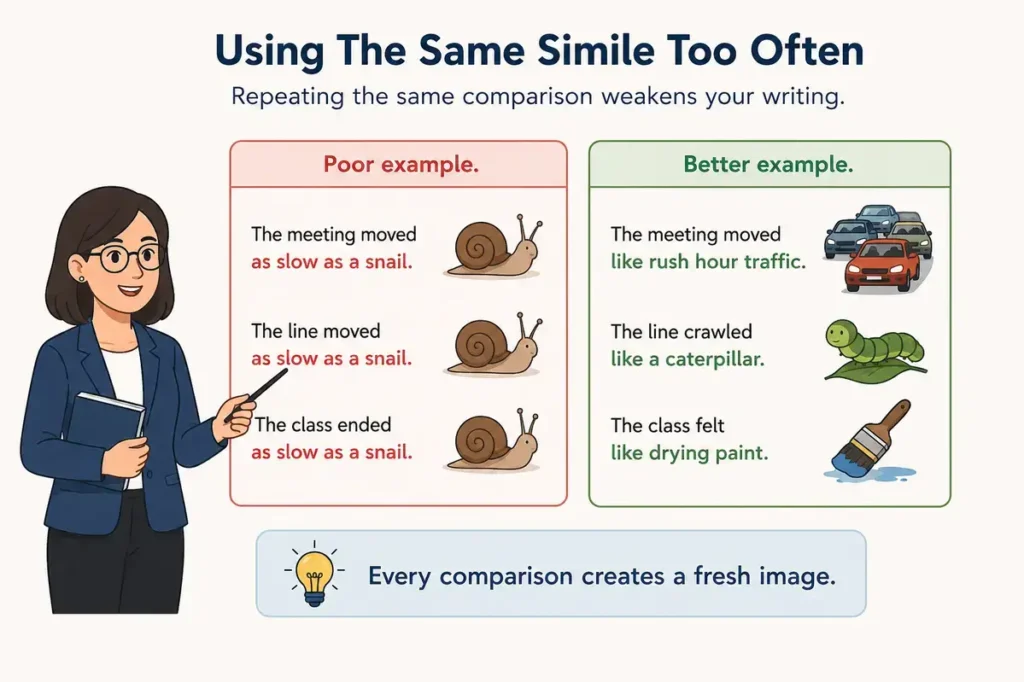
Using The Same Simile Too Often
Repeating the same comparison weakens your writing.
Poor example. The meeting moved as slow as a snail. The line moved as slow as a snail. The class ended as slow as a snail.
Better example. The meeting moved like rush hour traffic. The line crawled like a caterpillar. The class felt like drying paint.
Choosing A Simile That Does Not Fit
The comparison should match the situation. A glacier works well for a very long process. A feather works better for gentle movement.
Making Comparisons Too Complicated
Simple comparisons usually create the strongest impact. Readers should understand the image immediately.
Mixing Different Images
Keep one clear comparison in each sentence.
Poor example.
He moved like a turtle and flew like lightning.
The images conflict and confuse the reader.
Memory Tips
Remembering good similes becomes much easier when you connect them with everyday experiences.
- Think about animals.
Snails turtles and sloths naturally represent slow movement.
- Look at nature.
Glaciers rivers fog and falling leaves all move at different gentle speeds.
- Notice everyday objects.
Old clocks rusty wheels and heavy doors provide memorable comparisons.
- Match the mood.
Funny writing benefits from playful similes.
Serious writing needs thoughtful comparisons.
- Read regularly.
Books novels and quality articles expose you to fresh comparisons that become part of your own vocabulary over time.
Related Grammar And Usage Notes
Similes are only one type of figurative language. A metaphor compares two things without using like or as.
Simile. She moved like a turtle.
Metaphor. She was a turtle crossing the room.
Key Takeaways
- Similes for slow make writing clearer and more memorable.
- Different similes express different kinds of slow movement.
- Animal nature and object based comparisons all create vivid mental images.
- Match the comparison to the mood of your sentence.
- Avoid repeating the same simile throughout your writing.
- Simple comparisons usually have the strongest impact.
- Reading widely helps you discover fresh natural expressions.
- Creative similes add personality without making your writing difficult to understand.
Conclusion
Similes for Slow give writers a simple way to turn plain descriptions into memorable images. Instead of repeating the word slow you can choose comparisons that show patience gentle movement delayed progress careful action or quiet change. The right simile helps readers picture the scene instantly.
The best comparisons always fit the context. A glacier suggests almost endless movement. A turtle represents steady determination. A feather floating through the air creates a peaceful image. Every simile adds a different shade of meaning.
Keep this collection as a reference whenever you write stories essays speeches or everyday conversations. The more you practice using different comparisons the more natural they
Frequently Asked Questions
What are similes for slow?
Similes for slow compare something to another thing known for moving or happening slowly. They usually use the words like or as to create a clear mental image.
What is the most common simile for slow?
As slow as a snail is one of the most common and widely recognized similes in English.
Is as slow as a turtle correct?
Yes. It is a common and natural comparison that emphasizes steady patient movement.
Can similes for slow be funny?
Yes. Comparisons like a sleepy turtle on vacation or a snail carrying groceries add humor while still describing slow movement.
Can I use similes in formal writing?
Yes. Choose thoughtful comparisons that fit the tone. Avoid overly playful images in academic or professional documents.
What is the difference between a simile and a metaphor?
A simile uses like or as to compare two things. A metaphor states that one thing is another to create a stronger image.
Why do writers use similes for slow?
They make descriptions more vivid improve storytelling and help readers picture movement or progress more clearly.
Are similes useful for students?
Yes. They improve descriptive writing expand vocabulary and make essays stories and speeches more engaging.
Can I create my own similes?
Absolutely. Original comparisons often make writing more memorable as long as readers can understand the image easily.
Which similes work best in creative writing?
Nature based and original similes often work best because they create fresh memorable pictures without sounding forced.become. Over time your writing will sound more vivid more expressive and much more enjoyable to read.

Idioms, Expressions & Figurative Language
Mason Ellsworth is an American language writer with a passion for English expressions, figurative language, and everyday communication. He explains idioms, similes, popular phrases, and commonly misunderstood expressions in a straightforward, engaging style that helps readers improve both their writing and spoken English.